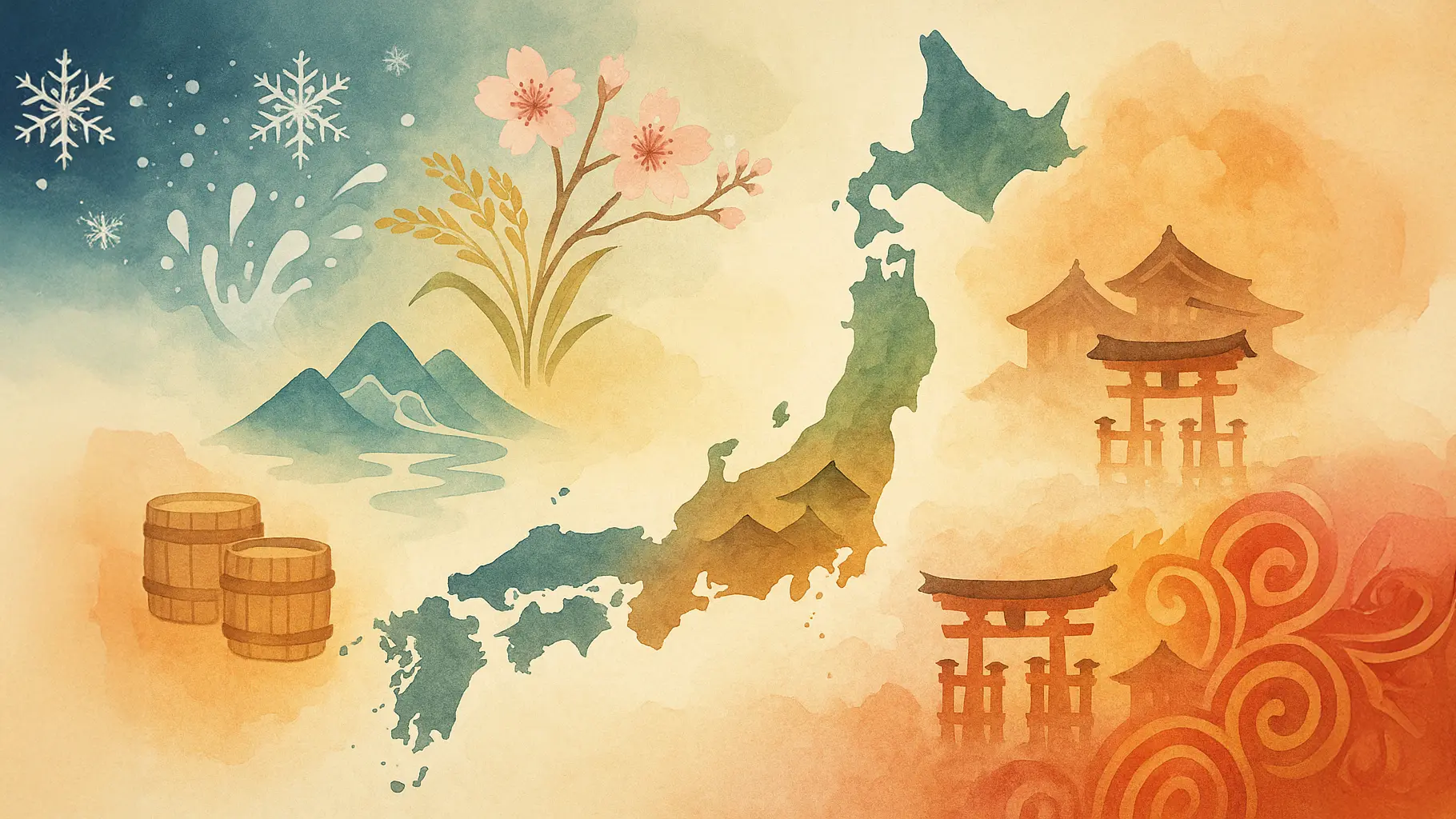
Akita Sake: Rich Flavors from Japan's Rice Country
Discover distinctive sake brands like Aramasa, Yuki no Bosha, and Takashimizu from Akita Prefecture. Learn about the characteristics and appeal of sake crafted from one of Japan's finest rice-growing regions.
Akita Sake: Blessings of Rice Country
There’s hardly a sake fan today who hasn’t heard of Aramasa.
This Akita brewery has been breathing new life into the sake world by fusing tradition with innovation. But Akita’s sake scene extends far beyond Aramasa alone.
Yuki no Bosha, Takashimizu, Kariho, Ama no To. Let’s explore the rich world of sake from Akita, one of Japan’s premier rice-growing regions.
Why Akita Became a Sake Powerhouse
The Rice Country Advantage
Akita Prefecture ranks third in Japan for rice production, following Niigata and Hokkaido.
Akita Komachi Akita’s famous brand rice needs no introduction. While popular as table rice, it’s also used in sake brewing.
Misato Nishiki & Akita Sake Komachi These are Akita’s original sake rice varieties. Particularly suited for ginjo brewing, they’re widely used by breweries throughout the prefecture.
Stable Supply of Quality Rice Access to excellent local rice is a major advantage for breweries. It reduces transportation costs and ensures the freshest possible rice for brewing.
Snow Country Water and Climate
Soft Water for Brewing Underground water flowing from the Ou Mountains and Shirakami Mountains is low in minerals. This soft water allows for slow fermentation, producing delicate, refined sake.
Harsh Winter Cold Akita’s winters are long and bitterly cold. This cold suppresses bacterial growth and creates ideal conditions for low-temperature fermentation.
High Humidity The humid climate typical of the Sea of Japan coast is perfect for koji making. The moisture-rich environment nurtures excellent koji development.
The Sannai Toji Tradition
Akita is home to the Sannai Toji, a distinguished guild of master brewers.
Based in the Sannai district of Yokote City, they maintained a tradition of seasonal brewing work during winter when farming wasn’t possible. Considered one of Japan’s three great toji guilds alongside Nanbu Toji and Echigo Toji, their techniques continue to support Akita’s sake brewing today.
Characteristics of Akita Sake
Rich and Umami-Forward
If you had to describe Akita sake in one word, it would be “rich.”
The umami of rice comes through distinctly, with full body and depth. In contrast to Niigata’s light, dry style, Akita sake offers a broader flavor profile.
The Akita Flower Yeast
Akita Prefecture has invested in developing its own unique yeasts.
The “Akita Flower Yeast” is known for producing aromatic fragrances. The ginjo aromas reminiscent of apples and pears often come from this yeast.
Notable Breweries and Brands
Aramasa (Aramasa Shuzo)
A revolutionary force in the sake world.
Known for the “No.6” series, this brewery is the birthplace of Yeast No.6 and uses only this strain. They’ve given modern interpretations to traditional methods like wooden barrel brewing and kimoto production.
Their striking label designs have helped create a new image for sake. While difficult to find, bottles are relatively accessible at specialty shops in Akita City.
Yuki no Bosha (Saiya Shuzoten)
A brewery whose motto is “harnessing the power of nature.”
No stirring, no filtering, no dilution. Through a philosophy of subtraction, they bring out rice’s inherent umami. Clean yet deeply layered in flavor.
Takashimizu (Akita Shurui Seizo)
One of Akita’s major producers.
This is one of the most beloved brands locally. Affordable with consistent quality, it’s an everyday sake that’s indispensable to Akita households.
Kariho (Kariho Shuzo)
A brewery known for serious dry sake.
Utilizing the characteristics of Yeast No.6, they produce crisp, sharp sake. Their “Yamahai Junmai Super Dry” has an astounding sake meter value of +12. A must-try for dry sake enthusiasts.
Ama no To (Asamai Shuzo)
A brewery that practices “sake starts in the rice paddies.”
They use only rice grown by local contract farmers. This commitment extends from rice cultivation to sake brewing. Simple yet profoundly flavorful.
Mansakunohana (Hinomaru Jozo)
A brewery in Yokote City producing elegant sake.
“Mansaku” refers to Akita’s prefectural flower. True to its name, the sake offers floral aromas and gentle flavors. Particularly popular among women.
Enjoying Akita Sake
Food Pairings
Rich Akita sake pairs wonderfully with bold, flavorful dishes.
Kiritanpo Nabe A winter delicacy of Akita. The chicken broth and sake’s umami complement each other beautifully. Perfect with warm sake.
Hatahata (Sandfish) Akita’s prefectural fish. Grilled with salt, in shottsuru hot pot, or as hatahata sushi. Its affinity with local sake goes without saying.
Iburigakko Smoked pickled daikon radish. Its distinctive smoky aroma and crunchy texture make it the perfect snack for dry sake.
Hinai Jidori Chicken One of Japan’s three great heritage chicken breeds. Enjoy it as yakitori or oyakodon. Pair with a robust junmai sake that can stand up to the rich chicken flavor.
Serving Temperatures
Many Akita sakes truly shine when warmed.
Particularly junmai sakes like Takashimizu, Kariho, and Ama no To gain umami when served lukewarm to hot. Of course, ginjo styles like Aramasa and Yuki no Bosha are best enjoyed chilled.
Visiting the Source
Akita City Kawabata is Akita’s premier entertainment district. It’s lined with izakayas featuring extensive local sake selections.
Yokote City Famous for its kamakura snow houses, Yokote is also sake country, home to Hinomaru Jozo and Asamai Shuzo. Drinking local sake inside a kamakura during the winter festival is an unforgettable experience.
Oga Peninsula Famous for the Namahage folklore, Oga offers the perfect combination of fresh seafood and local sake.
Recent Developments
The Path Aramasa Blazed
Aramasa Shuzo’s success has influenced other breweries in Akita.
Reassessing traditional methods, appealing to younger generations, refreshing design approaches. Each brewery is interpreting the “new way of sake” that Aramasa demonstrated and continuing to take on challenges in their own way.
Global Expansion
Akita sake is also making inroads into international markets.
Yuki no Bosha and Aramasa have received high praise at overseas competitions, and export volumes continue to grow. Sake made with Akita rice, Akita water, and Akita expertise is gaining recognition worldwide.
Conclusion
Akita sake is an art form nurtured by the blessings of rice country and the harshness of snow country.
Its rich, umami-laden flavors warm the body during cold winters. From innovative Aramasa to locally-rooted Takashimizu, Akita’s sake offerings span a wide range.
If you’re curious about Akita sake, start with Yuki no Bosha or Takashimizu. And if you get the chance, experience drinking local sake while gathered around a kiritanpo hot pot. Winter in snow country is when sake tastes its absolute best.
For Yamagata sake, see Yamagata Sake.
For details on kimoto and yamahai brewing, see What is Nama Sake.