Proper Storage Methods for Japanese Sake
A guide to storing sake properly at home. Covers refrigeration, light protection, and why bottles stand upright, plus whether freezing works, sake cellars, what to do with deteriorated sake, and which bottles suit aging.
Proper Storage Methods for Japanese Sake
A premium daiginjo received as a gift, left on display by the kitchen window — this is the textbook way to ruin sake. While it sits there waiting for “someday, a special occasion,” the aroma fades and the color shifts toward yellow.
The cause is storage.
Sake is a more delicate drink than most people assume. It is not something that improves simply by being laid down, the way wine is (aged sake aside). Without knowing how to store it properly, it is easy to waste a fine bottle.
This article explains how to store sake at home, along with the mistakes people most often make.
The Short Answer: Refrigerated, Upright, in the Dark
Before the details, here is the conclusion.
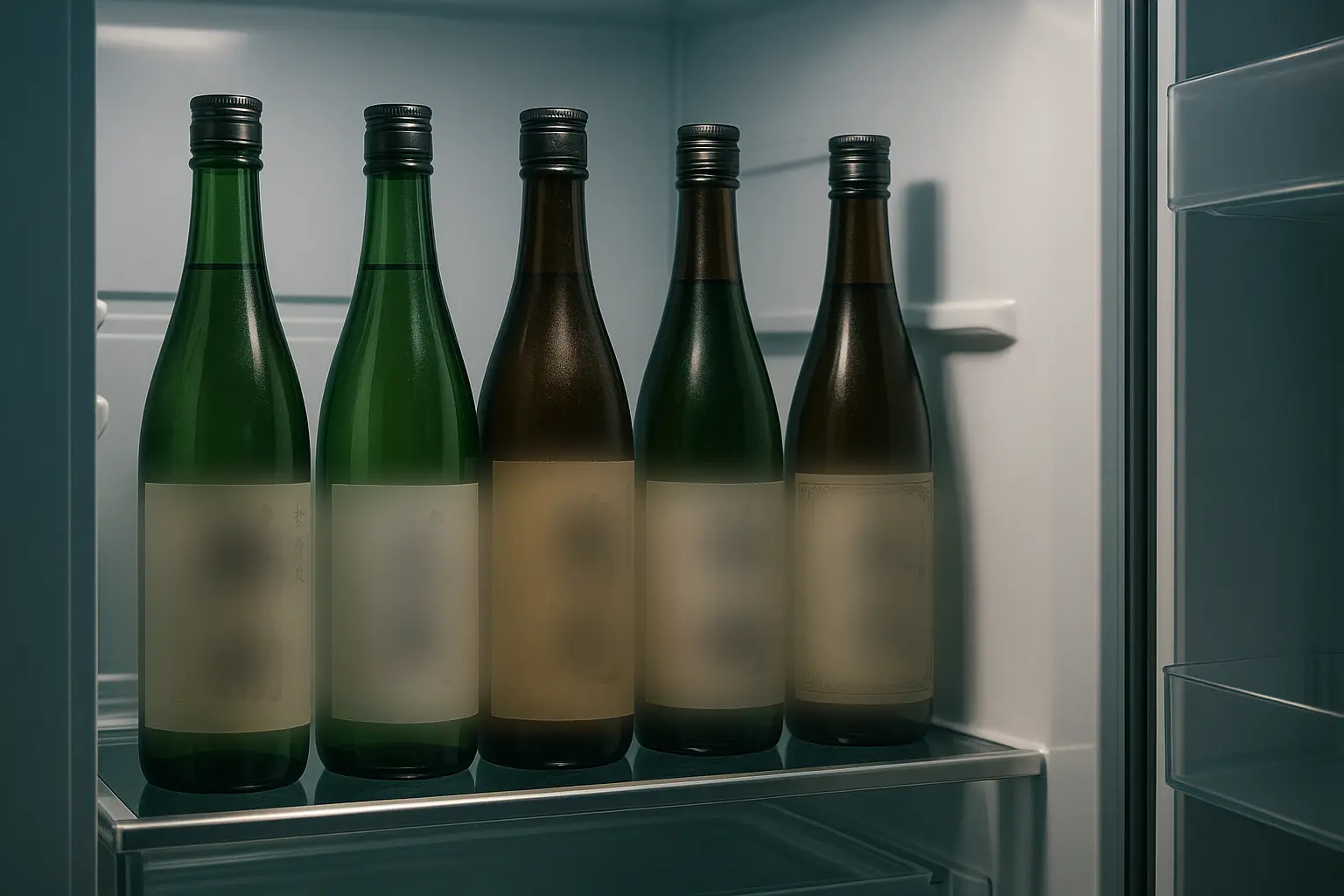
Put it in the refrigerator and store it upright. That’s it.
Follow that alone and nearly every bottle of sake will be fine. There is no need to overthink it.
Still, knowing why helps you handle the exceptions. Let’s look a little closer.
Why Keep It Cold
Heat is sake’s greatest enemy.
At higher temperatures, chemical reactions proceed inside the sake. The result is called hineka (stale aroma) — the not particularly welcome smell characteristic of sake that has grown old.
Nama-zake demands special care. Because it has not been pasteurized, its yeast and enzymes are still alive. Taken out of the refrigerator and left at room temperature, its flavor can change within a few days.
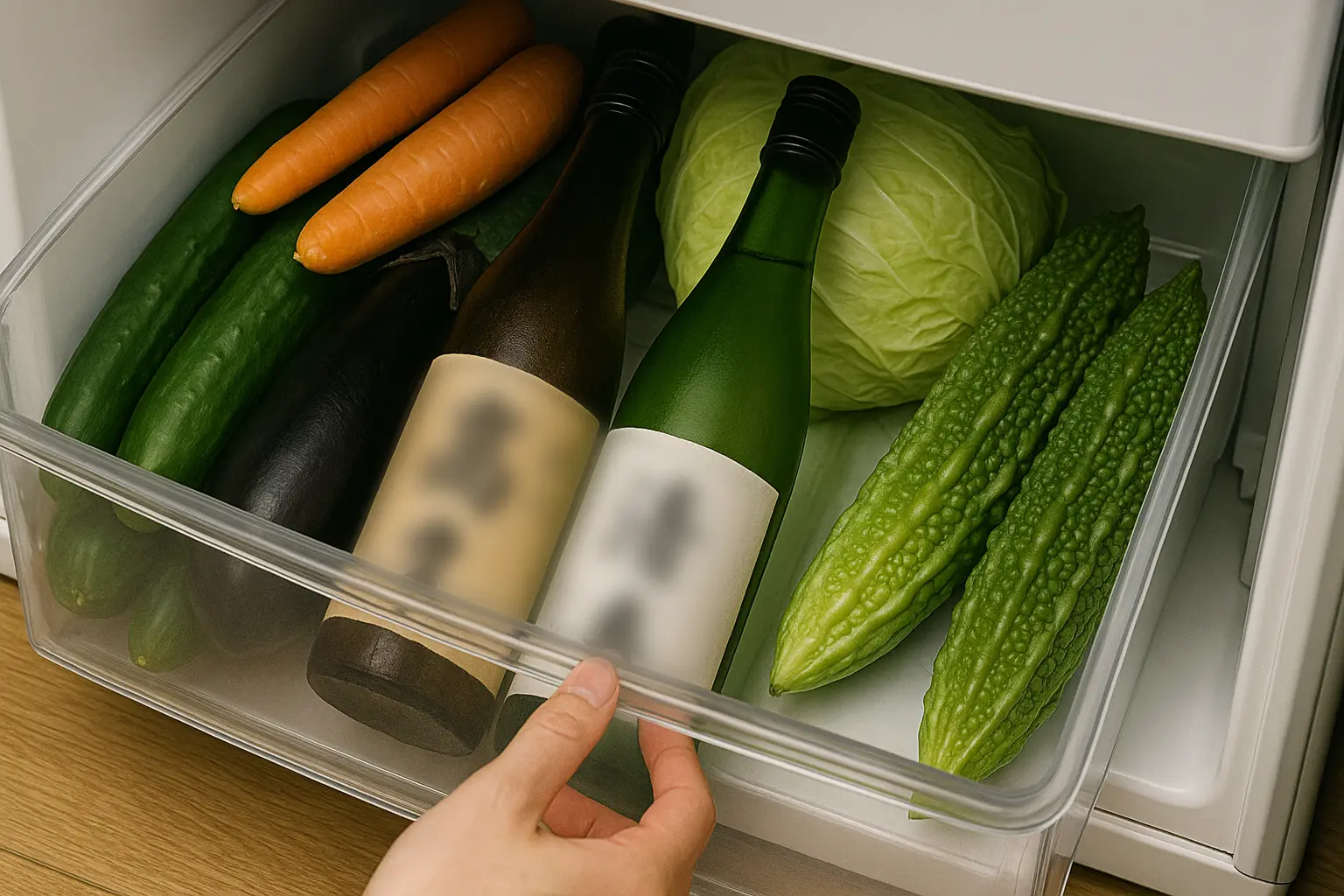
The ideal temperature is 5–10°C. The vegetable compartment of a refrigerator is just right.
If you own a wine cellar, that works too — provided you can set it somewhat below wine’s ideal range of 12–15°C.
Why Keep It Away From Light
Sake is also vulnerable to light.
Ultraviolet light does the damage in particular. Not only sunlight but fluorescent lighting will advance deterioration. It can produce an unpleasant smell known as light-struck odor.
Brown and green bottles are common precisely because they cut ultraviolet light. But the protection is not complete.
That is why inside the refrigerator is ideal. Close the door and no light gets in.
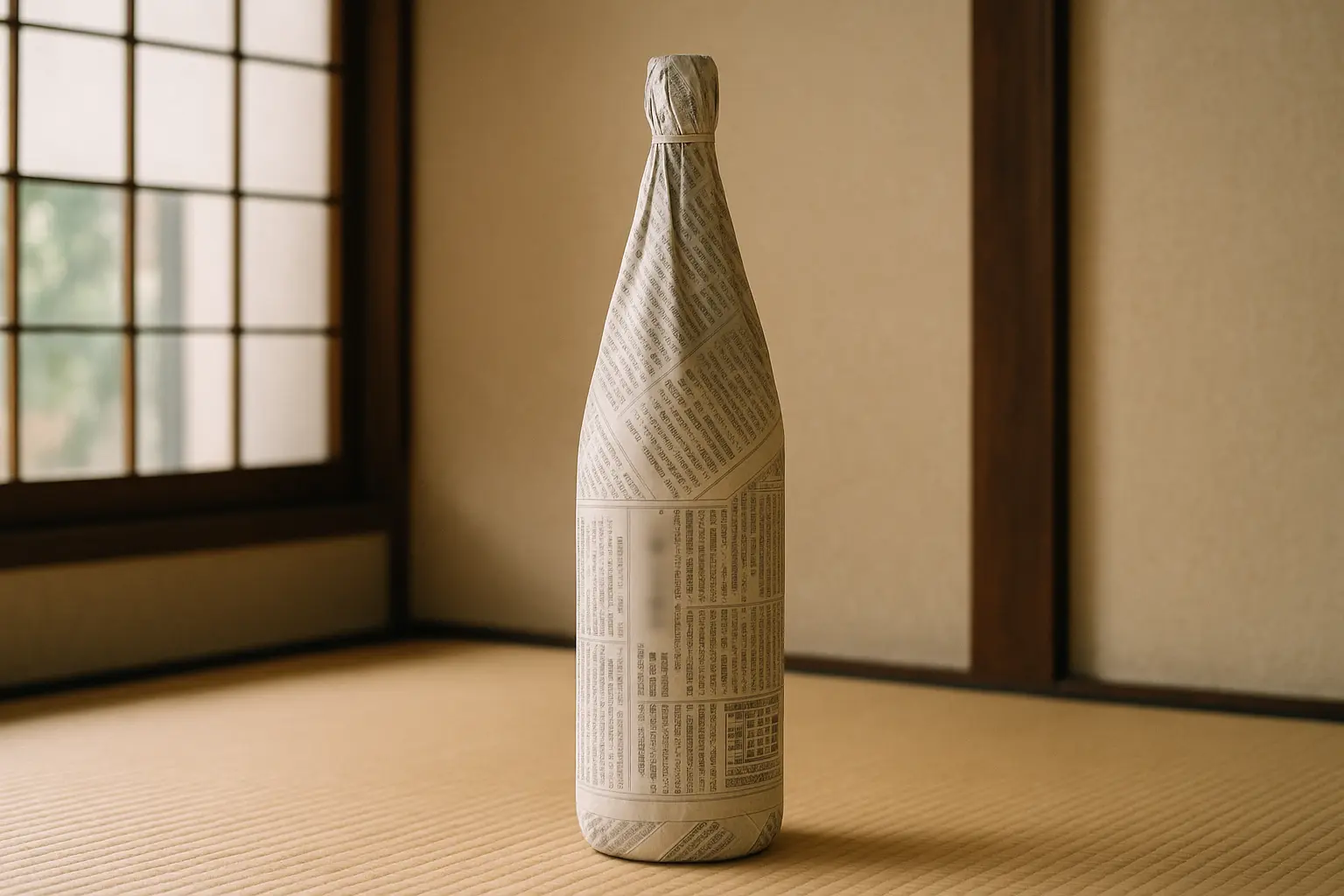
If a bottle absolutely must stay outside, wrap it in newspaper or keep it in its box. This is exactly why sake shops tell you not to throw the box away.
Why Store Bottles Upright
Laying wine on its side is standard practice, but sake is different. Upright storage is the rule.
There are two reasons.
1. The cap Sake caps are usually metal or plastic. Laid on its side, the sake is in constant contact with the cap, which can cause a faint metallic smell or contribute to deterioration.
2. Contact area with air Standing upright minimizes the surface area where sake meets air, which slows oxidation.
There is no benefit to laying a bottle down, only risk. So keep it standing.
Points by Type
Not every sake should be treated the same way.
Nama-zake
Requires the most care.
Because it is unpasteurized, the yeast is still alive. Left at room temperature, fermentation continues and the flavor changes. In the worst case the bottle can burst — rare, but it does happen.
Refrigerate it as soon as you buy it. Once opened, finishing it within a week is ideal.
Ginjo and Daiginjo
The delicate aroma is everything, and it is sensitive to temperature swings.
Refrigeration is essential. After opening, the aroma escapes especially quickly, so it is best finished early.
Junmai and Honjozo
Relatively robust. Refrigeration is ideal, but room-temperature storage is possible in a cool, dark place.
If you bought it for serving warm, storing it at room temperature poses no major problem — except in summer.
Aged Sake (Koshu)
Sake matured intentionally is meant to be enjoyed for its changes in the first place.
It keeps well long-term in a cool spot around 10–15°C. Once opened, however, it is like any other sake and best drunk soon.
Handling After Opening
Unopened and opened bottles deteriorate at completely different speeds.
The moment you open it, oxidation begins. Contact with air steadily alters the flavor.
Guidelines after opening
- Nama-zake: 3–7 days
- Ginjo: 1–2 weeks
- Junmai and Honjozo: 2–3 weeks
Past these points the sake is not undrinkable, but this is roughly how long it stays good.
When You Can’t Finish the Bottle
For someone living alone, 720ml can be a lot.
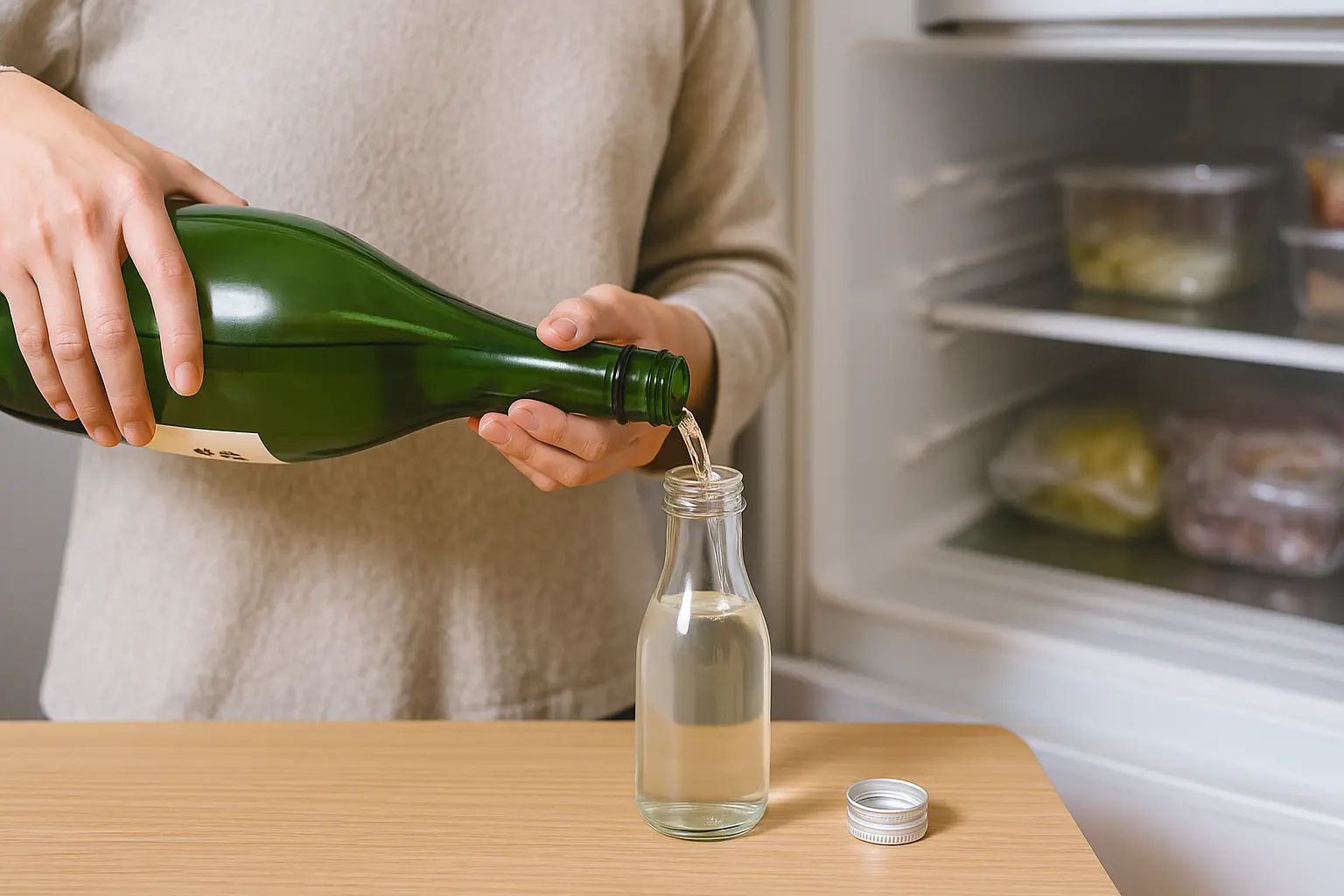
Transferring to a smaller bottle is effective, since it reduces the area exposed to air. A small bottle from a hundred-yen shop is plenty. Fill it to the mouth to push out as much air as possible.
Cooking with it is another option. Simmered dishes, hot pots, steamed dishes — sake lifts the flavor of a dish a level. Even sake that has lost a little quality works fine in cooking.
Common Mistakes
The Refrigerator Door Pocket
Convenient, but actually the worst spot.
The temperature shifts every time the door opens and closes, and there is vibration. For sake it is nothing but stress.
If possible, place it at the back of the refrigerator, somewhere that doesn’t move.
Saving It for “Someday”
That premium bottle you were given. Save it for a special occasion — the impulse is understandable.
But sake is fundamentally better the sooner you drink it. While you wait for the special day, the sake deteriorates first.
Open it soon after receiving it. That is how to enjoy it at its best, and it is also a courtesy to the person who gave it to you.
Displaying It on the Kitchen Counter
A bottle with a stylish label. The urge to use it as decor is understandable.
But kitchens swing wildly in temperature. It’s hot near the stove, and sunlight hits the windowsill.
If you want to display one, display an empty bottle. Keep the contents in the refrigerator.
Choosing a Storage Location
| Location | Recommendation | Suitable Sake | Precautions |
|---|---|---|---|
| Refrigerator (vegetable compartment) | ◎ | All types | Watch for odor transfer |
| Refrigerator (door pocket) | △ | Stopgap only | Severe temperature swings |
| Wine cellar | ◎ | All types | Mind the temperature setting |
| Under-floor storage | ○ | Pasteurized sake, aged sake | Rough in summer |
| Closet | △ | Short term only | Watch humidity and temperature |
| Kitchen counter | × | None | Light and heat rule it out |
Common Questions
Can sake be frozen?
Not recommended.
Freezing throws the balance of its components off, and the flavor may not return after thawing. There is also a risk that the water expands and cracks the bottle.
That said, there is a way of drinking called mizore-zake (slushy frozen sake), where the bottle goes into the freezer briefly right before serving to reach a sherbet-like state. That is a serving method, not storage, and it depends on not leaving it in there for long.
Does vibration matter?
It is considered to matter.
In an environment of constant vibration, sake is said to become rough more easily. One view holds that even the vibration of a refrigerator’s compressor is best avoided for long-term storage.
There is no need to be nervous about ordinary daily levels, but for a bottle you plan to keep a while, simply choosing a spot at the back of the refrigerator that doesn’t move improves the conditions.
What about long-term storage?
A sake cellar is one option.
Shaped like a wine cellar, it maintains the 0–5°C low-temperature range suited to sake. It is worth considering for anyone whose collection is growing, or who wants nama-zake on hand at all times.
If you use an ordinary refrigerator instead, wrapping the bottle in a bag or newspaper helps keep odors from other foods from transferring.
Is badly stored sake still drinkable?
First, check the aroma and color.
An obvious off-smell, a sour smell rising from the glass, a color that has turned deep brown — in these cases it is better not to drink it.
If it is only slightly stale (hineta), serving it warm can make that less noticeable, since heating changes the impression of the aroma. If something still feels off, using it as cooking sake is the practical landing point. In simmered dishes or hot pots, sake that has lost some of its flavor need not go to waste.
For a closer look at the signs of deterioration, see The Shelf Life of Sake.
What if I want to age it?
Kept in the refrigerator for a long stretch, sake will slowly mature.
However, not every sake ages well. What suits aging is junmai with substantial body — particularly those made by the kimoto or yamahai methods. Leaving a delicate ginjo for a long period usually ends with nothing but the loss of the aroma that made it special.
If you intend to age sake, it is more reliable to choose a bottle suited to aging from the start.
Bringing Home Sake Bought While Traveling
Local sake bought on a brewery tour. Getting it home is surprisingly difficult.
In summer, a cooler bag is essential.
Left in a car trunk, the interior temperature can exceed 60°C. The sake essentially cooks.
If the shop can ship it for you, that is the surest route. Shipping costs money, but less than ruining the bottle.
Summary
Storing sake is actually simple.
- Put it in the refrigerator
- Store it upright
- Drink it soon after opening
Following just these three prevents nearly every failure.
“Let’s save it for a special occasion” does not apply to sake. Drink it well while it is still good. That is the right way to get along with sake.
For how long sake keeps, see The Shelf Life of Sake.
If you want to finish a bottle soon after opening, see Sake for Drinking at Home.
For more on sake temperatures, see Sake Serving Temperatures.