How to Drink Sake: Enjoying It Occasion by Occasion
A quiet drink alone, a single cup at a bar, a celebration, a meal to match—sake changes with the occasion, and so does the way you choose and drink it. A practical guide to pacing, yawaragi-mizu, and the etiquette of pouring for each other.
How to Drink Sake: Enjoying It Occasion by Occasion
The same bottle shows a different face depending on where and how you drink it.
A quiet night facing a bottle alone and a room full of people raising a toast call for different sake, different amounts, different temperatures—and that is entirely as it should be. Sake may feel difficult precisely because this business of matching the drink to the occasion is so rarely talked about.
What follows is a look at the situations you are most likely to find yourself in, and how to drink so that everything settles comfortably into place.
Nights Alone
You open a bottle of sake at home, by yourself. This is probably the freest way to drink there is.
What matters most here is designing the amount. Finishing a shigo-bin (720ml bottle) on your own is a considerable quantity once you account for sake’s typical alcohol content. Buy a bottle expecting to empty it in one evening and you will usually be pushing yourself.
The realistic approach is to choose your bottle on the assumption that you will open it and drink it over several days. Pasteurized sake keeps well for several days to about a week in a cool dark place or the refrigerator. In fact the flavor shifts from day to day, so a single bottle gives you several different expressions. Namazake (unpasteurized sake) changes faster, so aim to finish it within a week.
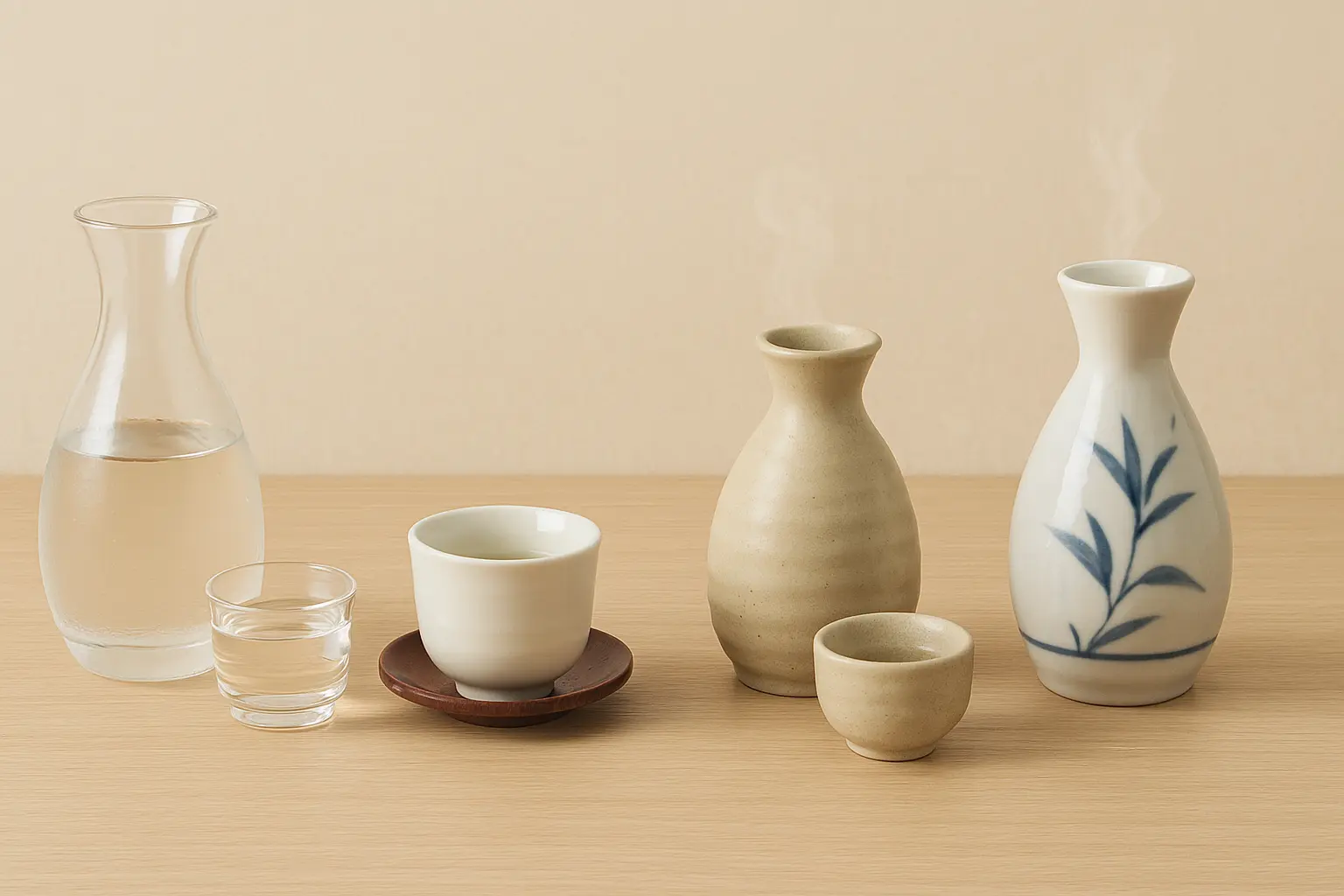
Small vessels suit this kind of drinking. Use something like an ochoko (a small sipping cup) or a guinomi (a slightly larger cup that sits in the palm)—a vessel emptied in a sip or two—and your hand pauses each time you refill. That pause works as a pacing device. Fill a large glass and you will get through it without noticing.
There is no need to fuss over the food. One salty thing—pickles, dried fish, cheese, miso—is enough. Eating less actually makes it easier to follow the way the sake changes.
The Time It Takes to Warm Sake
In cold weather, the trouble of warming sake becomes a pleasure in itself.
The method is simple: pour the sake into a tokkuri (a small ceramic serving flask), then stand it up to the neck in a pot of hot water. A microwave works too, but the top tends to heat faster than the bottom, so stirring once partway through evens it out.
For temperature, starting at nurukan (around 40°C) is the hardest to get wrong. Just above body temperature, the umami of the rice fills out and the aroma begins to rise. If you want it hotter, work up to jokan (around 45°C) and then atsukan (around 50°C).
The sake that improves with warming is the kind with substantial umami—junmai-shu, and especially sake made by the kimoto or yamahai methods (traditional, labor-intensive starter techniques). Ginjo-style sake, whose selling point is its showy aroma, tends to lose its balance when heated.
There is nothing wrong with letting it cool and warming it again. This is called kanzamashi—warmed sake allowed to cool—and some people prefer it that way. Hunting for the temperature that suits your own palate is more rewarding than following rules.
The article on sake serving temperatures covers how each temperature range changes the flavor in detail.
Meeting an Unfamiliar Bottle at a Bar
When you order sake at an izakaya or a bar, the hardest moment is simply not knowing what to ask for.
A tasting set is what helps here. Many places serve around three varieties in small pours, letting you try several personalities for the price of a single glass. When you order, it is worth saying “as different from each other as possible.” Three contrasting sakes tell you far more about your own taste than three similar ones.
If you are ordering just one glass, put some thought into how you phrase it. Saying “something dry” actually carries very little information. Instead, try:
- “Something with a bright aroma, light on the palate”
- “Something clean that goes with food”
- “Something with umami that’s good warmed”
Describe aroma, body, and temperature this way and the staff can pick accurately for you. Telling them what you plan to eat is also effective.
And if you find a bottle you like, note the name down on the spot. By the next day it will be gone. As rules of thumb go, this one is remarkably reliable.
Drinking With Others
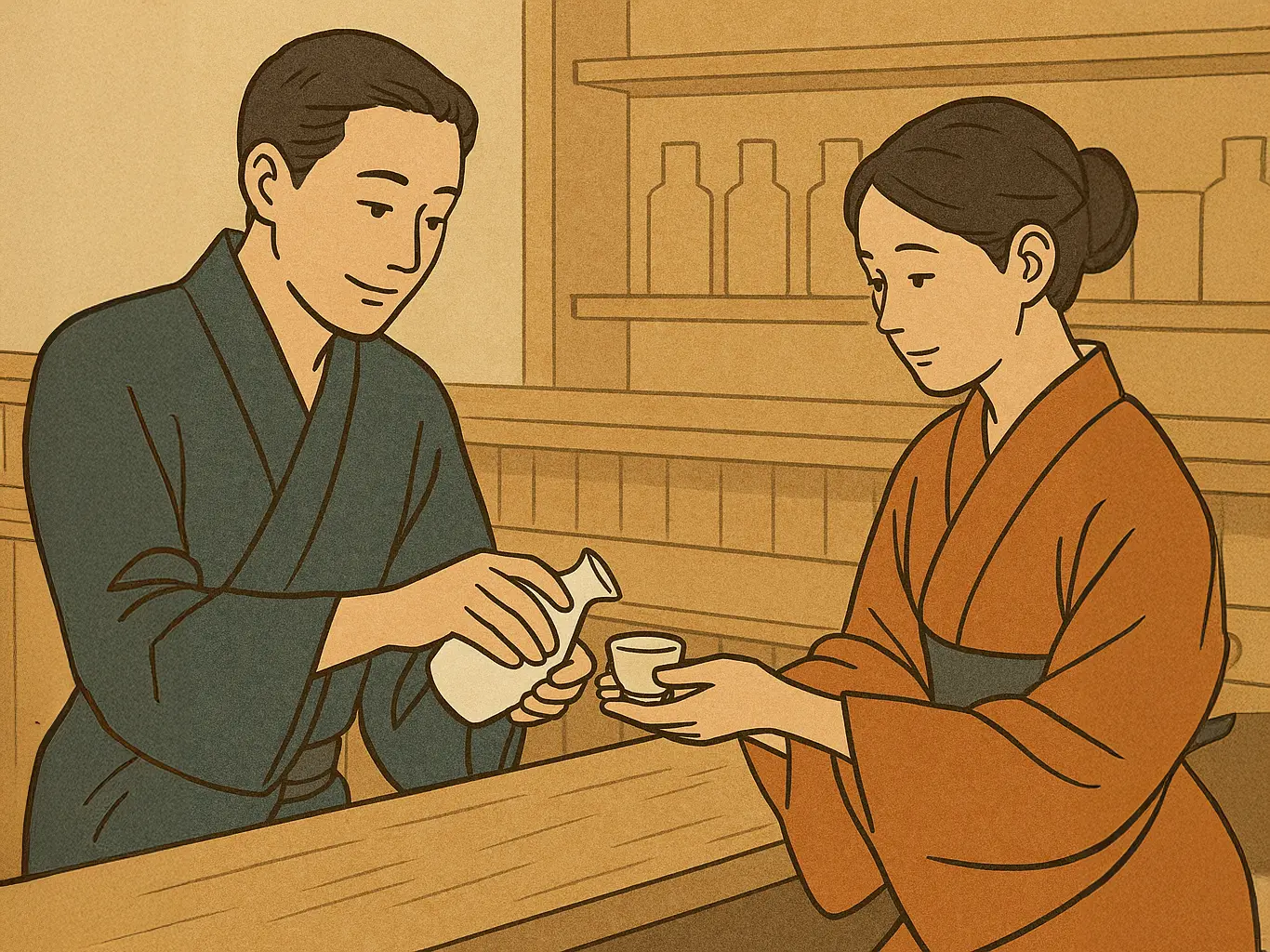
Sake has a culture of pouring for one another. There is no need to treat it stiffly, but knowing the basics keeps you from hesitating.
Pour with both hands on the tokkuri. Hold it in your right hand and rest your left lightly against it. When someone’s cup is empty, say something before you pour. Topping up in silence can look like you are urging them to drink.
Receive with both hands as well. Lift your cup and tilt it slightly to make pouring easier. Once it has been filled, take a sip rather than setting it down and leaving it.
Fill to about eighty percent. Poured to the brim, a cup spills as it is lifted.
As for pouring your own, it is generally considered safer to avoid at formal occasions, though with people you know well it hardly matters. Respecting the other person’s pace matters more. Continuing to pour for someone who cannot drink may be technically correct etiquette, but as hospitality it has failed.
Celebrations
At weddings, New Year gatherings, and brewery events, sake appears as an instrument of ceremony.
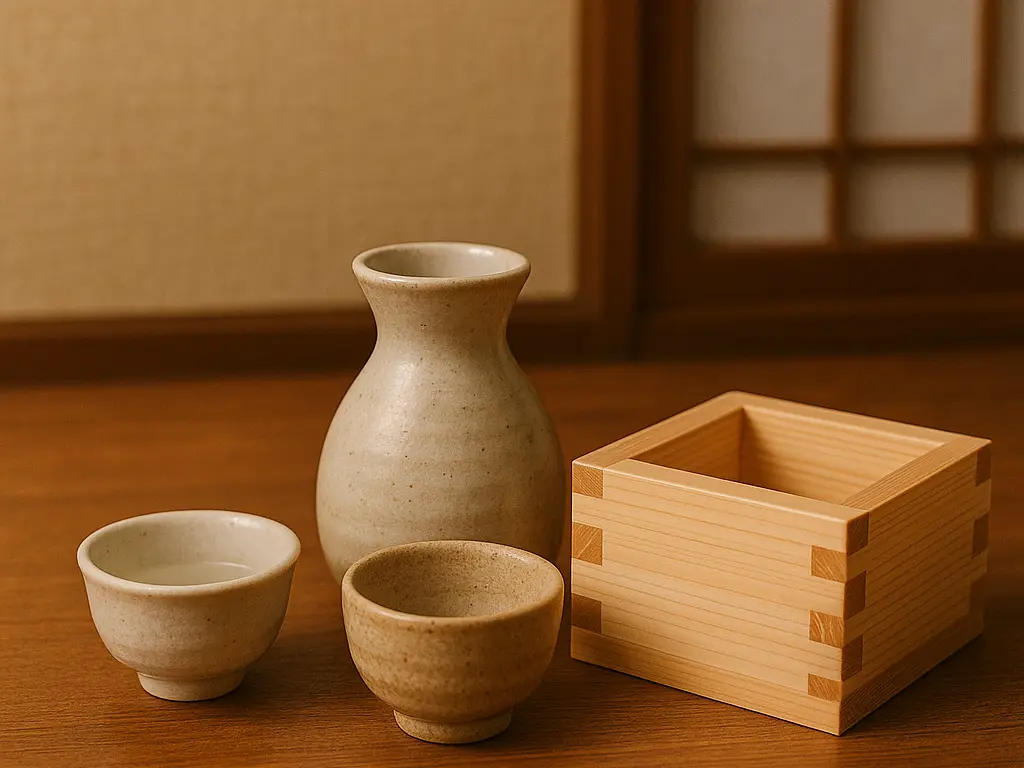
The masu—a square wooden box cup—belongs to occasions like these. The scent of the wood transfers to the sake and adds a distinctive character. Because “masu” puns on the verb meaning “to increase,” it is regarded as auspicious and chosen for celebrations. Opinions differ on the smell of hinoki cypress and cedar, so if it is not to your taste, you can set a glass inside the box instead—the style known as mokkiri.
Kagami-biraki is the ritual of breaking open a sake cask lid with a wooden mallet. The lid is called the “mirror,” and opening it is said to open up good fortune.
Sake at gatherings like these is not for careful evaluation. Drinking it as a means of sharing the occasion fits the moment better.
Matching Sake With Food
It is fair to say that sake comes into its own alongside a meal.
There are a few principles for pairing.
Match intensity with intensity. Light sake for delicate white fish, sake with body for richly flavored simmered dishes. If one side is too strong, the other disappears.
Try matching the region. A region’s sake grew up alongside that region’s food. When in doubt, choosing sake from the same area as the dish rarely goes far wrong.
Bring the temperatures together. Warm sake with warm dishes, chilled sake with cold ones. Simple, but it sits well in practice.
Sake also has one strength that other drinks lack: because it contains so much umami, it does not clash with the dashi at the heart of Japanese cooking. It sits comfortably beside clear soups and simmered dishes that are difficult to pair with wine.
Through the Seasons
Spring is the season of new sake. Freshly pressed namazake appears on shelves. If you are taking sake to a cherry blossom viewing, choose something light that can be drunk chilled.
Summer calls for cold sake. Serving it on the rocks or cutting it with sparkling water makes sense in this season—it lowers the alcohol content and goes down more easily.
Autumn means hiyaoroshi, sake that has matured over the summer before release. From room temperature to nurukan, its umami opens up.
Winter is for warmed sake and shiboritate, the freshly pressed new sake. Warm sake around a hot pot is an experience this season alone can offer.
Sake gets more interesting when you chase what each season brings rather than drinking the same thing all year round.
Finishing Well
In an article about how to drink, this last part cannot go unwritten.
Sake is around 15% alcohol, higher than beer or wine. And yet it goes down easily and keeps pace with the food, which makes it easy to lose track of how much you have had.
The widely known countermeasure is yawaragi-mizu—literally “softening water,” the water you drink alongside sake, equivalent to a chaser with Western spirits. Alternating between sake and water resets your palate so the flavors stay clear, and it naturally slows your pace. Ask for water at a bar and they will almost always bring it.
Knowing your own limit matters too. It varies a great deal with constitution and condition, and it is not something to measure against anyone else. Think of it as the amount that does not stay with you the next day.
And of course, in Japan the legal drinking age is 20. If you are driving, do not drink a drop. Avoid alcohol during pregnancy and while breastfeeding.
There is almost no right answer to how sake should be drunk. Temperature, vessel, quantity—if they suit the moment and suit you, that is enough.
But once you can change your approach to match the occasion, the sake meets you halfway. Quiet sake for a night alone, lively sake for a table full of people. Once you get the hang of choosing between them, sake suddenly becomes a very manageable drink.
For the types of sake vessels and how to choose them, see sake vessels.
For how flavor changes with temperature, see sake serving temperatures.
If you want to know about storage, head to how to store sake.