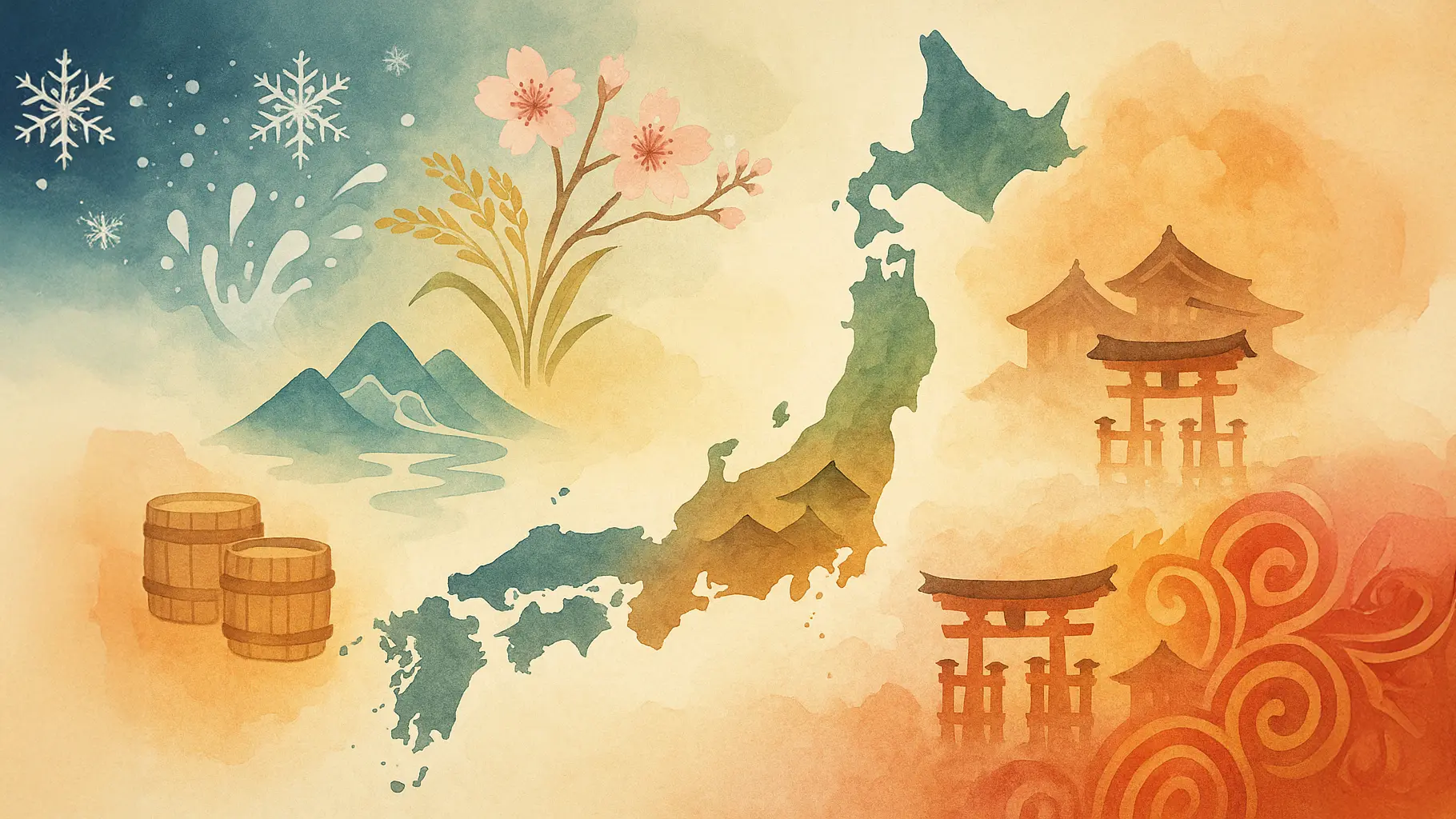
Hiroshima Sake: Birthplace of Soft Water Brewing
Discover Hiroshima's renowned sake, including Kamotsuru, Ugo no Tsuki, and Houken. Learn about the soft water brewing method pioneered in Saijo and what makes Hiroshima sake unique.
Hiroshima Sake: The Soft Water Revolution
Have you ever heard of Saijo?
Located in Higashihiroshima City, Hiroshima Prefecture, it’s one of Japan’s three great sake-producing regions. While it stands alongside Nada and Fushimi as a renowned brewing area, its story differs significantly from the other two.
Sake brewing in Saijo began with a revolution that overturned the conventional wisdom that “good sake cannot be made with soft water.”
Why Hiroshima Became a Sake Region
The Invention of Soft Water Brewing
Historically, hard water was considered essential for sake brewing.
Hard water like Nada’s famous miyamizu promotes vigorous fermentation, producing crisp, sharp sake. Soft water, on the other hand, causes slow fermentation and was thought incapable of producing quality sake.
Senzaburo Miura’s Challenge In the Meiji era, Hiroshima brewer Senzaburo Miura challenged this conventional wisdom.
Hiroshima’s water is soft. He reasoned that if that was the case, he simply needed to develop a brewing method suited to soft water. Through extensive trial and error, he established the “soft water brewing method”—a technique of slow fermentation at low temperatures.
The Results of the Revolution In 1907, Hiroshima sake won top honors at the National New Sake Competition. This was the moment when sake made with soft water—or rather, sake that could only be made with soft water—was recognized for its delicate refinement and elegance.
Saijo’s Natural Environment
Subterranean Water from Mount Ryuo Saijo’s water is ultra-soft subterranean water from the Ryuo mountain range. With minimal mineral content, it’s ideal for brewing.
Sake Brewery Street Seven sake breweries are concentrated within walking distance of Saijo Station. The landscape of white walls and chimneys truly befits the title of “Sake Capital.”
Basin Climate The basin climate with significant temperature variations is well-suited to sake brewing. Winter cold creates the perfect environment for low-temperature fermentation.
Pioneers of Ginjo Brewing
Hiroshima is also known as a pioneer of ginjo brewing.
The soft water brewing method involves slow fermentation at low temperatures—the same foundation as ginjo brewing. Hiroshima brewers have leveraged the characteristics of soft water to create ginjo sake with brilliant aromatics.
Characteristics of Hiroshima Sake
Soft and Refined
If you had to describe Hiroshima sake in a word, it would be “soft and refined.”
When brewed with soft water, fermentation proceeds slowly. The result is sake with minimal off-flavors and a smooth, silky mouthfeel.
A Tradition of Elegant Sake
Just as Fushimi sake is called “feminine sake,” Hiroshima sake is also known for its gentle character.
However, while Fushimi uses medium-hard water, Hiroshima uses ultra-soft water. This tends to produce even more delicate and refined flavors.
Notable Brands
Kamotsuru (Kamotsuru Sake Brewing)
The flagship brand of Hiroshima.
Founded in 1873, Kamotsuru Daiginjo has been beloved for years as a ginjo sake standard. Elegant aroma with a soft, gentle flavor.
It gained additional fame when it was served at the dinner between former President Obama and Prime Minister Abe during the President’s visit to Japan.
Ugo no Tsuki (Aihara Sake Brewing)
A rising star from a brewery in Kure City.
The name means “the moon after the rain has cleared,” and true to its name, the sake is characterized by crystalline clarity. It has gained popularity nationwide.
Houken (Houken Sake Brewing)
A small brewery in Nigata, Kure City.
Their philosophy is that “sake should be a supporting player that doesn’t overpower the food.” While not flashy, it truly shines when paired with cuisine. It’s highly regarded by professional chefs.
Fukucho (Imada Sake Brewing)
Delicate sake crafted by a female toji (master brewer).
They revived Hattanso, a rare sake rice variety, and use it to brew their sake. The elegant flavor reflects a distinctly feminine sensibility.
Ryusei (Fujii Sake Brewing)
A brewery in Takehara City.
In Takehara, known as the “Little Kyoto of Aki” for its preserved historical streetscape, they continue traditional sake brewing. They also produce deeply complex sake using the traditional kimoto method.
Hakubotan (Hakubotan Sake Brewing)
A long-established brewery in Saijo.
With a history dating back to 1675, they produce authentic Hiroshima sake that has been loved locally for generations.
Enjoying Hiroshima Sake
Food Pairings
Hiroshima’s soft sake pairs beautifully with seafood from the Seto Inland Sea.
Oysters Hiroshima is famous for oysters. Pair raw oysters with chilled junmai ginjo, or grilled oysters with warmed sake. A perfect combination.
Sardine Sashimi A Seto Inland Sea specialty. The soft sake enhances the delicate flavor of the fish.
Conger Eel The famous anago-meshi (conger eel rice) from Miyajima. The sweet sauce pairs excellently with gentle Hiroshima sake.
Momiji Manju An unexpected pairing, but sweet confections also go well with sake—especially aged sake or kijoshu (sake brewed with sake instead of water).
Serving Temperature
Hiroshima sake can be enjoyed both chilled and gently warmed.
Serve ginjo sake chilled to appreciate its aroma. Pure rice sake releases its umami at room temperature to lukewarm. When pairing with oysters, slightly warming the sake enhances the match.
Enjoying Sake in Hiroshima
Saijo Sake Brewery Street Seven breweries are concentrated within walking distance of JR Saijo Station. Enjoy brewery opening events and sake district tours.
Kamotsuru Sake Brewing Well-equipped visitor facilities. Learn about sake brewing history while enjoying tastings.
Hiroshima City The Nagarekawa and Yagenbori areas have many izakaya featuring local sake. Some specialize in oysters paired with regional sake.
Miyajima and Kure Combine sightseeing with enjoying local sake.
Recent Developments
Branding “Hiroshima Sake”
Hiroshima Prefecture is working to enhance the brand value of its sake.
Under the unified banner of “Hiroshima Sake,” they’re strengthening promotion both domestically and internationally. They’re also actively entering international sake competitions.
Young Brewers Taking on New Challenges
More breweries are pursuing new innovations while preserving tradition.
Younger generation brewers at places like Ugo no Tsuki and Fukucho are creating new styles of sake. While inheriting the soft water brewing tradition, they’re developing sake that appeals to contemporary consumers.
Summary
Hiroshima sake is the product of a revolution that overturned the belief that “good sake cannot be made with soft water.”
Its soft, refined character is the result of maximizing the potential of soft water. A walk through Saijo’s Sake Brewery Street reveals the depth of this tradition.
If Hiroshima sake interests you, start with Kamotsuru or Ugo no Tsuki. And if you have the chance, take a trip to walk Saijo’s Sake Brewery Street and enjoy oysters with local sake. Sake nurtured by the gentle climate of the Seto Inland Sea is tender and profound.
For more about Nada and Fushimi sake, see Nada and Fushimi.
For tips on brewery visits, see our detailed guide in Sake Brewery Tour Guide.