Sake Tasting Methods: Professional Techniques You Can Practice at Home
Learn the art of sake tasting. Master the professional three-step process of seeing, smelling, and tasting that you can practice at home.
Sake Tasting Methods: Professional Techniques You Can Practice at Home
When you hear “sake tasting,” you might think it’s only for professionals.
But once you know the basics, anyone can enjoy sake on a deeper level. See, smell, taste—just by being mindful of these three steps, you’ll discover aspects of sake you never noticed before.
What is Sake Tasting?
Purpose
Sake tasting (kikizake) is the practice of evaluating the quality and characteristics of sake.
At breweries, it’s used for quality control and selecting sake for shipment. At competitions, multiple sakes are compared to judge their quality.
For enthusiasts, it’s a way to discover personal preferences and understand the characteristics of different sakes. Don’t overthink it—think of it as developing a habit of “observing” sake.
The Kikichoko (Tasting Cup)
Professional tasters use a special vessel called a “kikichoko.”
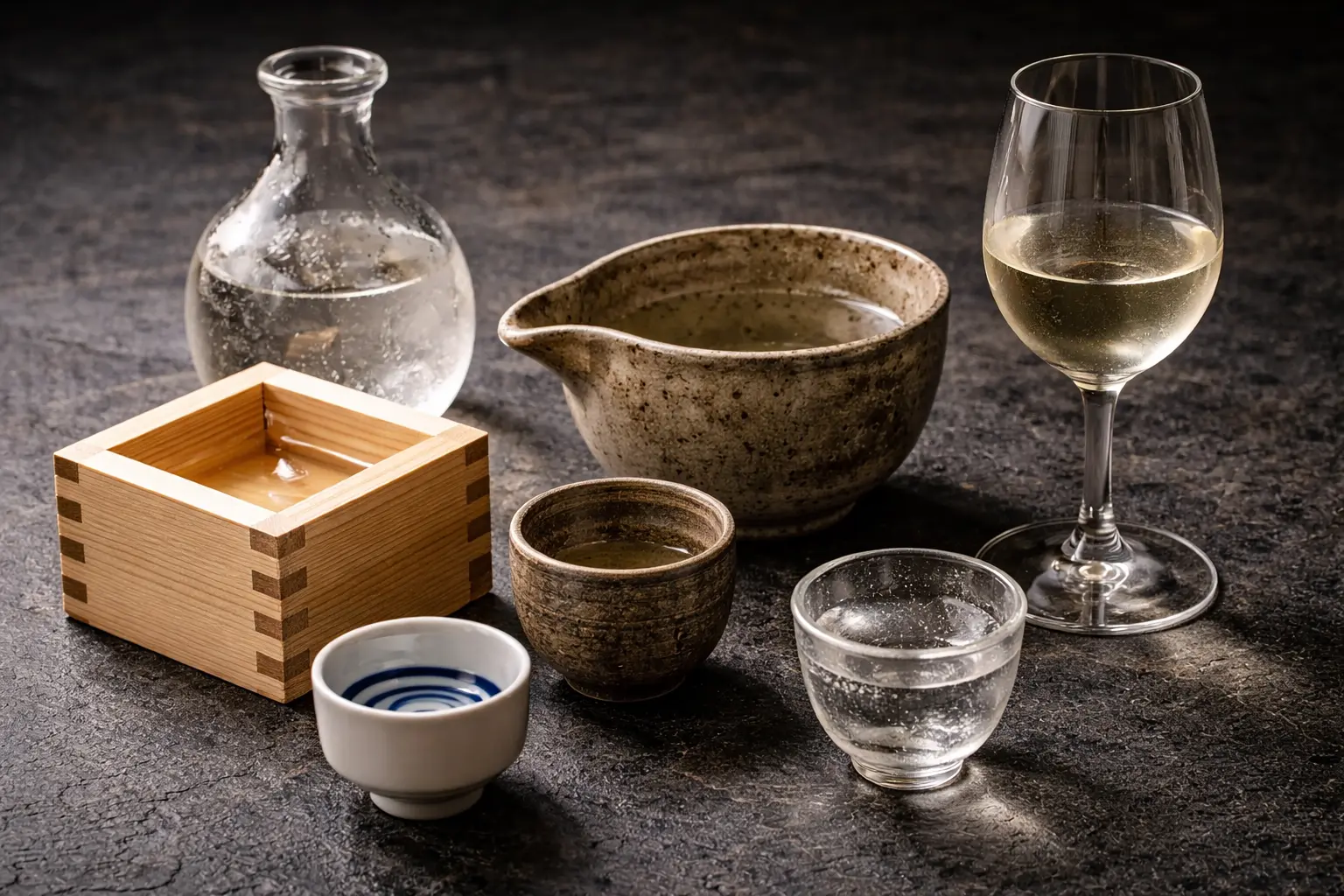
It’s a white ceramic cup with two concentric blue circles (called “janome” or snake’s eye) painted on the bottom. These circles help assess the sake’s transparency and color.
At home, you can use a white-interior ochoko or a wine glass as a substitute.
Preparation
Setting Up the Environment
Create an environment where you can focus on tasting.
Things to Avoid
- Strong scents (perfume, air fresheners, cooking odors)
- Noisy locations
- Extremely hot or cold environments
Ideal Conditions
- A bright room with minimal odors
- Room temperature around 20°C (68°F) is ideal
- A quiet place where you can concentrate
Preparing the Sake
Adjust the sake to the appropriate temperature before tasting.
For Evaluating as Chilled Sake Remove from the refrigerator and let it sit for about 10-15 minutes until it reaches 10-15°C (50-59°F). If it’s too cold, the aromas won’t develop fully.
For Evaluating at Room Temperature Around 15-20°C (59-68°F). This makes it easier to perceive the sake’s true aroma and flavor.
Resetting Your Palate
Before tasting, neutralize your palate.
Rinse your mouth with water or eat a small amount of unsalted crackers. Lingering flavors from previous food will affect your evaluation.
Step 1: See (Appearance)
Examining the Color
First, hold the sake up to the light to check its color.
Colorless to Pale Yellow The typical color of sake. Indicates freshness.
Golden to Amber Found in aged sake and koshu. The color deepens with time.
Slightly Greenish Tint Sometimes seen in nama (unpasteurized) sake.
Cloudiness Nigori sake appears milky white. Even clear sake may have slight haziness.
Examining Clarity
Check clarity through the janome pattern in the kikichoko.
Clear Indicates thorough filtration. Expect a clean taste.
Slightly Hazy Found in unfiltered or nama sake. Tends to have more umami.
Examining Viscosity
Tilt the glass and observe the “tears” running down the inside.
Tears Fall Slowly Higher sugar content or alcohol. Possibly a rich flavor.
Tears Fall Quickly Likely a lighter, more refreshing sake.
Step 2: Smell (Aroma)
Uwadachika (Top Note)
Bring the glass close to your nose and gently smell.
This is the “uwadachika”—the aroma that rises when sake is poured into a glass.
Common Aroma Descriptors
- Fruity: apple, banana, melon, pear
- Floral: white flowers, violet, jasmine
- Rice-derived: freshly cooked rice, mochi, rice bran
- Dairy: yogurt, butter, cream
- Aged notes: caramel, honey, nuts, Shaoxing wine
Putting aromas into words is difficult, but simply associating them with “what does this remind me of” is enough.
Fukumika (Palate Aroma)
The aroma you perceive when sake is in your mouth. Often different from the uwadachika.
As you roll the sake around your mouth, it warms to body temperature and new aromas emerge. Pay attention to the retronasal aroma.
Aroma Intensity
Aroma intensity is also an important evaluation point.
Bold: Common in ginjo sake. Rich and impressive aromas. Subtle: Common in junmai or honjozo. Restrained and calm aromas. Almost No Aroma: Some sakes are intentionally made this way.
Step 3: Taste (Flavor)
Taking a Small Sip
First, take a small amount (about 5-10ml) into your mouth.
Don’t swallow immediately—spread it throughout your mouth. Different parts of your tongue perceive different tastes.
Being Mindful of the Five Flavors
Sake flavor is primarily composed of the following elements.
Sweetness Perceived at the tip of the tongue. A smooth mellowness from sugars.
Acidity Perceived on the sides of the tongue. Refreshing sharpness from organic acids. Creates structure and definition.
Umami Perceived across the entire tongue. Richness and depth from amino acids.
Bitterness Perceived at the back of the tongue. Subtle bitterness adds complexity. Too much is a flaw.
Astringency A puckering sensation felt throughout the mouth. In small amounts, it tightens the flavor.
Mouthfeel and Finish
Mouthfeel The impression when sake first enters your mouth. Light, smooth, sharp, etc.
Mid-palate The flavor that spreads in your mouth. Where you sense complexity and fullness.
Finish The taste and aroma that linger after swallowing. Does it persist or cut off cleanly?
Evaluation Points
Balance
Are sweetness, acidity, umami, and bitterness harmoniously balanced?
If one element dominates, it becomes tiring to drink. Well-balanced sake makes you want to keep drinking.
Complexity
Is it multifaceted rather than one-dimensional?
Simple sake isn’t bad, but complex sake offers new discoveries with each sip.
Character
Does the sake have distinctive characteristics?
Sake with personality is more memorable than generic ones.
Checking for Flaws
Check for these common faults.
- Hineka: An unpleasant aged smell in old sake
- Nikko-shu: An odor from light-struck sake
- Sanpai-shu: A sour, vinegar-like smell
- Foreign matter: Visible particles
Tasting Comparisons at Home
Start with 2-3 Types
Comparing too many at once makes it hard to discern differences.
Start with 2-3 types and practice noticing the differences.
Set a Theme
Having a theme makes differences easier to identify than random tasting.
Recommended Themes
- Different grades from the same brewery (junmai vs. junmai daiginjo)
- Same rice, different breweries (comparing sakes using Yamada Nishiki)
- Same region, different breweries (comparing Niigata sakes)
- Same sake at different temperatures (chilled vs. warm)
Take Notes
Put your impressions into words and note them down.
A smartphone note app is fine. Record in your own words: “fruity,” “dry,” “clean.” Looking back later reveals your preferences.
Take Photos
Photographing labels helps when looking back later.
Capture not just the brand name, but also the classification (junmai ginjo, etc.) and rice polishing ratio.
Tips from the Professionals
Don’t Slurp
Professional tasters have a technique of slurping to mix the sake with air.
However, this requires practice. At home, simply rolling the sake around in your mouth is sufficient.
Spitting Out
At competitions, tasters often spit to evaluate many sakes.
At home, it’s fine to swallow, but when comparing many types, take small sips to avoid getting intoxicated.
Take Your Time
Don’t rush to the next sake.
Carefully observe each sake before moving on. Taking time helps you notice subtle differences.
Conclusion
The basics of sake tasting are three steps: see, smell, and taste.
Even if you can’t tell the differences at first, developing the habit of conscious observation will gradually sharpen your senses. There’s no right or wrong—what matters is putting what you perceive into words.
Through sake tasting, the world of sake will expand even further. Why not try it with your next glass?
For more about sake flavor types, see Types of Sake Flavors.
For tasting events, check out Sake Events and Festival Guide.