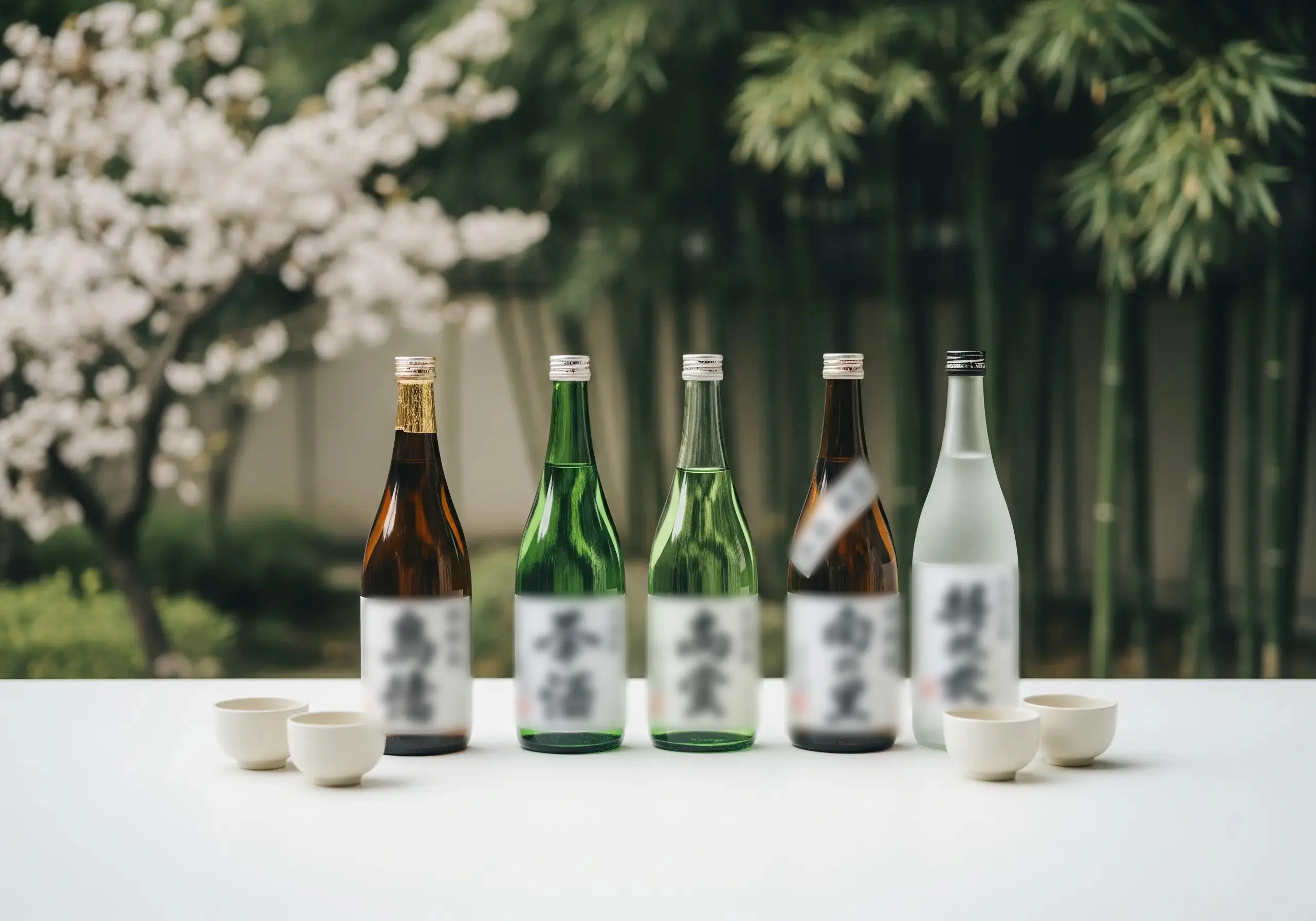
Sake vs Shochu: Comparing Ingredients, Production Methods, and Flavors
A comprehensive comparison of sake and shochu. Learn about the differences in ingredients, production methods, alcohol content, flavors, and serving styles.
The Difference Between Sake and Shochu
Have you ever been asked at an izakaya, “What’s the difference between sake and shochu?” and struggled to explain?
Both are traditional Japanese alcoholic beverages. However, their ingredients, production methods, and flavors are actually quite different. Understanding these differences helps you appreciate each one more deeply.
The Fundamental Difference: Brewed vs Distilled
Sake is a “Brewed” Beverage
Sake is a “brewed” beverage, where the alcohol produced through fermentation is consumed directly.
It belongs to the same category as wine and beer. Since there’s a natural limit to the alcohol content achievable through fermentation, sake typically has an alcohol content of around 15-16%.
Shochu is a “Distilled” Spirit
Shochu is a “distilled” spirit, where the fermented liquid is distilled to concentrate the alcohol.
It belongs to the same category as whisky, brandy, and vodka. Through distillation, the alcohol content increases, typically ranging from 25-35%.
This distinction between “brewing” and “distillation” is the starting point for all other differences.
Differences in Ingredients
Sake Ingredients
The main ingredients for sake are rice, rice koji, and water.
Rice Sake-specific rice varieties (such as Yamada Nishiki and Gohyakumangoku) or regular table rice are used. The starch in rice is converted to sugar, which then becomes alcohol.
Rice Koji This is steamed rice with koji mold cultivated on it. It plays the role of breaking down rice starch into sugar.
Water Large amounts are used as brewing water. Water quality significantly affects the taste of the sake.
Shochu Ingredients
Shochu is categorized by its main ingredient.
Sweet Potato Shochu (Imo-jochu) Made primarily from sweet potatoes. Kagoshima Prefecture is the main production area. Known for its sweet aroma and rich body.
Barley Shochu (Mugi-jochu) Made primarily from barley. Oita Prefecture is the main production area. Known for its clean, crisp taste.
Rice Shochu (Kome-jochu) Made primarily from rice. Kumamoto Prefecture (Kuma Shochu) is famous. Has a flavor similar to sake.
Brown Sugar Shochu (Kokuto-jochu) Made primarily from brown sugar. Production is only permitted in the Amami Islands.
Buckwheat Shochu (Soba-jochu) Made primarily from buckwheat. Produced in Nagano and Miyazaki Prefectures.
While koji (rice or barley koji) is also used in shochu, the main ingredient is often something other than rice.
Differences in Production Methods
Sake Production
Sake is made through “multiple parallel fermentation,” a rare method in the world.
- Rice Polishing: Removing the outer layers of brown rice
- Washing and Soaking: Washing the rice and soaking it in water
- Steaming: Steaming the rice
- Koji Making: Cultivating koji mold on steamed rice
- Brewing: Mixing koji, steamed rice, water, and yeast
- Fermentation: Saccharification and alcohol fermentation occur simultaneously
- Pressing: Squeezing the moromi to extract the sake
- Pasteurization: Heat sterilization (skipped for unpasteurized sake)
- Storage and Aging
- Bottling and Shipping
Shochu Production
Shochu adds “distillation” after fermentation.
- Koji Making: Cultivating koji mold on rice or barley
- Primary Fermentation: Mixing koji, water, and yeast to ferment
- Secondary Fermentation: Adding the main ingredient (sweet potato, barley, etc.) for further fermentation
- Distillation: Heating the fermented liquid, vaporizing the alcohol, then cooling it
- Storage and Aging
- Dilution: Adding water to adjust alcohol content
- Bottling and Shipping
The distillation method also affects the flavor.
- Pot Still Distillation (Honkaku Shochu): Retains the flavor of the ingredients
- Continuous Distillation (Korui Shochu): Clean taste with minimal character
Differences in Alcohol Content
| Type | Alcohol Content |
|---|---|
| Sake | 15-16% (undiluted sake is 18-20%) |
| Honkaku Shochu | 25-35% |
| Korui Shochu | Under 35% (commercial products are often 20-25%) |
Shochu has about twice the alcohol content of sake. Therefore, it’s often enjoyed on the rocks or diluted with water.
Differences in Calories
Comparing the same volume (100ml):
| Type | Calories (per 100ml) |
|---|---|
| Sake | About 100-110 kcal |
| Shochu (25%) | About 140 kcal |
However, since shochu is often diluted, the calories per serving aren’t necessarily higher. Additionally, shochu contains almost no carbohydrates.
Differences in Flavor
Sake Flavor Profile
Characteristics
- Sweetness and umami derived from rice
- Complex aromas (fruity, floral, rice, dairy, etc.)
- Balance of acidity and bitterness
- Taste changes significantly with temperature
Flavor Descriptions Sweet, dry, light, rich, fruity, crisp, full-bodied, etc.
Shochu Flavor Profile
Characteristics
- Aroma and flavor derived from the ingredients
- Strength from the alcohol
- Clean finish
- Taste varies depending on how it’s diluted
Differences by Ingredient
- Sweet Potato Shochu: Sweet aroma, rich taste
- Barley Shochu: Clean and crisp, minimal character
- Rice Shochu: Mellow, flavor similar to sake
- Brown Sugar Shochu: Sweet aroma, light finish
Differences in Serving Styles
How to Drink Sake
Chilled (Reishu) Served cold from the refrigerator. Suitable for aromatic sake like ginjo.
Room Temperature (Hiya) Served at room temperature. Suitable for enjoying the umami of junmai sake.
Warmed (Kan-zake) Served warm. Suitable for honjozo and junmai sake. Great for warming up.
Sake is basically enjoyed straight, and diluting with water or ice is not common.
How to Drink Shochu
On the Rocks Served with ice. Suitable for aromatic honkaku shochu.
Mizuwari (Water) Diluted with water. Easy to drink with meals.
Oyuwari (Hot Water) Diluted with hot water. Enhances the aroma and warms the body.
Soda-wari (Soda) Diluted with carbonated water. Refreshing and easy to drink.
Straight Served as is. Due to the high alcohol content, sip slowly in small amounts.
Diluting shochu is common. You can change the serving style based on preference or mood.
Food Pairing
Foods That Pair Well with Sake
- Sashimi and sushi (raw fish)
- Simmered dishes and grilled fish
- Tofu dishes
- Tempura
- Hot pot dishes
- Cheese
Sake’s delicate flavors pair well with Japanese cuisine in general.
Foods That Pair Well with Shochu
- Yakitori and grilled offal
- Gyoza and fried chicken
- Sashimi (especially fatty fish)
- Braised pork belly
- Pickles and salted fish guts
Pairs well with bold and fatty dishes. Shochu’s alcohol refreshes the palate.
Differences in Storage
Storing Sake
- Store in a cool, dark place or refrigerate
- Unpasteurized sake must be refrigerated
- Consume within 1-2 weeks after opening
- Avoid light exposure
Storing Shochu
- Room temperature storage is OK
- Avoid direct sunlight
- Relatively long-lasting after opening
- Won’t freeze even in the freezer (due to high alcohol content)
Shochu is easy to store. Its high alcohol content makes it resistant to deterioration.
Differences in Price Range
Sake
- Regular sake/Honjozo: ¥1,000-2,000 (720ml)
- Junmai/Junmai Ginjo: ¥1,500-3,000 (720ml)
- Junmai Daiginjo: ¥3,000-5,000+ (720ml)
Shochu
- Korui Shochu: ¥500-1,000 (1.8L)
- Honkaku Shochu: ¥1,000-2,000 (720ml)
- Premium Shochu: ¥3,000+ (720ml)
Generally, at the same price point, shochu offers more volume and tends to be better value.
Which Should You Choose?
When Sake is Recommended
- Enjoying delicate Japanese cuisine
- When you want to appreciate the aroma
- When you want to enjoy temperature variations
- When you want to sip slowly in small quantities
When Shochu is Recommended
- Eating bold-flavored dishes
- Drinking over a long period
- When you want to enjoy various ways of diluting
- When watching calories (zero carbohydrates)
Summary
Here’s a summary of the differences between sake and shochu:
| Item | Sake | Shochu |
|---|---|---|
| Category | Brewed | Distilled |
| Main Ingredient | Rice | Sweet potato, barley, rice, etc. |
| Alcohol Content | 15-16% | 25-35% |
| Serving Style | Straight, warmed | On the rocks, diluted |
| Storage | Cool/dark or refrigerated | Room temperature OK |
It’s not about which one is better. Each has its own charm, and knowing when to choose each is the key to enjoying Japanese alcohol.
By knowing both, you can expand your drinking horizons. If you haven’t tried one yet, we encourage you to compare them.
For differences between sake and wine, see Sake vs Wine.
Learn more about sake basics at What is Sake?.