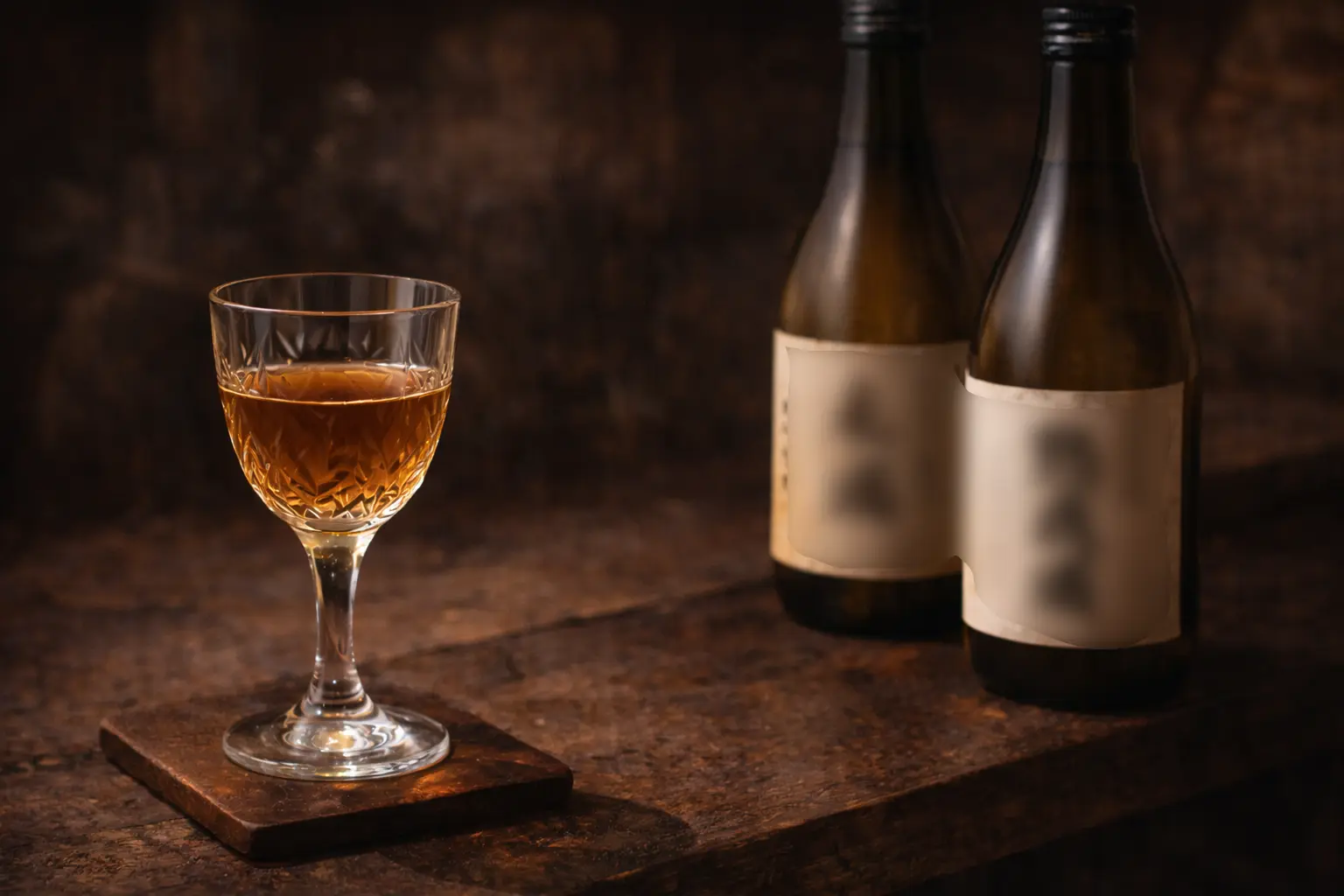
Koshu and Aged Sake: Flavors Transformed by Time
A thorough exploration of aged sake (koshu). Discover how aging transforms flavor, the different types available, selection tips, and the best ways to enjoy this time-honored delicacy.
Deep Flavors Born of Time
Many believe sake should be enjoyed fresh.
Yet, like wine, sake can be aged. These are called koshu or jukusei-shu (aged sake).
Time creates complex flavors entirely different from new sake’s appeal.
What Is Koshu/Aged Sake?
Definition
Generally, sake aged three or more years after production is called “koshu” or “jukusei-shu” (aged sake).
There’s no strict legal definition. Some breweries call one-year-old sake “aged.” Long-aged varieties include 5-year, 10-year, and even 20+ year expressions.
The Aging Mechanism
Sake transforms over time through several processes.
Amino-Carbonyl Reaction (Maillard Reaction)
Sugars and amino acids react to produce brown pigments. This causes the amber color change and creates toasty aromas.
Esterification
Acids and alcohol combine to form new aromatic compounds. Fruity aromas evolve into complex notes.
Oxidation
Subtle oxygen exposure softens the flavor. Rough edges smooth out, creating mellowness.
Types of Aged Sake
By Color
Light-Aged Type (Tanjuku)
Slowly aged at low temperatures. Color remains nearly clear to pale gold. Delicate flavors are preserved. Common for aged ginjo.
Deep-Aged Type (Nojuku)
Aged at room temperature or slightly warmer. Color ranges from amber to brown. Rich, complex flavors. Common for aged junmai and honjozo.
By Aging Method
Bottle Aging
Aged after bottling. Oxidation is minimized. Enjoy subtle transformations.
Tank Aging
Aged in large tanks. Maintains consistent quality. Suited for larger production.
Barrel Aging
Aged in wooden barrels. Gains barrel-derived aromatics. Whisky-like character.
By Rice Variety
Yamada Nishiki Aged Sake
Maintains elegance while developing complexity. Refined aging.
Omachi Aged Sake
Bold flavors deepen further. Rich finish.
Gohyakumangoku Aged Sake
Clean flavors gain roundness. Well-balanced aging.
Changes Through Aging
Color Changes
New sake: Nearly colorless 1-2 years: Pale yellow 3-5 years: Golden 5-10 years: Amber 10+ years: Brown to caramel
Color transformation is proof of aging. Beautiful amber hues are time’s gift.
Aroma Changes
New Sake Aromas Fresh fruit, floral notes, bright character.
Early Aging (1-3 years) Aromas settle and mellow. Honey notes begin emerging.
Mid Aging (3-5 years) Caramel, nuts, dried fruit aromas develop.
Long Aging (5+ years) Complex sherry or Shaoxing wine-like notes. Spice, chocolate, coffee nuances appear.
Flavor Changes
New Sake Fresh, lively, somewhat rough.
Early Aging Edges soften, becomes easier to drink.
Mid Aging Sweetness, acidity, and umami harmonize. Complexity increases.
Long Aging Rich and mellow. Long finish. Unique depth emerges.
Choosing Aged Sake
Reading the Label
Aging Period
Often shown as “X-year aged” or “X-year koshu.” Blends may show “average X years.”
Vintage (BY)
Brewery Year indicated. “BY2020” means brewed in 2020. Difference from current year shows aging time.
Aging Method
“Low-temperature aged,” “room-temperature aged,” “ice-temperature aged,” etc. Indicates flavor tendencies.
For Beginners
3-5 Year Light-Aged Type
Still retains sake character while showing aging benefits. Approachable, ideal for introduction.
Aged Sake from Famous Breweries
Reliable quality control. Low risk of disappointment.
For Advanced Enthusiasts
10+ Year Long-Aged
Enjoy complex flavors. Interesting comparisons with wine and whisky.
Deep-Aged Type
Distinctive character. Challenge food pairings.
How to Enjoy Aged Sake
Temperature
Chilled (10-15°C / 50-59°F)
Suited for light-aged types. Enjoy delicate aromas. Works as an aperitif.
Room Temperature (18-22°C / 64-72°F)
Temperature where aged sake aromas open best. Recommended for deep-aged types. For savoring slowly.
Lukewarm (Around 40°C / 104°F)
Surprisingly compatible serving style. Sweetness intensifies, becoming mellow. Perfect for winter.
Vessels
Wine Glass
Optimal for enjoying aromas. Burgundy-style especially recommended. Opens complex aged sake aromas.
Brandy Snifter
For deep-aged types. Enjoy how hand warmth changes the aroma.
Guinomi (Sake Cup)
For Japanese aesthetic enjoyment. Thick-walled ones recommended.
Changes After Opening
Aged sake continues evolving after opening.
Day 1: Somewhat closed Days 2-3: Aromas begin opening After 1 week: Even more mellow
No need to rush drinking. Enjoying the evolution is part of aged sake’s pleasure.
Food Pairing with Aged Sake
Dishes for Light-Aged Types
Simmered White Fish
Harmony with refined sweetness. Enhances delicate flavors.
Chawanmushi (Savory Custard)
Dashi umami matches aged sake umami.
Mild Cheeses
Mozzarella, Camembert, etc.
Dishes for Deep-Aged Types
Chinese Cuisine
Sherry-like flavors pair brilliantly with Chinese food. Mapo tofu, sweet and sour pork, Peking duck.
Rich Meat Dishes
Beef stew, braised pork belly, roast duck.
Blue Cheese
Rich aged sake and blue cheese make an exquisite combination.
Chocolate
Dark chocolate with long-aged sake. Adult sophistication.
Dried Fruits
Dried persimmon, raisins, figs. Echo aged sake’s aromatics.
As a Digestif
Instead of dessert, or alongside it.
Sweet aged sake is perfect after dinner. A time to slowly enjoy the finish.
Storing Aged Sake
Unopened Storage
Cool, Dark Place Essential
Light and heat accelerate aging too much. Closet depths or under-floor storage are ideal. Stable temperature locations.
Store Upright
Unlike wine, store standing up. Same for cork-stoppered bottles.
Age Your Own
Buying new sake and aging it yourself is an option. Build a cellar by buying a little each year.
After Opening
Refrigerate
Once opened, refrigerate. However, no rush to finish.
Enjoyable for 2-4 Weeks
Aged sake resists deterioration. May actually improve after opening.
History of Aged Sake Culture
Japanese Aged Sake History
Aged sake has actually existed since ancient times.
During the Edo period, “three-year sake” and “five-year sake” were prized as luxury items. Records show sales under names like “koshu” and “dai-koshu.”
After the Meiji era, preference for new sake spread, and aged sake culture declined. Recently, influenced by wine, interest has revived.
World Aged Beverage Cultures
Shaoxing Wine (China)
The most famous aged alcoholic beverage. 10, 20, even 50-year expressions exist. Often compared to Japanese koshu.
Madeira Wine (Portugal)
Unique heated aging method. Bottles over 100 years old still exist.
Sherry (Spain)
Distinctive solera system aging. Blending old and new wines.
Getting Started with Aged Sake
Where to Buy
Specialty Shops
Stores carrying aged sake are limited. Look for specialty liquor stores or department store wine sections.
Direct from Breweries
Through brewery websites or tours. May find limited editions.
Online Shops
Wide selection. Can reference reviews.
Your First Bottle
If unsure, consider these:
- 3-5 year aged junmai
- Standard aged sake from famous breweries
- Start with light-aged types
Expensive long-aged bottles can wait until you understand aged sake flavors.
Summary
Aged sake is art created by time.
Different from new sake’s freshness, it offers deep, complex flavors. The amber liquid holds the weight of years.
Like wine and whisky, an era of enjoying aged sake has arrived. Find your special bottle and taste the passage of time.
To learn more about sake varieties, see The World of Sparkling Sake.