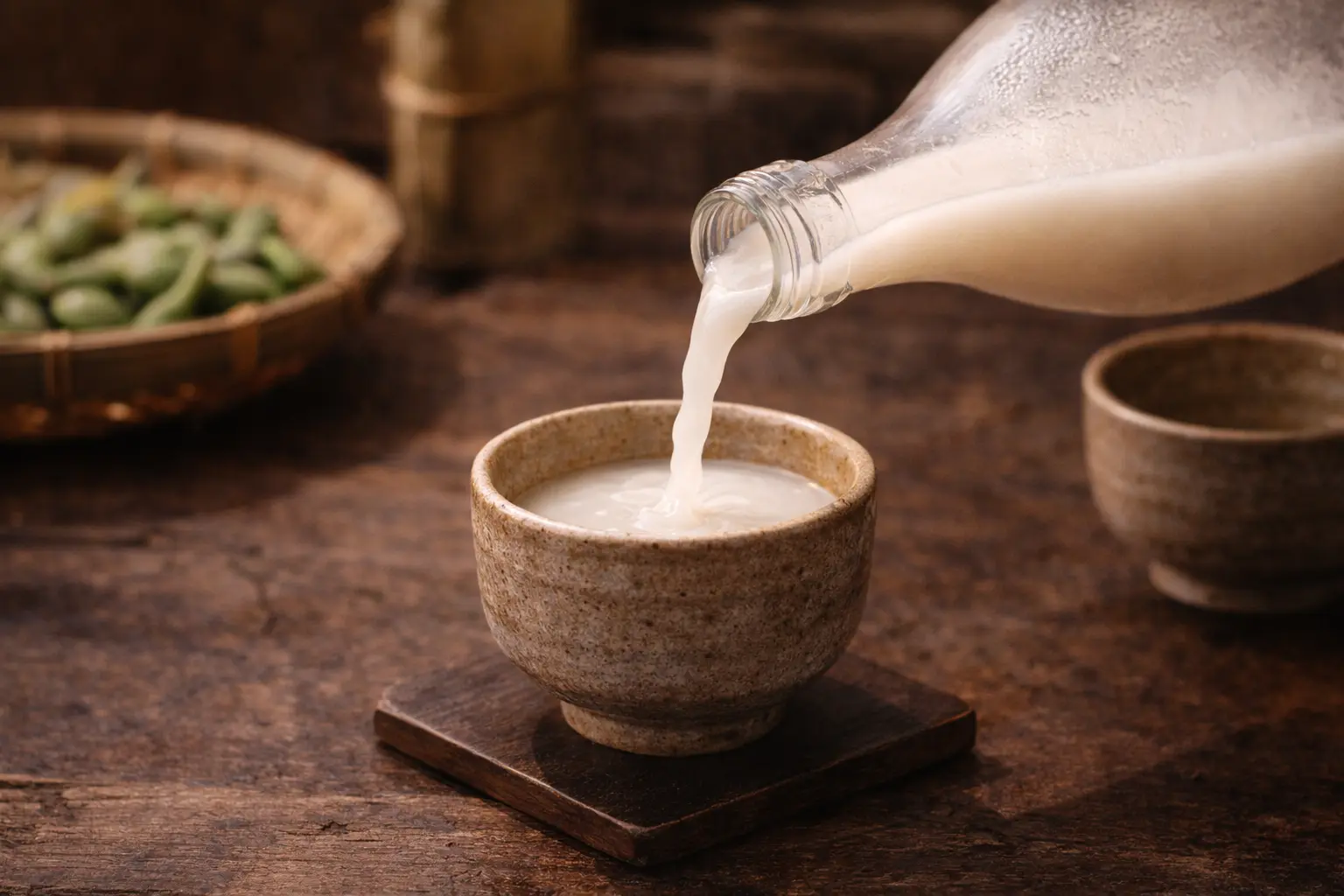
The World of Nigori and Doburoku: Enjoying Cloudy Sake
From the difference between nigori and doburoku to their appeal, how to choose, and ways to enjoy them. A beginner's guide to the deep world of cloudy sake.
The Appeal of Cloudy Sake
If you’re used to clear sake, the white cloudy liquid of nigori might not look like sake at first. But one sip can change that impression. Creamy, sweet, almost like dessert. This is sake?
In fact, all sake used to be cloudy. Clear seishu is relatively recent technology. Cloudy sake is the original form of Japanese sake.
Nigori and Doburoku Are Different
They’re often confused, but they’re different things.
Doburoku
Rice, rice koji, and water fermented and drunk as-is. Not filtered.
Legally it’s not “seishu” (refined sake) but “other brewed alcoholic beverage.” Because under tax law, without the “filtering” step, it can’t be called seishu.
Farmers used to brew their own, but now you need a license. Places like Tono City in Iwate Prefecture serve doburoku at farm inns thanks to special “doburoku zone” regulations.
Doburoku has whole rice grains remaining. Thick, with strong sweetness. Around 14-17% alcohol.
Nigori Sake
Moromi (fermented mash) filtered through coarse cloth or mesh. Filtered, but fine rice particles and sediment remain.
Legally classified as “seishu.” Because it’s been filtered.
No rice grains remain (or very fine ones). Ranges from smooth to thick. Both sweet and dry versions exist.
Active Nigori: Open with Caution
Among nigori, anything labeled “active nigori” (kassei nigori) is still fermenting in the bottle.
Meaning carbon dioxide keeps being produced. Open it and it might gush.
Open an insufficiently chilled active nigori too fast and it can spray sake all the way to the ceiling.
Caution: Always chill active nigori. Minimum 3 hours in the refrigerator. Don’t shake. Open slowly. If it starts gushing, put the cap back on.
To be safe, open active nigori over the sink, or even outdoors.
Flavor Variations
Nigori isn’t just one type.
Cloudiness Level
Usunigori has light cloudiness with some transparency. Light taste, easy to pair with food.
Standard nigori has creamy mouthfeel. Good balance of sweetness and umami.
Thick type is seriously rich. Enjoy like dessert. Best as a digestif.
Sweet vs Dry
Most are sweet, but dry nigori exists.
Sweet versions stop fermentation with sugar remaining. Easy for sake beginners. Pairs with fruit and dessert.
Dry versions are crisp. Pairs well with food. Overturns the “nigori is sweet” assumption.
Acidic Style
Some types have pronounced lactic acid-derived acidity. Yogurt-like flavor. Great with cheese.
Tips for Drinking
Temperature
Chilled (5-10°C) is most popular. Enjoy refreshing sweetness and creaminess. Active types must be chilled.
Room temperature (15-20°C) brings out more rice umami. Viscosity increases.
Surprisingly, lukewarm kan (around 40°C) works too. Sweetness intensifies, perfect for winter. But never heat active types. They’ll gush.
Handling the Sediment
Left alone, nigori separates into clear top and settled sediment.
Mixing is standard. Gently turn the bottle upside down to create uniform cloudiness.
Another recommended approach: start with the clear top, mix in sediment later. Enjoy two drinks in one. The top is smooth, mixed is rich. Like drinking different sake.
Vessels
Glass lets you see the cloudiness. Visual enjoyment too. Wine glasses work.
For ceramic, black or indigo vessels are best. White vessels don’t show off the cloudiness.
Food Pairings
Nigori pairs with unexpected dishes.
Cream-based—Cream stew, gratin, carbonara. Harmonizes with matching creaminess. Doesn’t have to be Japanese food.
Fermented foods—Cheese, yogurt, pickles. Affinity between fermented things. Especially acidic nigori with cheese—can recommend to wine lovers.
Spicy dishes—Mapo tofu, curry, ethnic food. Sweet nigori tames the heat. Surprisingly good match.
Desserts—Fruit, ice cream, wagashi. Sweet nigori as dessert wine. Pouring nigori over vanilla ice cream is a luxury.
Doesn’t match delicate sashimi. Nigori overpowers it.
Visiting Doburoku Zones
For authentic doburoku, visit a doburoku special zone.
Tono City, Iwate Prefecture pioneered doburoku zones. Stay at a farm inn and they’ll serve homemade doburoku. Made from local rice and water, a flavor you can only taste there.
Shirakawa-go, Gifu Prefecture is famous for its doburoku festival. At the autumn harvest festival, doburoku is served in Shinto ceremonies. Drinking doburoku among gassho-zukuri houses feels like time travel.
At Tono’s farm inns, you may even be served doburoku pressed that very morning. Sweet, but with a clean finish and a somehow nostalgic, rustic character—a taste fundamentally different from store-bought nigori.
Storage Notes
Nigori deteriorates easily. Needs more care than regular sake.
Refrigerate as standard. Active types must go in the fridge. Temperature rises, fermentation continues, flavor changes.
Finish within a week of opening. If sediment settles, gently mix before drinking. If aroma fades, try warming it.
Aging is for experts. Some nigori can age, but long-term storage of active types is dangerous. Could gush.
The Origin of Sake
If you’re used to clear seishu, nigori might look strange.
But this is sake’s origin. Before filtering technology, all sake was white and cloudy. Sake offered to gods, sake farmers drank at celebrations—all cloudy.
That rustic flavor has appeal seishu doesn’t. You feel rice’s bounty directly. Fermentation’s power spreads straight across your palate.
Fresh-pressed winter nigori, spring active nigori. Try each season’s flavors.
For more about sake types, see The World of Aged Sake.
For sparkling sake, visit The World of Sparkling Sake.