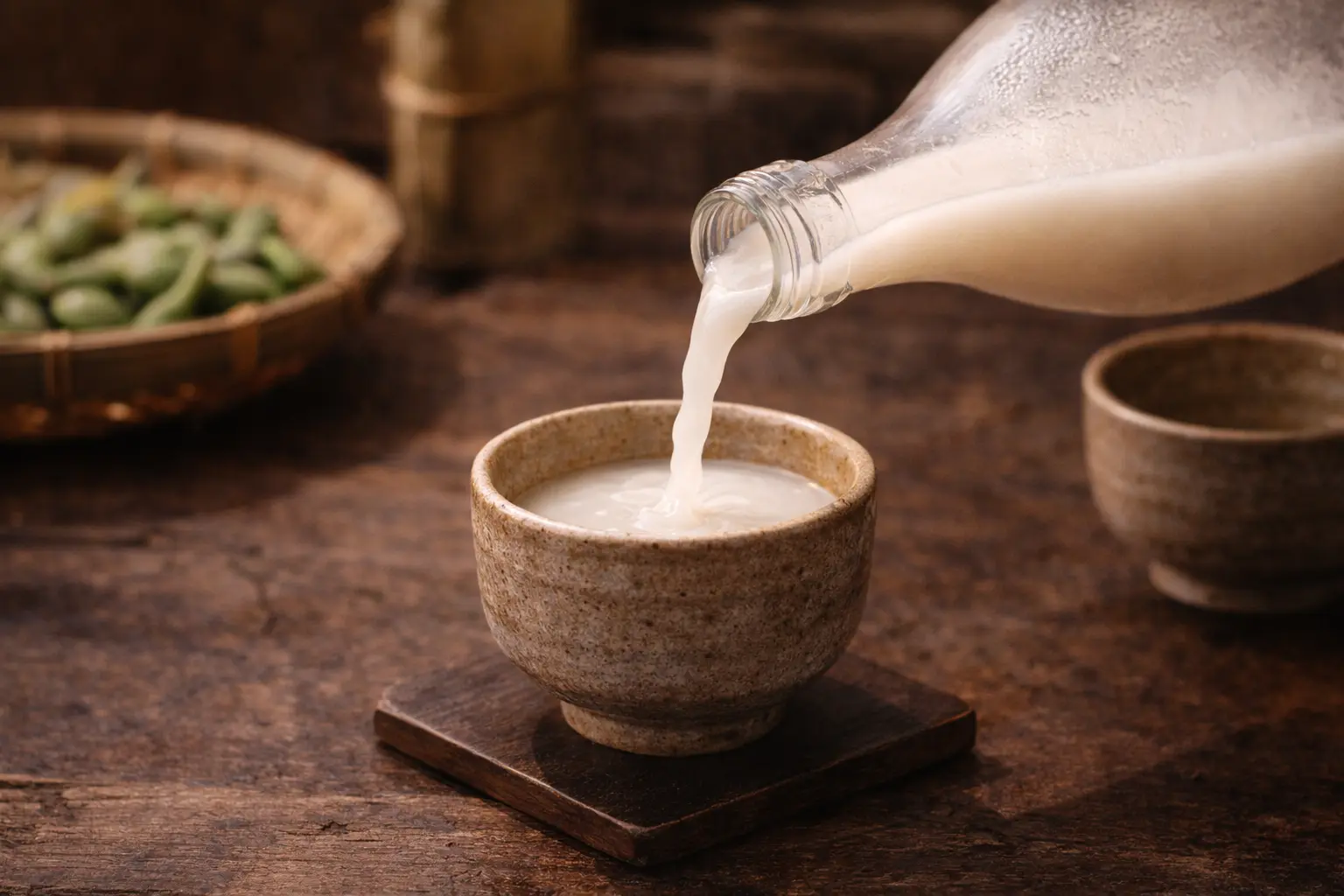
The World of Nigori and Doburoku: Enjoying Cloudy Sake
A comprehensive guide to nigori sake and doburoku, from their differences to selection tips and serving suggestions. Discover the deep world of cloudy Japanese sake.
The Charm of Cloudy Sake
In modern times, clear sake dominates the market. But once, all sake was white and cloudy.
Nigori sake and doburoku represent the origins of Japanese sake. Their rustic flavors offer a charm that clear sake simply cannot match.
The Difference Between Nigori and Doburoku
Doburoku
Doburoku is made from rice, koji, and water that has been fermented but not filtered.
Legally classified as “other brewed beverages” in Japan, it cannot be called “seishu” (clear sake) under Japanese liquor tax law because it hasn’t undergone filtration. While farmers once brewed it at home, a license is now required.
Characteristics:
- Rice grains remain visible
- Thick, creamy texture
- Strong sweetness
- Alcohol content around 14-17%
Nigori Sake
Nigori is sake that has been coarsely filtered through mesh or cloth.
Because it’s filtered through wide-mesh material, fine rice particles and sediment remain. Legally classified as “seishu” (clear sake).
Characteristics:
- No visible rice grains (or very fine particles)
- Texture ranges from smooth to creamy
- Flavor profiles from sweet to dry
- Same alcohol levels as regular sake
Active Nigori (Kassei Nigori)
Nigori sake where fermentation continues in the bottle.
Contains carbon dioxide and may fizz when opened. Fresh and refreshing taste. Must be refrigerated and consumed promptly.
Types of Nigori Sake
By Cloudiness Level
Usu-nigori (Lightly Cloudy)
Slightly hazy with remaining transparency. Light and delicate flavor. Works well as a food pairing sake.
Standard Nigori
Moderate cloudiness. Creamy mouthfeel. Good balance of sweetness and umami.
Thick/Creamy Type
Dense and rich texture. Can be enjoyed like dessert. Best as an after-dinner drink.
By Flavor Profile
Sweet Nigori
High residual sugar with sweet taste. Easy drinking for sake beginners. Pairs well with desserts and fruits.
Dry Nigori
Clean, crisp flavor. Easy to pair with food. Works as a palate cleanser for rich dishes.
Acidic Nigori
Characterized by lactic acid-derived acidity. Yogurt-like quality. Excellent with cheese.
The Appeal of Nigori Sake
Direct Rice Umami
Components filtered out in clear sake remain intact.
Rice-derived sweetness, umami, and richness. Yeast-derived aromas and flavors. Experience the full bounty of fermentation.
Creamy Mouthfeel
The smooth texture is unique to nigori.
Silky sensation on the tongue. Sweetness spreading through the palate. Long finish. An experience different from regular sake.
Seasonality
Many nigori sakes are seasonal products from winter to spring.
Fresh-pressed nigori during new sake season is exceptional. Enjoy the sense of seasons while drinking.
Visual Beauty
The aesthetic appeal of white, cloudy liquid.
Mystical appearance when poured into a glass. Perfect harmony with Japanese vessels. A sake to enjoy with your eyes.
How to Choose Nigori Sake
Reading the Label
Alcohol Content
Most similar to regular sake at 15-16%. Genshu (undiluted) types run 17-19%. Low-alcohol versions are 8-12%.
Sake Meter Value (SMV)
Larger negative numbers indicate sweeter sake. Nigori often ranges from -10 to -30 (sweet). Dry nigori is +1 to +5.
Active/Refrigeration Required
Labels showing “active,” “nama,” or “refrigeration required” indicate ongoing fermentation. Handle with care when opening.
For Beginners
- Sweet usu-nigori
- Lower alcohol types
- Nigori from well-known breweries
For Enthusiasts
- Authentic doburoku from special zones
- Active nigori genshu (undiluted)
- Aged nigori sake
How to Enjoy Nigori Sake
Temperature
Chilled (5-10°C / 41-50°F)
The most popular serving style. Refreshing sweetness and creaminess. Active types must be served cold.
Room Temperature (15-20°C / 59-68°F)
Rice umami becomes more prominent. Texture thickens. Sweetness mellows.
Lukewarm (Around 40°C / 104°F)
A surprisingly delicious way to serve. Sweetness intensifies and texture increases. Perfect for winter.
Pouring Technique
Nigori sake has sediment that settles.
Mixed Style
Gently turn the bottle upside down to mix sediment. Enjoy uniform cloudiness. The standard approach.
Separate Style
First enjoy the clear top portion. Later mix in the sediment for richness. Two experiences from one bottle.
Opening Active Nigori
Sparkling types require caution.
- Chill thoroughly (cold temperatures reduce fizzing)
- Don’t shake the bottle
- Open the cap slowly
- If it starts to overflow, close the cap
- Try again once it settles
Opening over a sink or outdoors is a safe approach.
Vessels
Glass
See the cloudiness inside. Enjoy the visual beauty. Wine glasses work well too.
Ceramic
White cloudiness doesn’t show well in white vessels. Black or indigo recommended. Suits Japanese aesthetics.
Masu (Wooden Box)
Traditional enjoyment. The wood aroma complements nigori well.
Food Pairing with Nigori Sake
Complementary Dishes
Cream-Based Dishes
Cream stew, gratin, carbonara. Creamy flavors harmonize together.
Fermented Foods
Cheese, yogurt, pickles. Affinity between fermented products. Especially good with acidic nigori.
Sweet Dishes
Simmered dishes, teriyaki, sweet-savory preparations. Sweet nigori pairs beautifully.
Spicy Dishes
Mapo tofu, curry, ethnic cuisine. Sweet nigori tempers the heat.
Desserts
Fruits, ice cream, Japanese sweets. Sweet nigori as a dessert wine.
Combinations to Avoid
- Delicate sashimi (nigori flavor overpowers)
- Light, clean dishes (imbalanced)
- Strongly bitter foods (poor compatibility)
Visiting Doburoku Special Zones
What Are Doburoku Special Zones?
Created through Japan’s 2002 Structural Reform Special Zones system.
Normally, sake production requires a minimum of 6 kiloliters annually. Special zones allow farm inns and similar establishments to produce small quantities of doburoku.
Doburoku Special Zones Across Japan
Tono City, Iwate Prefecture
Pioneer of doburoku special zones. Famous for “Tono Doburoku.” Homemade doburoku available at farm inns.
Sado City, Niigata Prefecture
Doburoku made with Sado rice. Flavor reflecting island terroir.
Nagano Prefecture
Multiple special zones exist. Doburoku made with pure highland water.
Shimane Prefecture
Doburoku culture connected to Izumo mythology.
Doburoku Festivals
Festivals celebrating doburoku are held throughout Japan.
The Shirakawa-go Doburoku Festival in Gifu is famous. Doburoku is offered as a Shinto ritual. Connected to autumn harvest festivals.
Storing Nigori Sake
Refrigeration is Essential
Nigori sake deteriorates easily.
Active types must be refrigerated. Rising temperatures accelerate fermentation and change the flavor.
Finish Quickly After Opening
Ideally drink within one week of opening.
If sediment settles, gently mix before drinking. If aroma fades, try warming it.
Aging for Advanced Enthusiasts
Some nigori sakes can be aged.
Aging with sediment creates complex flavors. However, long-term storage of active types is dangerous.
Summary
Nigori sake and doburoku represent sake’s original form.
Before filtration, these drinks contain all the bounty of rice. They offer charms different from clear sake.
Creamy texture, rustic sweetness, seasonal character. Once you try them, you’ll discover their appeal.
Fresh-pressed nigori in winter, active nigori in spring. Why not enjoy the seasonal variations?
To learn more about sake varieties, see The World of Aged Sake.