Sake and Japanese Annual Events: New Year, Hinamatsuri, Obon
Explore the deep connection between sake and Japanese annual events. From New Year's otoso to Hinamatsuri's shirozake to Obon offerings. Traditional and modern ways to enjoy sake through seasonal celebrations.
Sake and Life’s Celebrations
Sake has always been part of Japanese life.
New Year’s celebratory gatherings, Hinamatsuri offerings, summer festival dedications. Throughout the year, sake has accompanied various events.
Understanding the connection between events and sake reveals deeper aspects of Japanese culture.
Spring Events
New Year (January 1st onwards)
The most important celebration marking the year’s beginning.
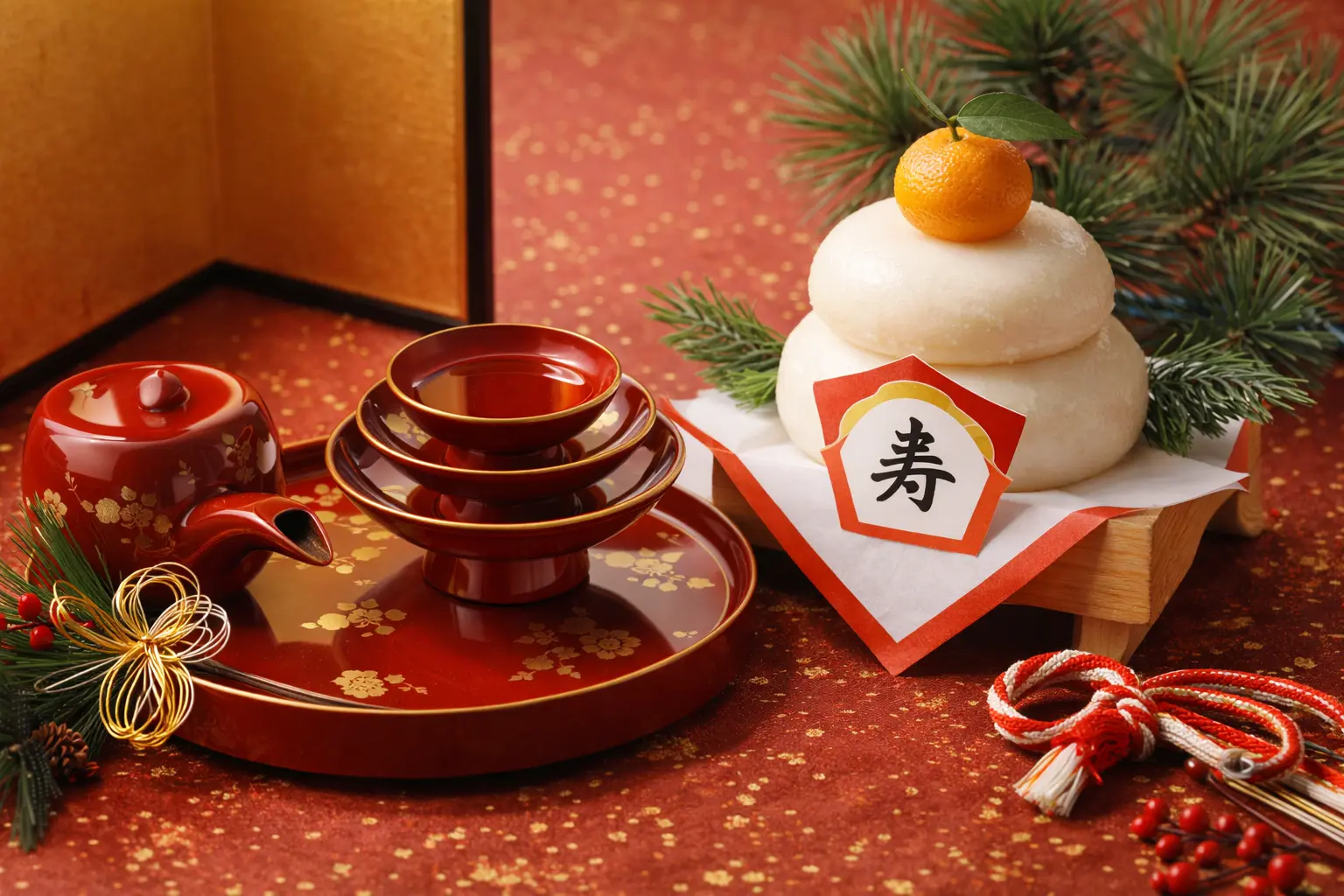
Otoso (Spiced Sake)
Medicinal sake drunk by families on New Year’s morning. Several medicinal herbs steeped in sake or mirin. It’s drunk wishing for good health throughout the year.
Traditionally, it’s hung in a well on New Year’s Eve and retrieved on New Year’s Day. The custom is to drink from youngest to oldest, sharing youthful vitality with elders.
Today, many use commercial otoso sets or simply drink regular sake.
Omiki (Sacred Sake)
Sake offered at household shrines and temples. Offerings are especially careful at New Year. The sake after offering is drunk as “osagari” (receiving the gods’ blessing).
Taru-zake and Kagami-biraki
The ceremony of breaking open a sake barrel with wooden mallets. “Kagami” (mirror) symbolizes harmony; “biraki” (opening) means opening fortune. Performed at corporate New Year parties and weddings.
Coming of Age Day (Second Monday of January)
The day new adults publicly drink sake for the first time.
In the past, sake was served during coming-of-age ceremonies. Today, the tradition continues with family and friends toasting after the ceremony. Many choose easy-drinking sake for their first experience.
Setsubun (Around February 3rd)
A day marking seasonal change and warding off evil.
While bean-throwing is famous, enjoying sake with ehomaki (lucky sushi roll) is also nice. After throwing beans calling “Devils out, fortune in,” warm yourself with heated sake.
Hinamatsuri (March 3rd)
A festival wishing for girls’ healthy growth.
Shirozake (White Sake)
An essential drink for Hinamatsuri. Sweet, thick sake made by mixing steamed mochi rice and koji with mirin and aging. About 10% alcohol.
Amazake
Non-alcoholic amazake made from rice koji can substitute for children.
Shirozake and omiki are offered to the hina dolls. Adults enjoy sake with chirashi-zushi and clam soup.
Hanami (Late March - April)
Japan’s unique culture of drinking under cherry blossoms.
A tradition continuing since the Heian period. From aristocratic elegant banquets to commoner enjoyment. Outdoor drinking has a liberating feel different from indoors.
For hanami sake, choose fragrant ginjo with spring florals, or new sake. Pair with sakura mochi and tricolored dango.
Summer Events
Children’s Day (May 5th)
A festival wishing for boys’ healthy growth.
Take iris baths and eat kashiwa mochi and chimaki. Iris (shobu) sounds like “martial spirit,” wishing for valor.
The custom of “shobusu” (iris sake) once existed. Today, adults toast to children’s growth.
Summer Purification (June 30th)
An event purifying the first half of the year’s impurities.
Walk through the chinowa (grass ring) at shrines, praying for good health. Some breweries release special “summer purification sake.” As summer approaches, enjoy chilled sake.
Tanabata (July 7th)
The day Orihime and Hikoboshi meet once a year.
Write wishes on strips and hang them on bamboo. There was also a custom of drinking at Tanabata banquets. Enjoying chilled sake under the starry sky is romantic.
Obon (Around August 13-16)
A period welcoming and honoring ancestral spirits.
Offering Sake
Sake is offered at Buddhist altars and spirit shelves. Some offer brands that ancestors favored.
Welcoming and Sending Fires
Fires to welcome and send off ancestral spirits. During Obon, families gather, reminiscing about the departed while sharing sake.
Bon Odori
At community Bon dance festivals, sake is often served at stalls. Drinking in yukata on summer nights is special.
Summer Festivals and Fireworks
Summer traditions throughout Japan.
At shrine festivals, sake is dedicated to the gods. After the festival, participants share the offered sake at the naorai (ritual feast).
Drinking while watching fireworks is a summer pleasure. Yukata, fan, chilled sake. The quintessential Japanese summer scene.
Autumn Events
Harvest Moon Viewing (Mid-September)
A celebration of the moon.
Offer moon-viewing dumplings, pampas grass, and taro while gazing at the full moon. There’s elegance in reflecting the moon in your sake cup.
Autumn is hiyaoroshi season. Sake pressed in spring, matured over summer, becomes mellow. Choose hiyaoroshi for moon viewing.
Autumn Equinox (Around September 23rd)
The middle day of the higan period. A day to honor and remember ancestors.
Eat ohagi, visit graves. Offer sake at Buddhist altars, reminiscing about the departed with family.
Harvest Festival / Niiname-sai (November 23rd)
An event offering new grains to the gods and giving thanks for harvest.
At the imperial palace, the Emperor offers sake made from new rice to the gods and partakes himself. At shrines throughout Japan, new grains and sake are dedicated.
Around this time, breweries begin new sake production. Brewing with new rice. With gratitude for the harvest.
Shichi-Go-San (November 15th)
A celebration of children’s growth.
At ages 3, 5, and 7, children visit shrines. At the naorai, adults drink celebratory sake. Children receive chitose-ame (thousand-year candy).
Winter Events
Winter Solstice (Around December 22nd)
The day with the shortest daylight.
Eat pumpkin and take yuzu baths. The season when warmed sake tastes best. Sake with floating yuzu is also elegant.
Christmas (December 25th)
A winter event now established in Japan.
While champagne and wine are popular images, sparkling sake is also an option. With chicken and cake.
New Year’s Eve (December 31st)
The year’s finale.
Eat toshikoshi soba while reflecting on the year. Some quietly drink sake while listening to the midnight bells. Keep drinking moderate in preparation for morning’s otoso.
Life Milestones and Sake
Weddings
San-san-kudo
A Shinto ceremony ritual binding the couple. Bride and groom alternately drink from three cups (small, medium, large). 3 sips × 3 cups = 9 times, an auspicious number.
Kagami-biraki
Breaking open sake barrels at receptions. Celebratory sake served to guests.
Longevity Celebrations
Serve quality sake at milestone age celebrations:
- Kanreki (60): With red vest
- Koki (70): With purple attire
- Kiju (77): Sake connected to the character for “joy”
- Sanju (80): Gold-flecked sake is also festive
- Beiju (88): Junmai daiginjo, connected to rice
Housewarming and Ridge-raising Ceremonies
Celebrations when building a home.
At ridge-raising ceremonies, sake is served to carpenters. Praying for household safety.
Birth Celebrations and Shrine Visits
Sake appears at celebrations of new life.
After the first shrine visit, families share celebratory meals with sake.
Modern Events and Sake
Valentine’s Day (February 14th)
A new proposal: pairing chocolate with sake.
Bitter chocolate with aged sake, milk chocolate with sweet sake. “Giri-sake” (obligation sake) and “honmei-sake” (true love sake) jokes exist too.
Mother’s Day and Father’s Day
More people give sake as gifts.
Special bottles or sake with personalized labels. Given with gratitude.
Halloween (October 31st)
Some young people enjoy sake at costume parties.
Pumpkin dishes with autumn sake. Hiyaoroshi pairs well.
Tips for Enjoying Events with Sake
Embrace Seasonality
Choose seasonal sake for each event:
- Spring: New sake, nigori
- Summer: Cold sake, nama-zake
- Autumn: Hiyaoroshi, aki-agari
- Winter: Warmed sake, new sake
Choose Appropriate Vessels
Select sake ware matching the event.
Lacquered otoso sets for New Year, white vessels for Hinamatsuri, outdoor cups for hanami. Different vessels change sake’s character.
Share with Family and Friends
Events connect people.
Daily solo drinking is fine, but event sake wants to be shared. Celebrations, memorials, seasonal milestones. Sake warms these moments.
Conclusion
Sake and annual events are inseparable.
Offered to gods, shared with people, feeling the seasons. Throughout the year, sake has accompanied Japanese life.
Some old customs are being forgotten. But knowing the connection between events and sake reveals the depth of Japanese culture.
At your next event, take sake in hand while thinking about its meaning. It will surely taste different.
For more on sake culture, see Sake Brewery Tour Guide.