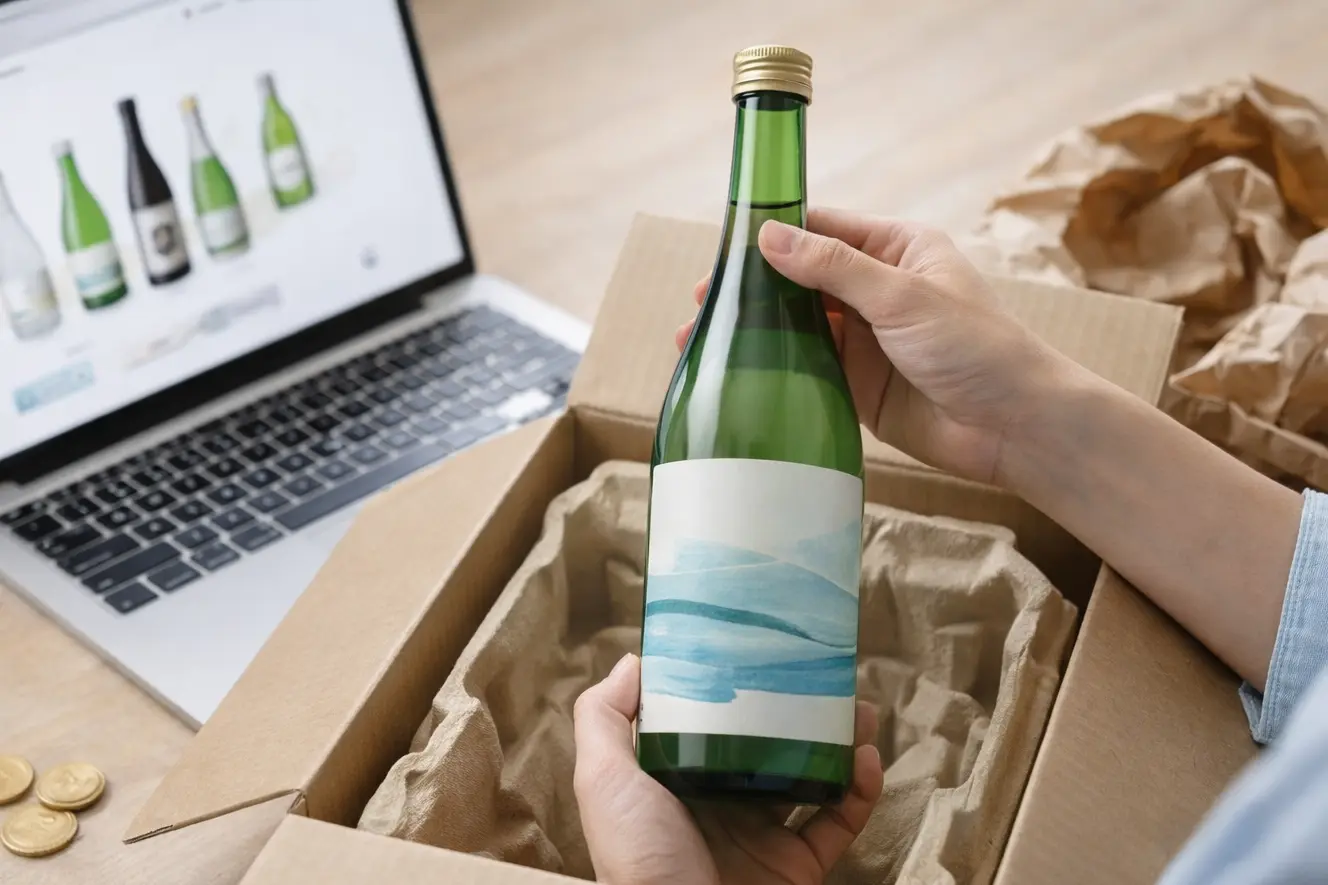
Online Sake Buying Guide: How to Shop with Confidence
Essential tips for buying sake online. How to choose reliable shops, verify storage conditions, and avoid common pitfalls. Make your first online sake purchase with confidence.
Buying Sake Online
No good sake shop nearby? Want to try regional bottles? Too busy to visit a store?
Online shopping is a convenient option.
However, sake is a delicate beverage. Buy carelessly and you might not experience its true quality.
Here’s how to shop online without disappointment.
Benefits of Online Buying
Wide Selection
Access to Regional Sake Bottles only distributed locally can be shipped to your door. Enjoy sake from across Japan at home.
Limited Editions Hard-to-find releases sometimes appear online when they’re unavailable in stores.
Easy Comparison Compare multiple bottles simultaneously. Check prices, specifications, and reviews side by side.
Convenience
Order Anytime No store hours to worry about. Buy whenever you want.
Home Delivery No carrying heavy bottles. Bulk buying is easy.
Subscription Services Monthly sake clubs introduce you to new bottles regularly.
Drawbacks of Online Buying
Quality Risks
Unknown Storage Conditions You can’t see the warehouse. Sake might have been exposed to heat.
Shipping Damage Summer shipping is particularly risky. Temperature fluctuations can degrade quality.
Sight Unseen
Label Condition Old stock might be shipped. Manufacturing date matters.
No Tasting You can’t try before you buy.
Other Concerns
Shipping Costs Small orders may have disproportionate shipping fees.
Difficult Returns Returns after opening are generally not accepted.
How to Identify Reliable Shops
Key Checkpoints
1. Storage Information
Good shops disclose their storage conditions:
- Refrigerated warehouse
- Temperature control methods
- Protection from direct sunlight
If not listed, it’s worth asking.
2. Shipping Options
Can you choose refrigerated shipping? This is crucial.
Essential in summer. Even in winter, Nama-zake and delicate sakes should ship cold.
3. Manufacturing Date Display
Shops that list manufacturing dates on product pages are trustworthy.
Without this, you risk receiving old stock.
4. Specialization
Is it a sake specialty shop or a general retailer?
Specialists typically have better knowledge and storage.
5. Reviews and Reputation
Other buyers’ reviews are helpful. But watch for fake reviews.
Red Flags
- No storage information provided
- No refrigerated shipping option
- Unusually cheap prices (quality concerns)
- Unclear contact information
- Extremely positive or zero reviews
Pre-Purchase Checklist
Product Selection
□ Check Manufacturing Date Within 3 months for Nama-zake, within 1 year for pasteurized sake.
□ Verify Storage Requirements Check if it needs refrigeration or cool, dark storage.
□ Confirm Volume Consider how quickly you’ll finish 720ml vs 1800ml.
□ Check Classification Junmai, Ginjo, etc.—does it match your preferences?
Shipping Settings
□ Choose Refrigerated Shipping Essential in summer. Worth the extra cost.
□ Specify Delivery Time Redelivery means sitting in a hot truck.
□ Avoid Unattended Delivery Leaving sake at your door risks quality degradation.
Payment & Other
□ Check Shipping Costs Many shops offer free shipping above certain amounts.
□ Consider Bulk Buying With shipping costs, buying more can be economical.
□ Use Promotions Take advantage of first-order discounts.
What to Do When It Arrives
Arrival Inspection
Check the Box Look for damage or water marks. Photograph any issues.
Check the Bottle No cracks or leaks? Check label condition too.
Verify Manufacturing Date Is it older than expected? Contact the shop if concerned.
Storage
Refrigerate Immediately Especially in summer or for Nama-zake. Don’t leave it sitting.
Store Upright Horizontal storage increases air contact and oxidation.
Avoid Temperature Fluctuations Back of the fridge is more stable than the door.
Seasonal Considerations
Summer (June–September)
The riskiest season.
- Always choose refrigerated shipping
- Be home on delivery day
- Refrigerate immediately upon arrival
- Extra caution for Nama-zake
Winter (December–February)
Relatively safer, but don’t get complacent.
- Watch for freezing in cold regions
- Don’t leave in heated rooms
- Nama-zake still needs refrigerated shipping
Spring & Fall
Mild temperatures make buying easier.
- Season for Shinshu (spring) and Hiyaoroshi (fall)
- Good time to hunt limited releases
- Watch for sudden temperature swings
Best Sake Types for Online Buying
Good Choices
Pasteurized Junmai and Honjozo Relatively temperature-resistant. Ideal for first online purchases.
Well-Sealed Bottles Proper corks are more reliable than screw caps for shipping.
Regional Limited Editions Bottles unavailable locally are the real appeal of online shopping.
Requires Extra Care
Nama-zake Temperature is critical. Buy only from trusted shops with refrigerated shipping.
Sparkling Sake Risk of overflow from shipping vibration. Choose experienced retailers.
Aged Sake (Koshu) Often expensive. Buy from established shops.
Troubleshooting
Poor Condition on Arrival
- Photograph before opening
- Contact the shop immediately
- Ask about return/exchange policies
Off Taste
- Sour or moldy smell indicates clear degradation
- Explain the situation to the shop
- Nama-zake may have characteristics you’re unfamiliar with (verify first)
Delivery Issues
- Track the package
- Contact both shop and carrier
- Mention summer delays could affect quality
Summary
Online sake buying is safe with the right knowledge.
Three Key Points
-
Choose Reliable Shops Check storage, refrigerated shipping, and expertise
-
Mind the Shipping Refrigerated in summer, specify delivery times
-
Refrigerate on Arrival Don’t leave it sitting; store properly
Follow these guidelines and enjoy discovering sake from across Japan at home.
Find bottles you’d never encounter locally through online shopping.
For more about sake, check out Enjoying Sake Overseas.