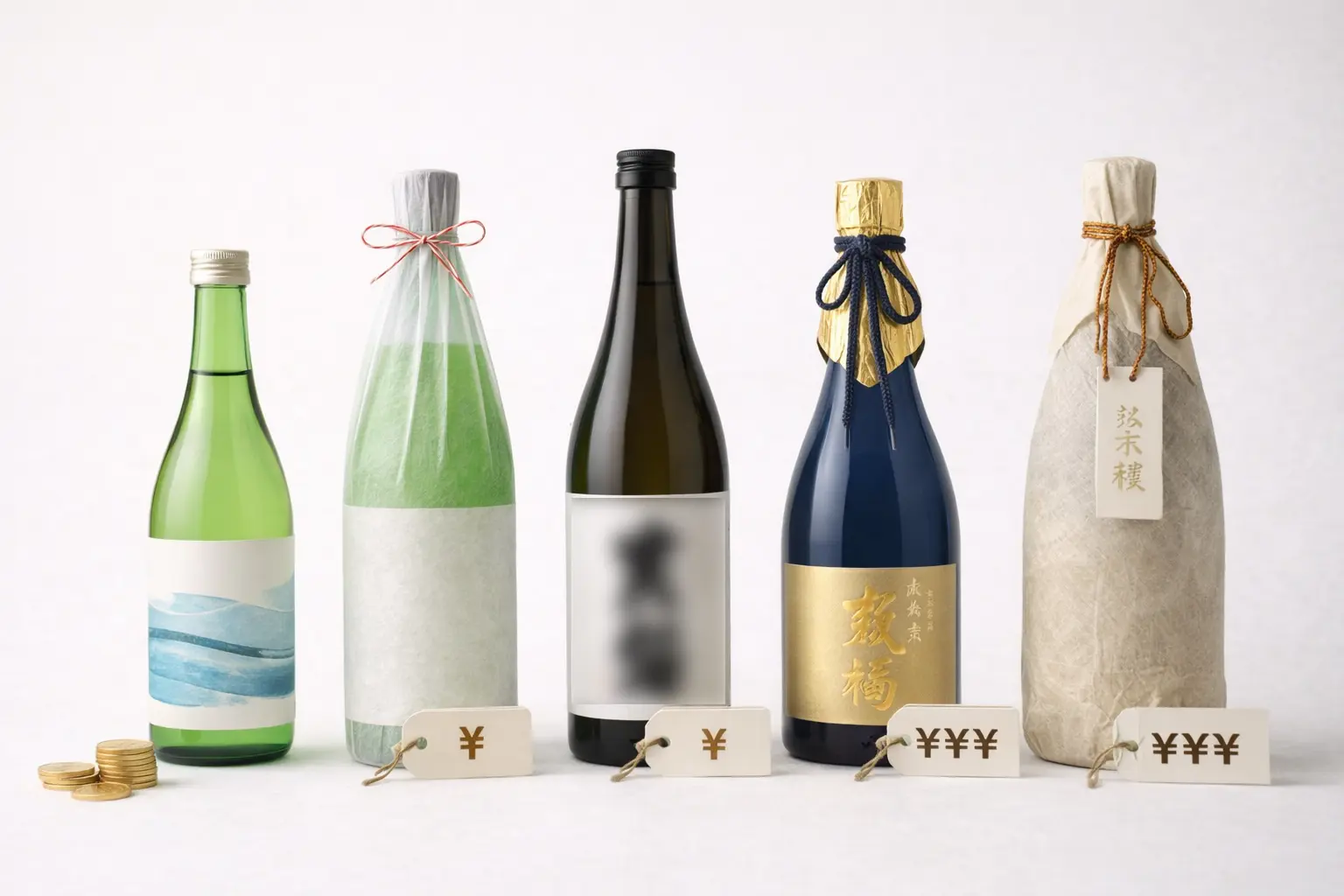
Understanding Sake Prices: A Guide to Choosing by Budget
Learn about the relationship between sake price and quality. From $10 bottles to premium selections, discover what to expect at each price point and how to find great value.
Making Peace with Sake Prices
Standing in front of a sake shop’s shelves, I often find myself pausing. A $5 bottle sits next to a $50 one. A tenfold price difference. What does this gap really mean?
Some people think “expensive sake must be good.” Others insist “there’s delicious sake at every price.” Both are right, and both are incomplete.
Sake prices have their reasons. Understanding these reasons helps you choose sake that suits your taste at a price that feels right.
Why Prices Vary
Three main factors determine sake pricing: ingredients, production methods, and brand value.
The Choice of Ingredients
Let’s start with rice. Sake rice differs from table rice entirely. Premium sake rice varieties like Yamada Nishiki, Gohyakumangoku, and Omachi are difficult to cultivate and yield less. They can cost several times more than regular rice.
Then there’s the polishing ratio. A daiginjo with 50% polishing means half the rice has been milled away. From 100 kilograms of rice, only 50 remain usable. Naturally, ingredient costs skyrocket.
Some breweries obsess over water—pumping from 100 meters underground, using snowmelt, balancing soft and hard water. Water comprises 80% of sake. Some breweries transport water from distant sources seeking perfection.
Investment in Time and Craft
Ginjo brewing takes time. Low-temperature fermentation can occupy a tank for nearly two months. Throughout, brewers monitor temperatures even in the middle of the night.
The toji’s expertise also factors into pricing. Skilled master brewers are in high demand. The craftsman’s experience and intuition command their fair price.
Equipment investment matters too. Temperature control systems, sanitation equipment, automated bottling lines—breweries with modern facilities maintain more consistent quality.
The Invisible Value
Sometimes similarly crafted sakes carry vastly different prices. This is “brand value” at work.
Nationally famous labels see demand exceeding supply. Premium prices emerge. A small unknown brewery might produce comparable quality, but name recognition creates the price gap.
Scarcity also drives prices upward. Sake brewed once yearly, limited to 500 bottles, available at only certain shops—people pay premiums for what’s hard to get.
Walking Through Each Price Range
Each price range has its own landscape. Let’s explore them.
Under $10: The Everyday World
This range belongs to daily drinking. Evening rituals, cooking wine, large gatherings. Sake that fits into ordinary life.
Futsushu (regular sake) and honjozo dominate here. Large manufacturers’ mass-produced offerings fill the shelves—not a bad thing. The technology to consistently deliver quality at volume has its own value.
Surprises await too. Small local breweries’ futsushu sometimes reveals humble deliciousness. Many transform when warmed.
But pitfalls exist. Sake with heavy alcohol additions can taste harsh. Many who say “I don’t like sake” formed that impression from this price range.
$10 to $20: The Sweet Spot
Personally, I consider this the “happy zone.”
Quality junmai sakes line up beautifully. Perfect for exploring local sake, with excellent quality-to-price balance. Many brewers create these hoping customers will drink them daily.
Good enough for weekend treats and dinner parties without embarrassment. You can bring home a bottle without wallet pain. If you’re starting your sake journey, explore this range first.
Ask at a specialty shop: “Around $15-20, something approachable in junmai.” You’ll likely receive a recommendation beyond expectations.
$20 to $30: The Fragrant Range
Welcome to junmai ginjo territory. Aromas become more pronounced, textures silkier.
These sakes surprise with “sake can smell like this?” Apple, melon, banana notes. Chilled in a wine glass, the experience resembles fine white wine.
Gift-worthy quality here. Ideal for introducing non-sake-drinkers to the category. Those who said “sake’s not for me” often change their minds in this range.
Many gold medal winners from the Annual Japan Sake Awards fall here. Awards indicate one measure of quality.
$30 to $50: Refinement
The world of junmai daiginjo. Polishing below 50%, the pinnacle of ginjo craftsmanship.
This range tests a brewery’s skill. No matter the ingredient investment, without craftsmanship, you get merely expensive sake.
Breweries making delicious sake at this price have proven ability. Anniversaries, celebrations, gifts for special people—bottles to store in the back of your shelf for special occasions.
Aroma, flavor, and finish harmonize at high levels. You might experience “so this is what sake can be.”
Above $50: The Summit
The peak. Rice polished to extremes, rare varieties, the crystallization of a toji’s skills.
But honesty compels me to say: above $50, “deliciousness” gives way to “rarity” and “brand” in determining price.
Comparing a $30 sake with a $100 one, no one finds it “three times better.” Differences exist, but whether they’re worth triple the price depends on the person.
This range belongs to devoted enthusiasts. Beginners needn’t start here.
Why Expensive Doesn’t Mean Better
This matters.
Preferring a $15 junmai over a $50 daiginjo isn’t unusual. I’m one of those people.
Extreme polishing removes off-flavors but also strips away rice character and umami. Perfect for those who love delicate elegance, but lacking for those seeking robust rice flavor.
“Deliciousness” in sake is thoroughly subjective. Assuming expensive means good undermines trust in your own palate.
A renowned toji once said: “Calling expensive sake delicious is easy. Finding deliciousness in affordable sake—that’s the mark of a true sake lover.”
Smart Selection Tips
Let me get more specific about choosing by budget.
For Daily Drinking
Choose junmai or tokubetsu honjozo around $10. Try local breweries over major brands—discoveries await.
For warming, this range actually works better. The joy of a cheap sake “transforming” when heated isn’t available with premium bottles.
For Weekend Treats
Junmai ginjo around $15-20 works best. Chilled in a wine glass, the aromas shine. For food pairing, dry junmai also excels.
For Special Occasions
Select junmai daiginjo between $30-50. A brewery’s flagship never disappoints. Chill it, and savor that first glass slowly.
Finding Great Value
Locally beloved labels unknown nationally often hide treasures. Tell specialty shop staff “around $X, I like this style,” and let professionals choose.
Seasonal releases also reward. Shinshu (new sake) and hiyaoroshi often feel like bargains from the same brewery.
In the End
What matters in sake selection isn’t price—it’s knowing your preferences.
Expensive doesn’t guarantee delicious. Cheap doesn’t mean bad. Start exploring the $10-20 range. Once you know your taste, move forward.
Don’t let price confuse you. Trust your palate. That’s the secret to enjoying a long relationship with sake.
For more on buying sake, see Online Sake Buying Guide.