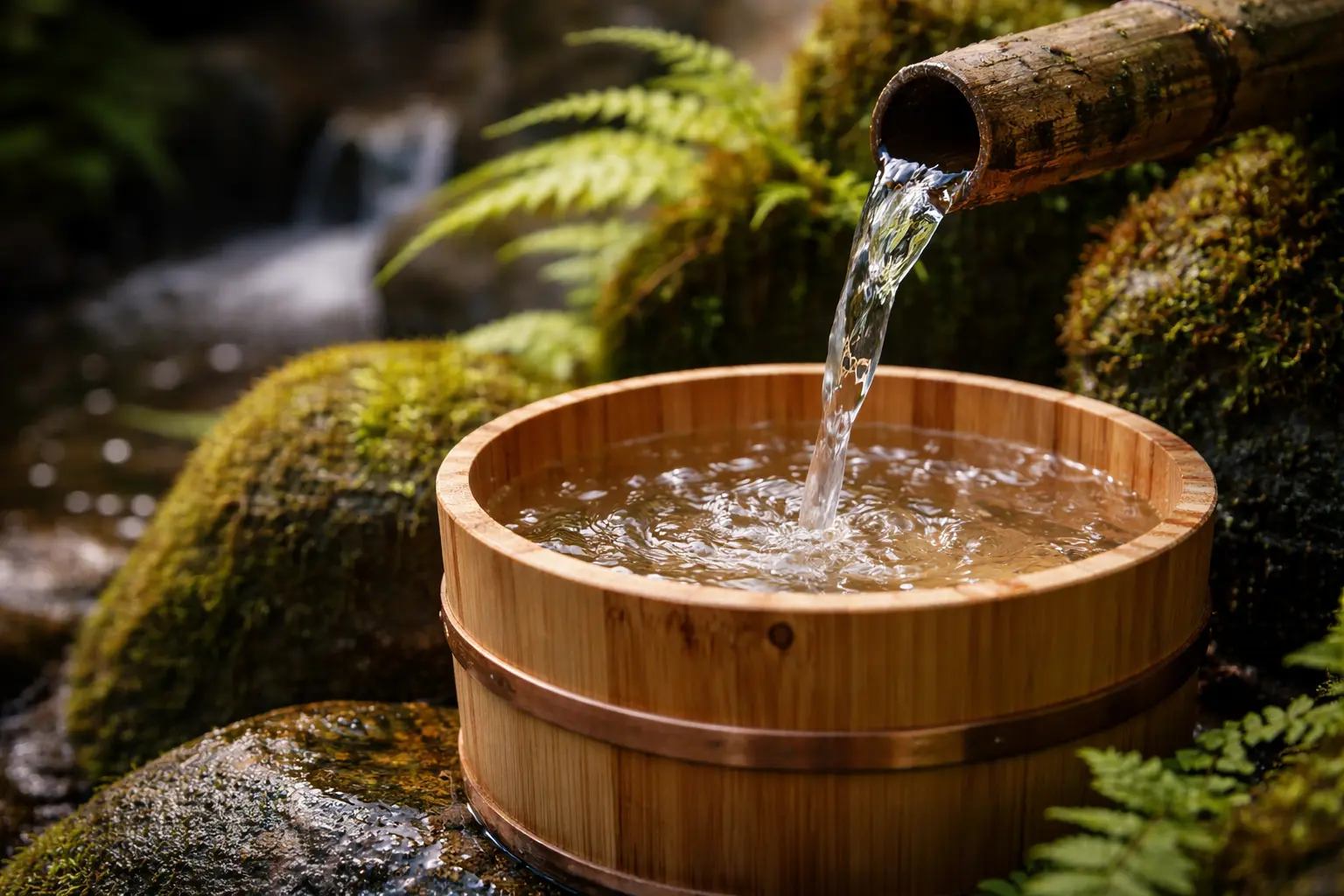
Water in Sake: How Soft and Hard Water Shape Flavor
Sake is 80% water. Learn how water hardness affects sake character, famous brewing waters of Japan, and how water creates regional sake styles.
Water in Sake: The Element That Makes Up 80%
“Our water is soft.”
When visiting a brewery, the master brewer often starts by talking about water. Not rice, not yeast—water.
About 80% of sake is water. Naturally, the type of water used changes the flavor. Soft or hard—this distinction shapes each sake’s character.
What Is Brewing Water?
Water in Sake Production
Sake production uses water at many stages.
Water for washing rice, soaking rice, cooling steamed rice, adding to the mash—all of this is collectively called “shikomi-mizu” (brewing water).
Most critical is water added directly to the mash. This water’s properties directly affect sake flavor.
Water Volume
Making one sho (1.8L) of sake requires many times that amount of water.
From washing to brewing, 30-50 times the rice weight in water is used. That’s why breweries have always been built where quality water is available.
Soft Water and Hard Water
What Is Hardness?
Water “hardness” is determined by calcium and magnesium content.
Generally, under 100mg/L is soft, 100-300mg/L is medium-hard, over 300mg/L is hard. In sake brewing, though, around 50mg/L often marks the soft/hard divide.
Hard Water Sake
Hard water contains more minerals.
Minerals nourish yeast, so fermentation proceeds vigorously. The result tends toward dry, crisp, powerful sake.
Nada in Hyogo Prefecture is famous for hard water. Nada’s “miyamizu” has high hardness, and sake made with it has long been called “Nada’s masculine sake.”
Soft Water Sake
Soft water has fewer minerals.
Fermentation proceeds slowly, resulting in mild, soft-flavored sake. Tends toward sweeter or more umami-rich profiles.
Hiroshima’s sake is known for soft water brewing—called “Hiroshima’s feminine sake.” Niigata is also a soft water region, contributing to its light sake style.
Famous Waters and Sake
Miyamizu (Nada, Hyogo)
Miyamizu has supported Nada’s five brewing districts for centuries. Discovered in the Edo period, sake made with this water became popular in Edo.
Miyamizu’s characteristics: high calcium and potassium, low iron. Iron degrades sake, so less is better.
Thanks to this water, Nada sake could survive long-distance transport, shipped as “kudari-zake” to Edo.
Fushimi Water (Kyoto)
Kyoto’s Fushimi has water contrasting with miyamizu—soft water.
The famous “gokosui” spring produces mellow, elegant sake. This is why Fushimi sake is called “feminine sake.”
Diversity of Brewing Waters
Famous waters exist throughout Japan, each shaping regional sake character.
Hokkaido’s snowmelt, Tohoku’s clear underground streams, Chugoku’s granite-filtered water—each has different properties, producing different sake.
How Water Affects Sake
Effect on Fermentation
Hard water minerals activate yeast.
Fast fermentation converts sugar to alcohol readily, creating dry sake. Vigorous fermentation also tends to produce higher acidity.
Soft water fermentation proceeds slowly. Sugar remains, creating mellow flavors. Sensaburo Miura of Hiroshima established soft water brewing techniques in the Meiji era, proving good sake could be made with soft water.
Effect on Sake Quality
Same rice, same yeast, different water—different sake.
Hard water sake: crisp, dry, structured Soft water sake: mellow, soft, full-bodied
These are tendencies, not absolutes. Dry sake can come from soft water; mellow sake can come from hard water. Water is one factor; final quality depends on overall technique.
Iron’s Harm
Iron in water is sake’s enemy.
High iron content turns sake brown and creates off-flavors. This leads to the defect called “iron smell.”
Brewing water must have low iron content—this is absolute. Breweries constantly test water quality, securing low-iron sources.
Water Treatment
Filtration and Adjustment
Some breweries filter their brewing water.
Activated charcoal filtration removes impurities; hardness can be adjusted. However, excessive treatment removes water character, so most breweries minimize processing.
Well Water and Tap Water
Most breweries pump water from on-site wells.
Groundwater has stable temperature and few impurities. Some breweries dig deep wells seeking ideal brewing water.
Some use tap water, but chlorine removal treatment is required.
Tasting for Water Character
Choose by Region
Being conscious of sake’s origin reveals water differences.
Compare Nada sake with Fushimi sake. Compare Niigata sake with Kochi sake. You’ll notice regional “flavor tendencies” actually come from water differences.
Drink the Brewing Water
Brewery tours sometimes offer brewing water tastings.
Drink the water, then drink that brewery’s sake. You might sense how the water’s softness or hardness reflects in the sake.
Yawaragi-mizu
Water drunk between sake sips is called “yawaragi-mizu.”
Ideally, use the same brewery’s water as the sake you’re drinking. Otherwise, soft mineral water. It prevents excessive intoxication and resets your palate for fresh appreciation of the next sip.
Summary
80% of sake is water. This fact speaks to water’s importance.
Hard water makes powerful sake; soft water makes gentle sake—knowing this helps with selection. Looking at origin gives clues about water properties.
Next time you choose sake, consider the region’s water. That land’s water shapes that sake’s flavor.
Learn more about sake production in How Sake is Made or Sake Yeast Types.