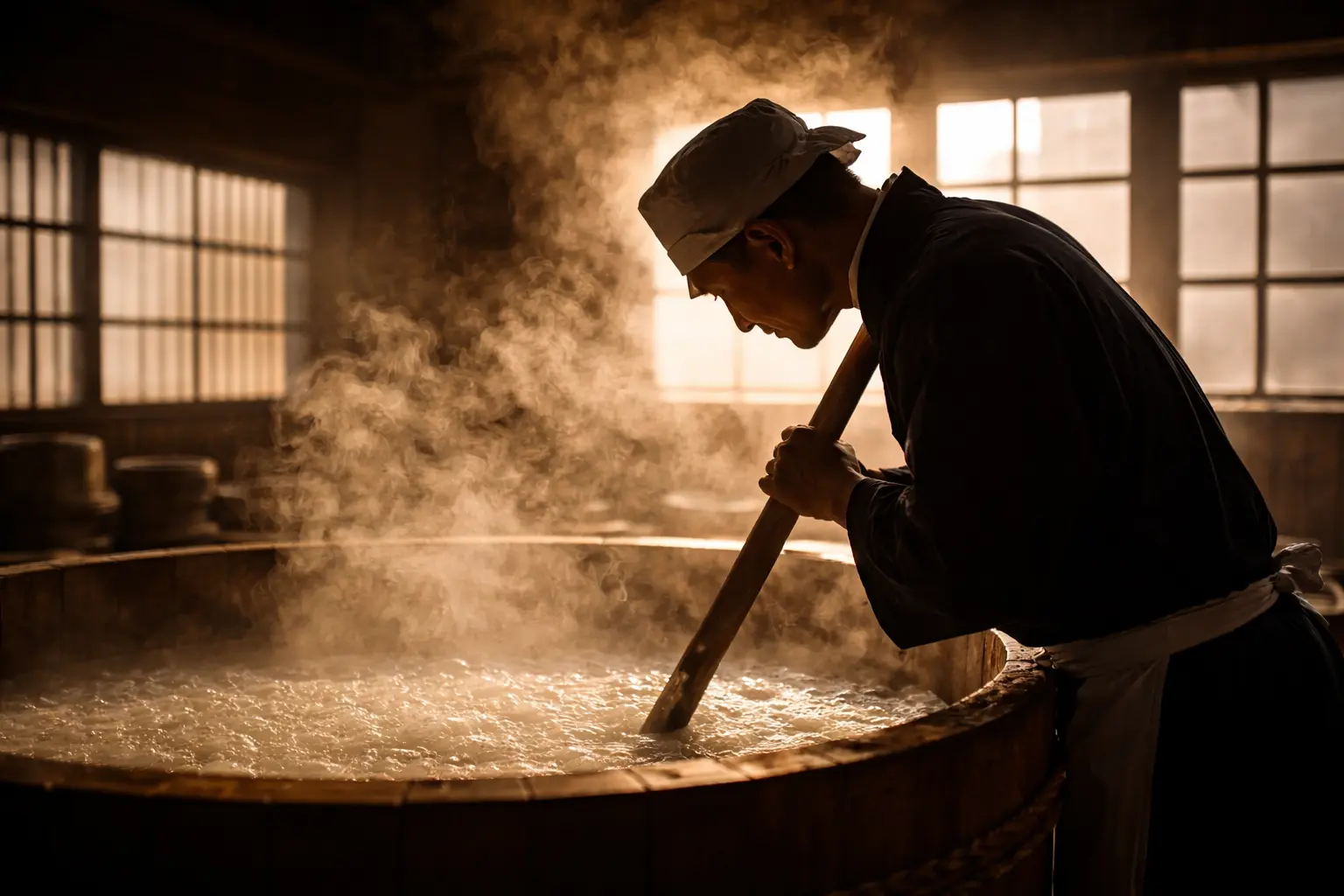
Toji: The Master Brewers Behind Japanese Sake
Discover the toji, master brewers who lead sake production. Their role, history, regional schools like Nanbu and Echigo, and how modern toji are evolving.
Toji: The Conductor of Sake Brewing
“Let’s ask the toji.”
When visiting a brewery, sometimes it’s not the owner or sales staff who knows sake best—it’s the toji. Not the business owner, yet knowing more about brewing than anyone else. That’s what a toji is.
The Role of Toji
Chief of Sake Production
The toji is the highest authority in sake production.
From selecting rice to making koji, creating the yeast starter, managing the mash, pressing, and storage—the toji oversees everything. Leading workers called kurabito, the toji determines that year’s sake quality.
In modern terms, “head of manufacturing,” but with far greater authority and responsibility than a typical factory manager.
Experience and Intuition
Much of sake brewing can’t be quantified.
“This year’s rice is harder.” “This mash needs more time.” Judgments from years of experience determine sake quality. Even with modern thermometers and analyzers, final decisions often rely on the toji’s senses and experience.
Smelling koji in the koji room, tasting the mash to check fermentation progress. Such sensory skills take years to develop.
Training the Next Generation
A toji’s job isn’t just making sake.
Training the next generation of kurabito is equally important. Passing down techniques, raising successors. Sake brewing can’t be done alone. Building teams and transmitting skills is also the toji’s work.
History of the Toji
Off-Season Farm Workers
The toji system originated in the Edo period.
Sake brewing happens in winter. Cold temperatures are needed for proper fermentation. This season was the agricultural off-season. Farmers with no field work began working at breweries as seasonal labor.
Returning to the same brewery each year, they refined their skills, eventually forming groups of brewing specialists.
Birth of Toji Guilds
Seasonal brewing workers organized by their home regions.
Fellow countrymen helped each other, shared techniques, and referred work to one another. Thus “toji guilds” were born. Each region developed unique technical systems, forming distinct schools.
These guilds weren’t mere labor groups. They were trade unions, mutual aid societies, and educational institutions combined.
Toji Schools
Nanbu Toji (Iwate Prefecture)
Japan’s largest toji guild. Based in Iwate, they work at breweries nationwide.
Nanbu toji are known for precise technique and light, clean sake. Their strength lies in low-temperature fermentation skills developed in cold climates.
The Nanbu Toji Association maintains high standards through technical training and certification exams.
Echigo Toji (Niigata Prefecture)
The guild supporting Niigata’s light, dry style.
Renowned for crisp, clean sake. Niigata being called Japan’s “sake kingdom” owes much to Echigo toji skills.
Tanba Toji (Hyogo Prefecture)
The prestigious guild behind Nada’s brewing.
Active in Nada’s five districts since the Edo period, creating “Nada’s masculine sake.” Mastering the hard miyamizu water is their specialty.
Noto Toji (Ishikawa Prefecture)
The guild serving Hokuriku region brewing.
Known for yamahai techniques. Skilled at making powerful, umami-rich sake.
Other Guilds
Hiroshima, Tajima, Izumo, and other regional toji guilds exist. Each developed techniques suited to local climate and water.
Modern Toji
Rise of Employee Toji
Traditionally, toji came to breweries only for winter.
Now, many breweries employ “employee toji” full-time. Outside brewing season, they handle bottling, sales support, and equipment maintenance.
Agricultural mechanization eliminated the need for seasonal work, and younger generations stopped joining traditional guilds.
Owner-Toji
More brewery owners now serve as their own toji.
In this “kuramato-toji” style, one person handles both business and production. Especially common at smaller breweries.
Making the ideal sake with their own hands—more young successors embrace this vision, taking over family breweries while developing brewing skills.
Women Toji
Breweries were once often “off-limits to women.”
Today, women toji aren’t rare. Many earn recognition for sake made with delicate sensibilities.
Regardless of gender, skill and passion can make anyone a toji now.
Merging Science and Experience
Modern toji combine traditional skills with scientific knowledge.
Managing temperature and composition numerically while making final judgments by taste and smell. Data and intuition—both essential.
Young, academically trained toji absorbing veteran techniques while creating new sake—this scene plays out at breweries nationwide.
The Toji’s Year
Brewing Season (October–March)
When new rice arrives in autumn, brewing begins.
Rice washing, steaming, koji making, yeast starter, main mash—work continues daily. During koji production, the toji enters the koji room every few hours through the night to check temperature.
During this period, toji barely get enough sleep.
Off-Season (April–September)
Brewing ends, but work continues.
Managing stored sake, bottling, quality checks. Preparing for next season, maintaining equipment. Employee toji also join sales visits and sake events.
Traditional seasonal toji would return home to farm during this time. Modern employee toji work at the brewery year-round.
Knowing Toji, Understanding Sake
Choose by Toji
Even at the same brewery, sake can change when toji change.
Find a favorite sake, then research who made it. If that toji moves to another brewery, their new sake is worth trying.
Meet Them at Tours
Brewery tours sometimes offer chances to meet the toji.
Hearing brewing stories directly is precious. Drinking sake made by that person while hearing their story—no greater luxury exists.
Summary
The toji is sake brewing’s conductor.
Through long history, they refined techniques, formed schools, and supported sake culture. Today, employee toji and owner-toji increase, women toji thrive. Forms change, but passion and skill continue.
Next time you drink sake, consider “who made this.” Behind that glass stands a toji.
Learn more about sake production in How Sake is Made or Sake Yeast Types.