What Is Craft Sake: The New Category Born from Regulation
Most craft sake is not legally "sake" (seishu) in Japan. A licensing barrier that keeps new seishu producers out is precisely what gave rise to a freewheeling style of brewing with unconventional ingredients. Here is what this new category really is, starting with the licences behind it.
What Is Craft Sake: The New Category Born from Regulation
There is no official definition of “craft sake.” Much as craft beer has no firm definition, the term gets used to evoke something vaguely small-scale and distinctive.
But this particular “craft” label differs from all the others in one decisive way.
Most of the drinks called craft sake are not, legally speaking, sake.
This is not a statement about quality. It is a matter of classification under Japan’s Liquor Tax Act, and beyond that, a matter of the structural conditions the sake industry operates under. Grasp this single point and everything else falls into place: why these brewers reach for herbs and fruit, and why new producers keep appearing.
Wanting to Brew Seishu, and Not Being Able To
Making alcohol in Japan requires a manufacturing licence under the Liquor Tax Act. Licences are issued separately for each type of liquor, and brewing seishu requires a seishu (sake) manufacturing licence.
Here is the wall. On the grounds of supply-demand adjustment within the industry, new seishu manufacturing licences are effectively no longer being issued. As domestic sake consumption has declined over the long term, a system that keeps the number of producers from growing has been maintained for decades.
Which means that anyone who decides today that they want to brew sake finds no way in at all. Buy an existing brewery, or join one as a successor. Starting from zero is, as a regulatory matter, all but closed off.
Younger people who saw potential in sake, and career-changers arriving from other industries: this wall was the first thing they ran into.
A Different Licence, a Different Drink
The workaround that emerged was the manufacturing licence for the “other brewed alcohol” category.
Under the Liquor Tax Act, calling something “seishu” means adhering to a strict list of permitted ingredients: rice, rice koji (rice inoculated with the mould Aspergillus oryzae, which converts starch to sugar), water, and a limited set of secondary ingredients. Turn that around and it means the moment you add anything else, the drink is no longer seishu. Add hops, add herbs, add fruit, and it moves into the “other brewed alcohol” classification.
That is where the reversal happened. If you cannot obtain a seishu licence, brew something that is not seishu. Follow essentially the same process as sake with rice and rice koji, then add a secondary ingredient. Technically it is sake brewing through and through; legally it belongs to a different category of liquor.
This is what craft sake actually is. It is sometimes described as a loophole, but in practice it was close to the only legitimate route to entering the industry within the existing rules.
And the crucial part is that the constraint produced freedom as a byproduct. Once you fall outside the definition of seishu, no ingredient restrictions apply. Lean hard on hops, steep local herbs, ferment fruit—whatever you like. Experiments that would count as “breaking the rules” for seishu become ordinary options here.
The Brewers Who Named the Category
The name “craft sake” and the framework of the category were established by haccoba in Minamisoma, Fukushima Prefecture.
Working under an “other brewed alcohol” licence, haccoba builds on sake brewing methods while using hops and herbs. The brewery also frames its work as reviving older, freer forms of sake making for the present day, among them the traditional hanamoto method (a historical starter technique that incorporated botanicals). Taking something that regulation says is not sake and placing it confidently within the sake tradition: that was the category’s point of departure.
Ine to Agave in Oga, Akita Prefecture, is another brewery that embodies the movement. Alongside its “other brewed alcohol” licence, it also holds the export-only sake manufacturing licence discussed below. Its range crosses regulatory boundaries: doburoku (unfiltered, coarsely textured brew with the rice solids left in), all-koji sake brewed with koji alone, and sake using agave syrup as a secondary ingredient.
What these brewers have in common is that they operate as small, locally rooted sites, often in closed schools or other vacant buildings. Attaching a bar or eatery to the brewery, where you can drink what was pressed on the spot, is an increasingly common arrangement.
The Regulations Are Moving Too
Even the system that looked frozen in place has shifted.
Since 2020, an export-only seishu manufacturing licence has been available. It permits brewing seishu for export alone, its requirements are relaxed compared with the conventional seishu licence, and there is no minimum production volume threshold. The supply-demand argument that justifies the restriction simply does not apply to exports.
With sake exports continuing to grow in value, this opens a route for new entrants aimed at overseas markets. Brewers such as Ine to Agave, who have obtained the licence and now make seishu as well, are the concrete result.
A barrier that had not moved in decades now has a hole in it, partial though it is. Craft sake as a detour, and the export licence as a front door. New entry into sake brewing is currently advancing along both paths.
What Does It Taste Like?
Craft sake varies enormously with the secondary ingredient, so no single description covers it. Certain tendencies do recur, though.
Hopped versions layer beer-like bitterness and citrus aromatics over sake’s savoury depth. Served chilled, they take on a distinctive shape that is neither quite sake nor quite beer.
Herb and spice versions gain the freshness and complexity of aromatic plants. The thinking resembles the botanical blends of gin, and this is the area where a brewer’s design philosophy shows most clearly.
Fruit versions push acidity and sweetness forward, often landing somewhere near wine or cider. They are an easy entry point for people with no prior familiarity with sake.
Doburoku and all-koji sake fall outside the seishu category without any secondary ingredient at all—through process choices such as skipping filtration or brewing with koji alone. Rice sweetness and acidity come through in concentrated form.
Alcohol content is often designed lower than in sake, and many bottles are clearly built to be enjoyed on their own rather than alongside a meal.
No Quarrel with Conventional Sake
For the avoidance of doubt: craft sake is not a rejection of conventional sake.
The consistency of sake from the large producers—the same flavour whenever and wherever you buy it—is itself a considerable technical achievement. Reproducing an identical flavour year after year while the rice crop changes annually is far harder than it intuitively sounds.
Craft sake, meanwhile, takes on year-to-year variation and experimentation as values in themselves. Rather than competing, the two are better understood as extending the reach of sake’s technical tradition in different directions.
In fact, many craft sake brewers trained at established breweries, and their koji making and starter preparation follow sake practice faithfully. The one thing that differs is what goes in at the end.
Buying and Drinking It
Craft sake is made in small volumes and rarely reaches the shelves of ordinary liquor retailers. The main routes are direct sales from the brewery, online stores, and specialist shops that carry it. Where a brewery has an attached tap room (a bar serving its own drinks straight from the tanks), that is where you will find it at its freshest.
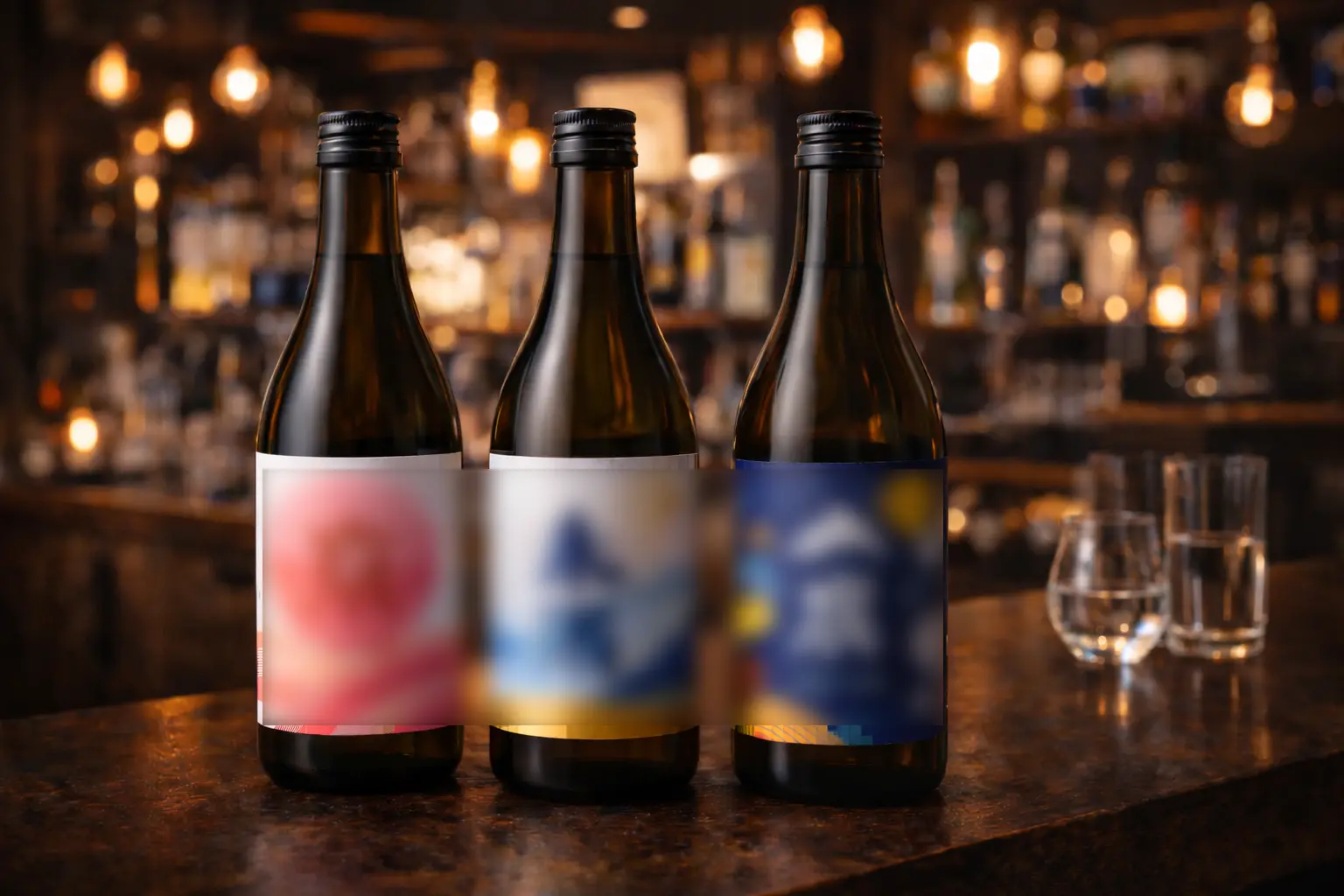
Look at the label and you should see “other brewed alcohol,” or perhaps “sparkling liquor.” It may be surprising not to see “seishu” or “sake” printed there, but that comes down to the regulatory reasons described above.
Many of these products assume refrigerated handling, and some need treatment close to that given to unpasteurised sake. Check the storage instructions when you buy.
Craft sake did not come about because someone set out to invent a new category. People who wanted to brew sake ran into a system that would not let them brew sake, and the path they found within that constraint turned into a new form of expression.
We often hear that regulation kills creativity. This case runs the other way: a closed front door lit up a side street nobody had walked down.
A bottle whose label does not say “sake” is the one testing sake’s future furthest ahead. That is the shape of what is happening now.
For the legal classifications of sake, see Special Designation Sake Categories.
Doburoku and nigori sake are covered in Nigori Sake and Doburoku.
References: National Tax Agency materials on the Liquor Tax Act; NLI Research Institute, “Thinking Soberly About Alcohol: Brewing Sake Without a Seishu Manufacturing Licence”; SAKETIMES, “A Roundup of Notable Craft Sake Breweries”; published information from haccoba and Ine to Agave