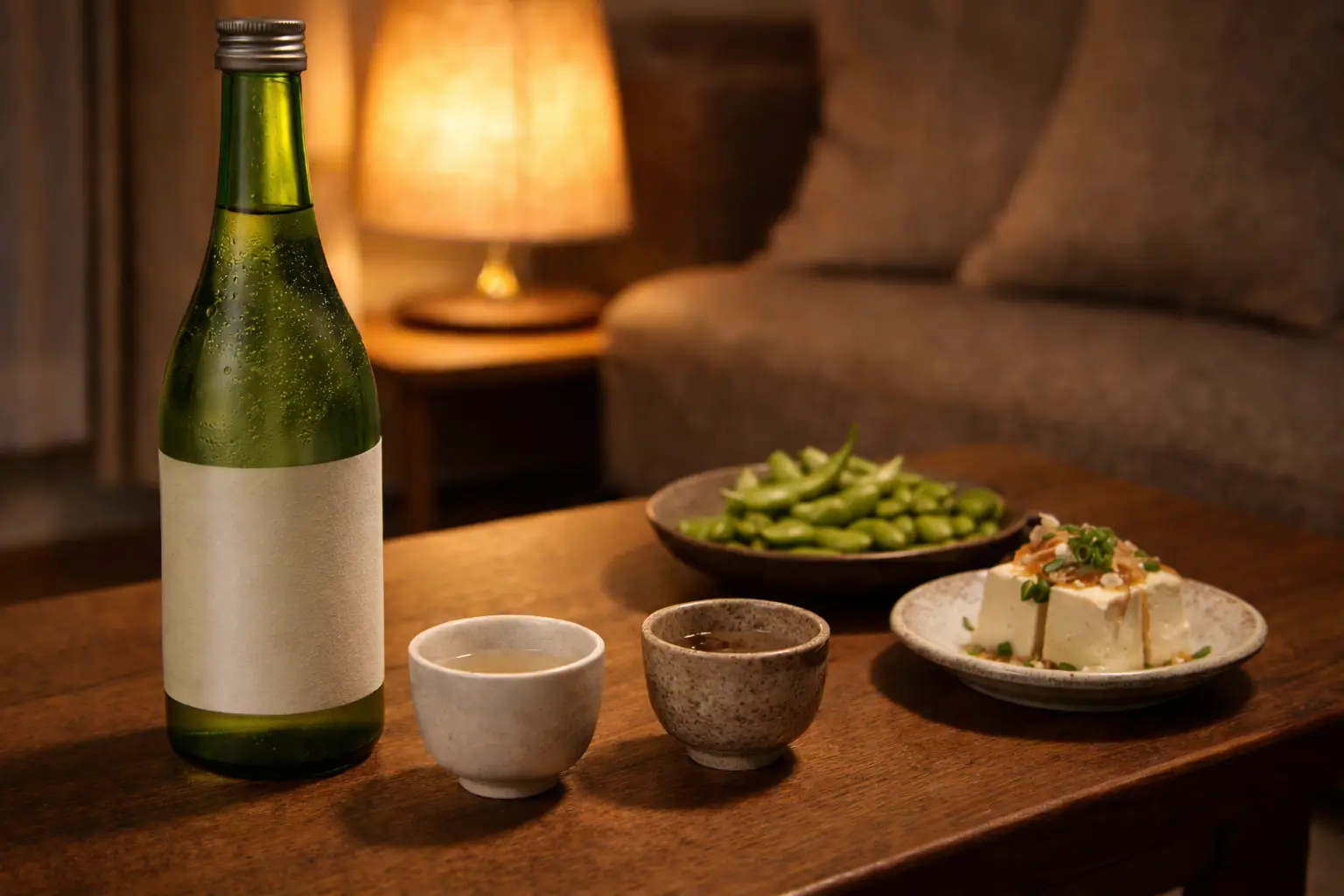
Choosing Sake for Home Drinking
A guide to selecting sake for home enjoyment. From bottle sizes to storage, temperature tips, and food pairings—everything you need for better home drinking.
Enjoying Sake at Home
Sake at an izakaya is great, but sake at home has its own charm.
Your own pace, your favorite food, exactly as much as you want. Home drinking has unique pleasures. But choosing what to buy and how to store it can be confusing at first.
Choosing Bottle Size
720ml (Yongobin)
Best size for home drinking beginners.
For solo drinking, you’ll finish it in 3-4 sessions. You can empty it before the flavor fades after opening. It fits in the refrigerator door pocket too.
When you want to try different brands, 720ml bottles are easy to commit to.
1.8L (Isshobin)
Once you find a favorite, the large bottle becomes an option.
It holds 2.5 times more than the small bottle, often for less than double the price. Better value overall.
But finish it within two weeks of opening.
Small bottles (300ml, 180ml)
Perfect for “just a little” or “trying many things.”
If you live alone and drink small amounts daily, keeping several small bottles works well. Fresh every time you open one.
Storage Basics
Refrigerate
Sake belongs in the refrigerator. Unpasteurized nama sake absolutely requires it.
Even pasteurized sake lasts longer in the fridge after opening. Only unopened, pasteurized sake can handle room temperature storage.
Avoid Light
Sake is light-sensitive. UV rays accelerate degradation.
Clear bottles need extra care. Keep them in bags or wrap in newspaper.
Store Upright
Horizontal storage exposes more surface to air, speeding oxidation.
Keep bottles standing. Large bottles that don’t fit in the fridge should stand in a cool, dark place.
Serving Temperature
Straight from the Fridge (Around 5°C)
Nama sake and ginjo taste best cold.
Ready to drink immediately. Perfect for hot summer days.
Slightly Warmer (10-15°C)
To appreciate aromas, let it warm slightly.
Leave it out for 15 minutes or warm it with your hands. Aromas begin to open.
Room Temperature (Around 20°C)
Junmai and honjozo often shine at room temperature.
Rice flavors come through clearly. This temperature pairs well with meals.
Warm Sake
At home, water bath heating works best.
Boil water in a pot, remove from heat, place the tokkuri in. Five minutes for lukewarm (35°C), ten for hot (50°C). Microwaves create uneven heating—takes practice.
Food Pairing Ideas
Light Sake with Light Food
Crisp ginjo pairs with sashimi, cold tofu, edamame.
Simple preparations that highlight ingredients. Neither overpowers the other.
Umami-Rich Sake with Bold Flavors
Junmai and yamahai suit simmered dishes, grilled fish, cheese.
Sake umami and food umami layer into deeper flavors.
Sweet Sake with Spicy Food
Surprisingly, sweeter sake works with curry or kimchi.
Sweetness softens spice, creating balance.
When in Doubt, Salt
Salt works with any sake.
Sipping sake while nibbling salt reveals the sake’s character. Salted fish, pickles, salt-grilled anything—all versatile matches.
Recommended Sake Types for Home
Everyday Dinner Sake
For daily drinking, choose food-friendly sake.
Junmai or honjozo that doesn’t dominate. Local brewery standards often match local cuisine well.
Treat Yourself Sake
For weekends or special occasions, go premium.
Daiginjo or junmai daiginjo. Prices that seem high at shops cost half what you’d pay at restaurants.
Always-On-Hand Sake
Keep one bottle ready anytime.
Pasteurized regular sake or honjozo that stores well. Good for unexpected guests.
Buying Tips
Ask at Sake Shops
Specialty shops can recommend based on your preferences.
“Something for fish dishes” or “something fruity”—specific requests help them help you.
Check Production Dates
Sake has no expiration date but shows production month.
For nama, within 3 months. For pasteurized, within a year. Fresher tastes better.
Start Local
Breweries exist across Japan. Try your local ones first.
Local sake is easy to find and pairs with local food. Interest expands from there.
Ways to Enjoy Home Drinking
Comparative Tasting
Same brewery different sake, same rice different brewery—comparisons reveal differences.
Buy 2-3 bottles, taste side by side. Your preferences emerge.
Temperature Experiments
Same sake tastes different cold versus warm.
Try one bottle at multiple temperatures: chilled, room, warmed. Find your preferred serving style.
Keep Notes
Record what you drink, your impressions, what you ate.
Even phone photos work. Looking back reveals preference patterns.
Summary
Home drinking is freedom.
Expensive or cheap, cold or warm, with food or without. Find what tastes good to you.
Start with one bottle that interests you. Try it different ways. That’s how your personal home drinking style develops.
Learn more about serving temperatures in Sake Serving Temperatures.