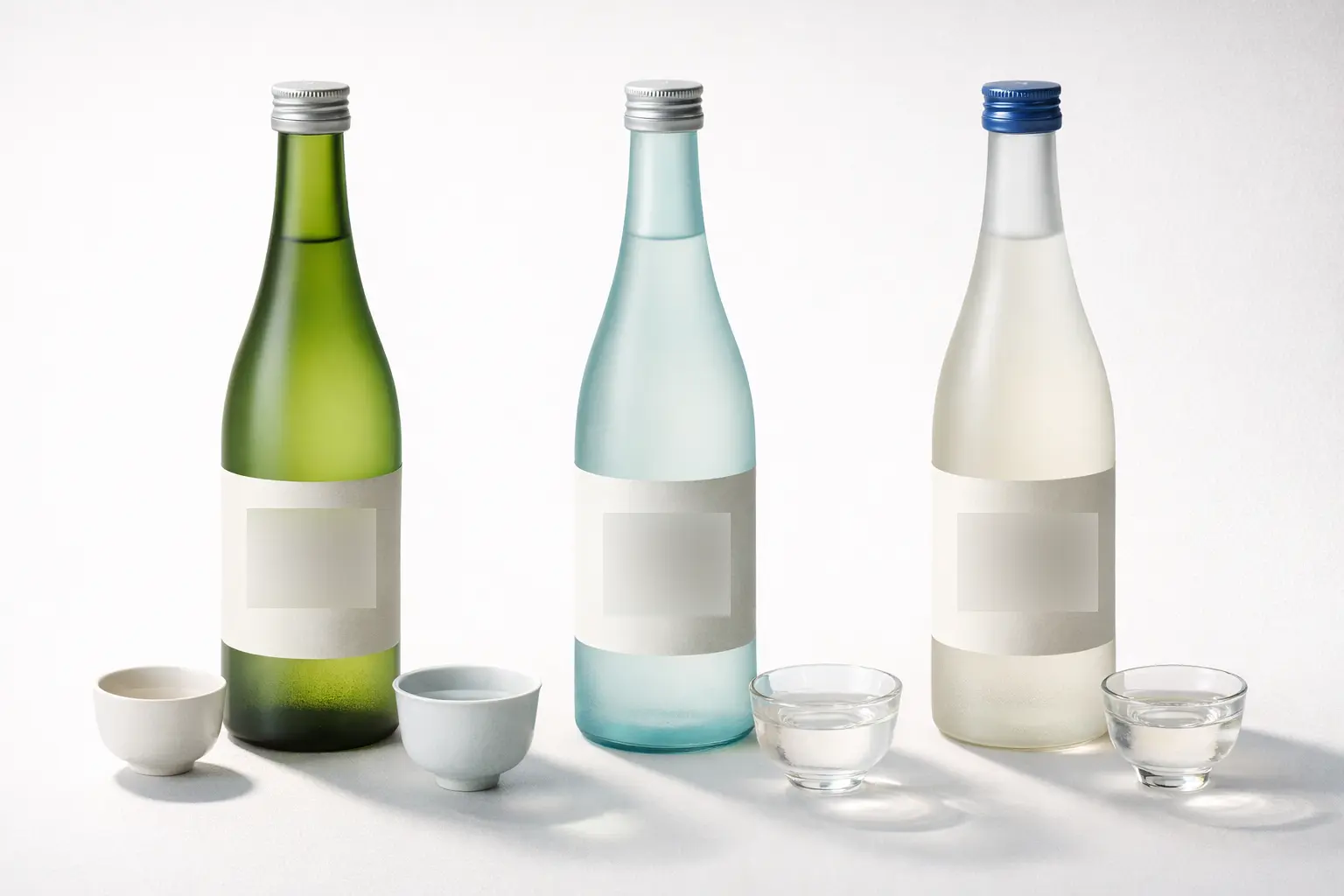
Understanding Junmai, Ginjo, and Daiginjo
A clear explanation of sake classification. Learn the differences between Junmai, Ginjo, and Daiginjo and their characteristics.
Understanding Junmai, Ginjo, and Daiginjo
Have you ever opened a sake menu at a Japanese restaurant and felt completely lost? “Junmai,” “Ginjo,” “Daiginjo”—you sense that Daiginjo is probably premium, but the actual differences remain fuzzy. And asking the server feels a bit embarrassing. I get it.
Here’s the good news: this classification system isn’t as complicated as it looks. Understanding just two key concepts will completely change how you read a sake menu.
First, Let’s Talk About Rice Polishing
To understand sake categories, you need to know about “seimaibuai” (rice polishing ratio).
When we cook rice at home, we use white rice that’s been milled from brown rice. Sake brewing uses the same principle, but the milling is far more extreme.
A rice polishing ratio of 60% means 40% of the outer rice grain has been milled away, leaving 60%. At 50%, half the grain remains. The smaller the number, the more extravagantly the rice is being used.
Why mill so much? The outer layers of rice contain fats and proteins that can create off-flavors. Using only the starchy center produces a cleaner, more refined sake. That’s why heavily polished sake tends to be more delicate and elegant.
The milling itself is no quick job. For Daiginjo grades, the rice is polished slowly over dozens of hours to avoid cracking the grains. Since more than half of each grain is stripped away as bran, you also need far more rice to begin with. This combination of “time” and “quantity of rice” is exactly what drives the price differences we’ll get to later.
That said, “tends to be” is key. Plenty of excellent sake with higher polishing ratios deliver wonderful, full rice flavors. In recent years, more breweries have deliberately polished less to bring out the rice’s character, so a smaller number no longer automatically means “better.”
What “Junmai” Means
Japanese sake falls into two categories: “Junmai-kei” (pure rice types) made only with rice, koji, and water, and “Aru-ten-kei” (alcohol-added types) that include a small amount of brewer’s alcohol.
The term “alcohol-added” might sound negative, like something’s being diluted. But this isn’t about cutting corners—it’s a technique to enhance aroma and create a lighter finish. Some ginjo sake intentionally add small amounts of alcohol to draw out those gorgeous fruity notes. By law, the added alcohol may not exceed 10% of the weight of the white rice used; go beyond that and the sake can no longer carry a special designation.
Junmai types tend to showcase the rice’s natural richness and umami. Alcohol-added types lean toward a cleaner, lighter profile. Neither is superior—it’s about personal preference and food pairing.
The Eight Special Designations at a Glance
Under Japan’s National Tax Agency standards for labeling sake (“Seishu no Seiho Hinshitsu Hyoji Kijun”), sake that meets certain conditions is classified into eight “tokutei meishoshu” (special designation sake) categories. Anything that doesn’t meet these conditions is called “futsu-shu” (ordinary sake), which still accounts for much of the sake on the market.
Let’s see all eight in a table. The two things to watch are whether the word “Junmai” appears (i.e. whether alcohol was added) and the polishing ratio number.
| Name | Polishing ratio | Ingredients | Flavor tendency |
|---|---|---|---|
| Junmai-shu | No requirement | Rice, koji | Rich, umami-forward; wide range of character |
| Tokubetsu Junmai-shu | 60% or less, or special method | Rice, koji | Cleaner than Junmai from extra polishing |
| Junmai Ginjo-shu | 60% or less | Rice, koji | Fruity and light |
| Junmai Daiginjo-shu | 50% or less | Rice, koji | Delicate yet aromatic; umami remains |
| Honjozo-shu | 70% or less | Rice, koji, brewer’s alcohol | Light and easy to keep drinking |
| Tokubetsu Honjozo-shu | 60% or less, or special method | Rice, koji, brewer’s alcohol | Cleaner mouthfeel than Honjozo |
| Ginjo-shu | 60% or less | Rice, koji, brewer’s alcohol | Aromatic with a clean finish |
| Daiginjo-shu | 50% or less | Rice, koji, brewer’s alcohol | Gorgeous aroma and clarity |
The four on the right made only from “rice and koji” are the Junmai types; the four that include “brewer’s alcohol” are the alcohol-added types. And a polishing ratio of 60% or less earns the word Ginjo, 50% or less earns Daiginjo. Seeing the names as this grid of rows and columns makes everything click at once.
One note: Junmai-shu has no polishing requirement only since the 2004 revision of the standards. Before that, a limit of “70% or less” applied; today it’s been removed, so any sake made purely from rice can be called Junmai regardless of polishing ratio.
Eight Categories, But You Only Need Four
Still, you don’t have to memorize all eight from the start. Master these four and you’ll handle most situations:
Junmai-shu is the foundation—sake made purely from rice. With no polishing ratio requirement, you’ll find enormous variety between breweries. It’s versatile, enjoyable warm or cold.
Junmai Ginjo-shu requires rice polished to 60% or less and undergoes low-temperature fermentation. Known for fruity aromas that shine when served chilled. A great starting point for sake newcomers.
Junmai Daiginjo-shu requires rice polished to 50% or less. With over half the rice milled away, it demands significant labor and raw material costs. Delicate and refined—the kind you save for special occasions.
Honjozo-shu requires rice polished to 70% or less with added brewer’s alcohol. Clean and easy-drinking, often reasonably priced. A reliable everyday choice.
The other four categories (Tokubetsu Junmai, Tokubetsu Honjozo, Ginjo, Daiginjo) are essentially variations of these.
A Practical Way to Read the Label
When you’re picking a single bottle at a shop or restaurant, being able to read the label cuts down on mistakes. There are only a few spots to check.
First, the special designation printed prominently on the front—names like “Junmai Daiginjo” or “Honjozo” are exactly the categories we’ve been discussing. If nothing is printed there, or it only says “sake” or “seishu,” it’s likely an ordinary sake.
Next, the ingredients on the back label. If it ends at “rice, koji,” it’s a Junmai type; if “brewer’s alcohol” follows, it’s an alcohol-added type. That single line tells you whether to expect richness or a lighter touch.
Then the polishing ratio number. 50% or less puts it in the Daiginjo class; 60% or less in the Ginjo class. The smaller the number, the more labor went into it.
With a little practice, you’ll be able to name the category from just the ingredients and polishing ratio—even with the designation hidden.
A Sense of the Price Range
Price matters as much as taste. It varies by brand and brewery, but here’s a rough sense of the market for a 720 ml bottle (the standard “yon-go” size).
Honjozo-shu is the most approachable, roughly 900–1,500 yen. Junmai-shu typically centers around 1,000–2,000 yen. Junmai Ginjo-shu runs about 1,500–3,000 yen, and Junmai Daiginjo-shu starts around 2,500 yen and, for prized labels, often tops 5,000 yen.
The reason prices climb is simple: the more rice you mill, the more raw material you need, plus the added effort of slow, low-temperature fermentation. In other words, price roughly reflects the amount of labor. But as noted below, the amount of labor doesn’t necessarily match what tastes best to you.
For a first bottle, there’s no need to reach for the top tier. Junmai and Junmai Ginjo around 1,500 yen include plenty of gems that clearly show a brewery’s skill. Get a feel for your preferences in this range first, then gradually work up to the higher labels of breweries you’ve come to love—the surest route, even if it looks like the long way around.
Expensive Doesn’t Always Mean Better
Let me be direct about something important.
Yes, Daiginjo requires extensive labor and commands higher prices. But that doesn’t guarantee you’ll find it “delicious.”
The more you polish rice, the fewer off-flavors—but also less of the rice’s character and umami. If you love clean, delicate sake, Daiginjo might be perfect. If you want bold rice flavors, you might find it underwhelming.
When in doubt at a restaurant, start with Junmai-shu. You’ll taste the rice directly, making it ideal for understanding what sake is really about. From there, explore ginjo types for more elegance, or aged and kimoto styles for more depth.
Pairing with Food
Here’s a rough guide.
Junmai types pair beautifully with Japanese cuisine in general—simmered dishes, grilled fish, anything highlighting natural flavors. Warming brings out the umami, making it excellent for kanzake (heated sake).
Ginjo types complement delicate dishes like sashimi and sushi. Serve chilled so the elegant aromatics enhance rather than overpower the food. Those fruity notes also play surprisingly well with Western dishes and cheese.
If there’s one trick, it’s to “match the intensity of the dish and the sake.” Light dishes with a light ginjo, richly flavored dishes with a full-bodied junmai. Keeping just this in mind will keep you from going far wrong.
Of course, these are just guidelines. The best approach is trusting your own palate and experimenting freely.
Frequently Asked Questions
Q. Ginjo or Junmai Ginjo—which should I choose?
Both are polished to 60% or less, so the polishing is identical. The only difference is the added alcohol. Junmai Ginjo carries the rice’s umami and feels fuller; Ginjo, thanks to the added alcohol, has lifted aromatics and a lighter finish. Reach for Ginjo when you want to enjoy the aroma cleanly, and Junmai Ginjo when you want more to sink your teeth into. Think of it as a difference in direction, not in rank.
Q. Is it OK to warm Daiginjo?
Nothing forbids it, but I wouldn’t recommend it. Daiginjo’s appeal is the delicate ginjo aroma that rises when it’s chilled, and warming tends to blow that aroma off and throw the balance out. To honor that carefully built aroma, serve it cold or, at most, up to room temperature. If you want to enjoy warm sake, a Junmai-shu or Honjozo—whose umami swells with heat—suits it far better.
Q. What exactly is “special” about “Tokubetsu Junmai”?
It signals that the sake was made with rice polished to 60% or less, or by a “special production method.” What counts as special, however, is left to each brewery’s judgment, and they’re required to state the reason on the label. It might be a prized rice variety, a particular technique—reasons vary by brewery. Knowing there’s no single strict standard behind the impressive-sounding name will save you some hesitation when choosing.
Want to learn more about rice polishing? See Understanding Seimaibuai.