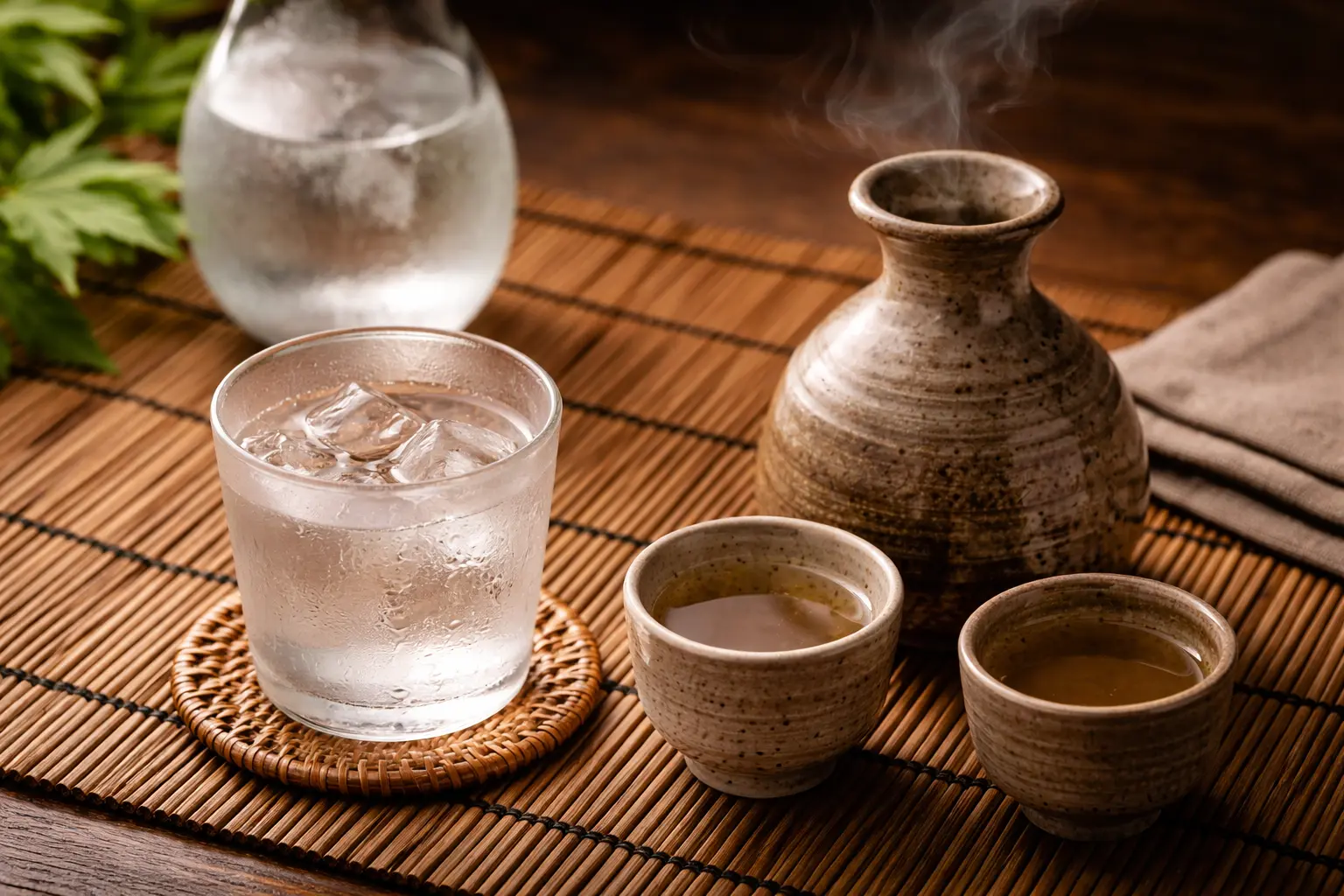
Sake Serving Temperatures: From Chilled to Warm
Sake transforms with temperature. From ice-cold reishu to steaming atsukan, discover how different temperatures unlock different flavors in the same bottle.
Sake Serving Temperatures: One Bottle, Many Faces
“This sake became a completely different drink when I warmed it.”
I overheard this at an izakaya counter from someone who clearly knew their way around a sake menu. The same bottle transforming with temperature—anyone who drinks sake regularly eventually experiences this phenomenon.
Wine has ideal serving temperatures too, but few beverages in the world can be enjoyed across a range from 5°C to 55°C. This temperature flexibility is one of sake’s most fascinating aspects.
Understanding Temperature Names
Japanese has poetic names for different sake temperatures. Knowing them helps navigate menus and conversations about sake.
The Cold Spectrum
Yuki-bie (Snow-Cold) Around 5°C Straight from the refrigerator. Aromas stay quiet, flavors sharp and crisp.
Hana-bie (Flower-Cold) Around 10°C Removed from the fridge for a few minutes. Aromas begin emerging, flavors opening up.
Suzu-bie (Cool-Cold) Around 15°C Wine cellar temperature. Not too cold, nicely balanced.
Room Temperature
Hiya (Cool) Around 20°C Despite the name, “hiya” isn’t actually cold—it means room temperature. Before refrigeration, this was “cold” sake. Order “hiya” at a traditional bar and you might get room temperature sake.
The Warm Spectrum
Hinata-kan (Sunlight-Warm) Around 30°C Just slightly warm. Below body temperature.
Hitohada-kan (Body-Warm) Around 35°C As the name suggests, body temperature. Feels barely warm in your mouth.
Nuru-kan (Lukewarm) Around 40°C Pleasantly warm. Perfect introduction to heated sake.
Jo-kan (Properly Warm) Around 45°C Distinctly warm. Aromas rise from the cup.
Atsu-kan (Hot) Around 50°C Noticeably hot. Steam visible.
Tobikiri-kan (Extremely Hot) 55°C and above Very hot. Polarizing, but adds sharpness.
Why Temperature Changes Flavor
Same liquid, different experience. What’s happening?
Aroma Volatility
Higher temperatures make aromatic compounds evaporate faster. Heat a ginjo sake and its delicate fruity notes often vanish. Conversely, warming a subdued junmai can coax out hidden aromas.
Sweetness and Acidity Balance
Human taste perception changes with temperature.
Cold accentuates acidity while muting sweetness. Dry sake becomes even crisper when chilled.
Warmth brings sweetness forward and softens acidity. This is why warmed sake feels gentler.
Umami Expansion
Amino acids in sake express more fully when warmed. This is called “kan-agari”—sake that improves with heating. Umami that stayed hidden when cold suddenly blooms.
Temperature Recommendations by Style
Which sake at which temperature? There’s no single correct answer, but patterns exist.
Ginjo and Daiginjo
Recommended: 10-15°C (Flower-Cold to Cool-Cold)
To enjoy fruity aromatics, don’t over-chill. Snow-cold temperatures close down the bouquet. Warming typically disperses the delicate fragrances.
That said, some daiginjo taste wonderful warm. Worth experimenting rather than following rules blindly.
Junmai
Recommended: 15-45°C (Cool-Cold to Properly Warm)
Junmai handles the widest temperature range. Solid rice umami keeps the sake stable whether cooled or heated.
Many junmai demonstrate “kan-agari”—becoming more delicious when warmed.
Honjozo
Recommended: 20-50°C (Room Temperature to Hot)
Clean-tasting honjozo is a classic choice for warming. Maintains balance even at high temperatures. Versatile with food.
Nama (Unpasteurized)
Recommended: 5-10°C (Snow-Cold to Flower-Cold)
Without pasteurization, nama sake is typically served cold. Warming changes its fresh character.
Though some connoisseurs enjoy kimoto nama at lukewarm temperatures.
Aged Sake (Koshu)
Recommended: 20-40°C (Room Temperature to Lukewarm)
Complex aging aromas open better with slight warmth. Too cold can make aged sake feel heavy.
How to Warm Sake Properly
The Water Bath Method
What you need
- Tokkuri (sake flask) or serving pitcher
- Pot and water
Steps
- Fill tokkuri about 80% full
- Put water in pot, bring to boil
- Turn off heat
- Place tokkuri in water and wait
Lukewarm takes 2-3 minutes, hot takes 3-4 minutes. Touch the bottom of the tokkuri to check temperature.
What Not to Do
Microwave heating Creates uneven hot spots and evaporates alcohol quickly. If you must use one, low power, short intervals, stir between.
Direct flame Never. Risk of cracking the vessel, and rapid heating destroys the sake.
Leaving in boiling water Temperature rises too high. Turn off heat before or just after boiling.
The Joy of Temperature Exploration
Same Sake, Different Temperatures
Try one bottle at chilled, room temperature, and lukewarm. Some sake transform dramatically.
“Didn’t like it cold, but it’s delicious warm”—every sake enthusiast has this revelation. The reverse happens too.
Seasonal Changes
Summer calls for ice-cold sake. Winter invites warming. Obvious, perhaps, but part of sake’s charm.
Drink the same brand year-round and you’ll notice optimal temperature shifts with seasons.
Pairing Considerations
Chilled sake with sashimi. Warm sake with hot pot. Matching temperature to food adds another dimension.
Hot sake with tempura cuts through oil beautifully. Cold sake doesn’t provide this effect.
Don’t Overthink Temperature
Having written all this, I should add: don’t obsess over temperature.
The warmed sake at the izakaya arrived hotter than expected. Still delicious. The ginjo got too cold in the fridge. Let it sit a few minutes.
Rather than declaring “this sake must be at this temperature,” exploring and finding your own preferences brings more enjoyment.
Summary
Sake temperature isn’t simply “cold” or “warm.” From 5°C to 55°C, each degree can reveal different characteristics.
The same sake changes with temperature. This simple fact makes sake endlessly fascinating.
Next time you drink sake, try a different temperature than usual. You might discover something new.
Learn more about sake basics in What is Sake or Understanding Sake Categories.