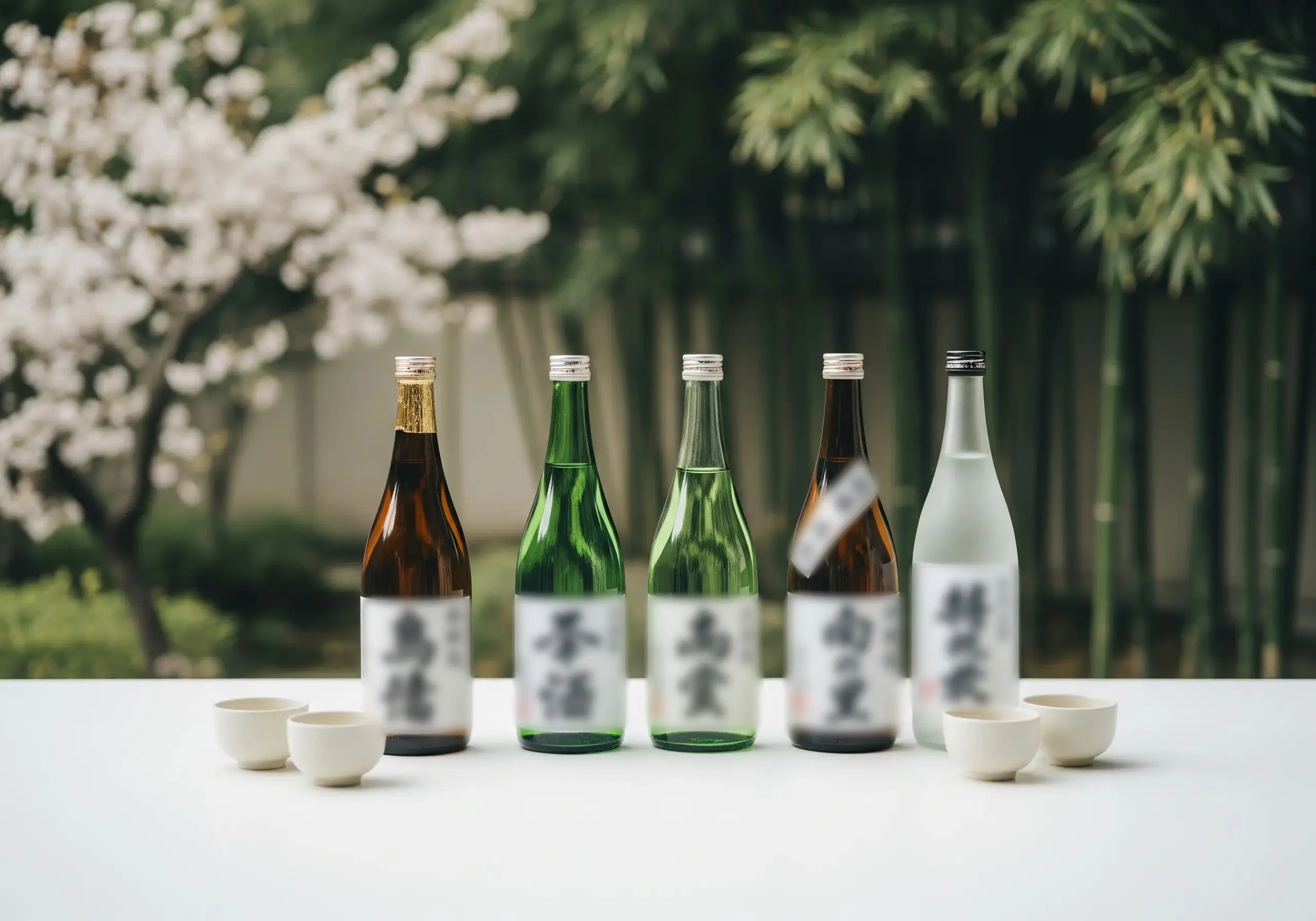
Niigata Sake: Discovering the Holy Land of Light and Dry
Niigata Prefecture boasts the most sake breweries in Japan. Learn about the characteristics of Niigata sake, famous for its light and dry style, its representative brands, and how to enjoy it.
Niigata Sake: The Holy Land of Light and Dry
When people hear “Niigata sake,” most think of a crisp, light, and dry flavor profile. But why did Niigata become the byword for this style? The answer lies in four verifiable conditions of this land: its climate, its water, its rice, and its craft.
Niigata Sake by the Numbers
First, consider the scale. Around 90 breweries belong to the Niigata Sake Brewers Association, giving the prefecture the highest number of sake breweries of any in Japan. According to the National Tax Agency’s report on sake production, Niigata ranks third nationally in volume of production, behind Hyogo and Kyoto. It falls short of those two in sheer quantity, but what matters is the content: in Niigata the proportion of “special designation” sake, such as ginjo and junmai, far exceeds the national average, and its share of the country’s ginjo sake alone is roughly twenty percent, consistently among the highest.
In other words, Niigata is at once a region that produces a great deal and a region that produces high-quality sake at a high ratio. This dual character is the true measure of its standing as a sake country.
The Four Conditions That Created Light and Dry
Climate: Heavy Snow and Slow, Cold Fermentation
Niigata is one of the snowiest regions in Japan. In the mountains, winter snowfall reaches several meters. This severe cold carries a double meaning for brewing.
First, it suppresses the growth of harmful bacteria. Second, it creates the ideal environment for “kanzukuri,” the practice of fermenting slowly at low temperatures. When fermentation is drawn out at low temperatures, the yeast works gently, producing a clean sake with few off-flavors. Niigata’s lightness is born first of all from this cold.
Sake fermentation runs faster the warmer it is and gentler the colder it is. Fast fermentation loads on aroma and flavor but also invites off-notes, while slow, cold fermentation takes its time and tends toward a delicate sake of great clarity. Since the days when heating equipment was scarce, Niigata’s breweries have used the cold climate itself as a fermentation “device.” Turning the apparent disadvantage of a harsh winter into a weapon for quality is what Niigata has done.
Water: The Soft Water of the Shinano and Agano River Systems
The Niigata Plain was formed by two great rivers: the Shinano, the longest river in Japan, and the abundant Agano. The winter snow becomes meltwater in spring, and as it filters through the mountains it reaches the breweries as underground spring water.
This water is often soft, low in minerals. Brewing with soft water lets fermentation proceed gently, tending to yield a fine-textured, smooth sake. This sets a different flavor direction from regions that ferment vigorously with hard water. In Niigata, the “climate” of snow connects directly to the character of the “water.”
Rice: Gohyakumangoku, Born in Niigata
Niigata is one of Japan’s leading rice regions and a major producer of Gohyakumangoku, a rice well suited to brewing.
Gohyakumangoku was developed in Niigata Prefecture and given its name in 1957 to mark the year the prefecture’s rice output surpassed five million koku (about 750,000 tons). Its central “shinpaku” (starchy core) is large, making it easy for koji mold to penetrate, though it crumbles if milled too far. Because of these traits, Gohyakumangoku contains fewer compounds that cause off-flavors and tends to produce a clean, refined sake. It was this variety that supported the light-and-dry boom from the rice side.
At the same time, a large shinpaku makes Gohyakumangoku ill-suited to heavy polishing. So Niigata developed its own sake rice, Koshi Tanrei, for premium grades such as daiginjo, where the grain is milled far down. While preserving the light tradition that Gohyakumangoku built, the prefecture moved on the rice front as well so its brewers could reach for more highly polished sake. Not merely buying materials from outside but raising a rice suited to the local land, Niigata shows here too the depth of a true sake region.
Craft: The Accumulated Skill of the Echigo Toji
Even when the conditions align, it is human skill that turns them into sake. Niigata is home to a guild of master brewers known as the “Echigo Toji.”
During the agricultural off-season in winter, these craftsmen of Echigo entered the breweries and, over a long history, honed brewing techniques suited to soft water, low temperatures, and Gohyakumangoku. It is thanks to the accumulated skill of this guild, counted among Japan’s three great toji traditions, that the natural conditions of heavy snow, soft water, and sake rice crystallized into the finished style of “tanrei karakuchi.”
Niigata also has a system for passing that skill to the next generation. In 1984 the Niigata Sake Brewers Association founded the Niigata Sake School. A dedicated school where mid-career brewers study brewing systematically is without parallel elsewhere in Japan, and it has produced people who can design sake with scientific grounding as well as intuition and experience. In addition, the Niigata Prefectural Sake Research Institute is the only sake-specialized research body run by a prefecture anywhere in Japan, providing technical support to breweries and dispatching instructors to the school. That light-and-dry sake can be achieved reliably not only at a few famous breweries but across many of the prefecture’s producers rests on this foundation of education and research.
What is Tanrei Karakuchi?
The term “tanrei karakuchi” (light and dry) spread as a way to describe Niigata sake in the 1980s.
“Tanrei” means light-bodied, with a clean finish; a taste with little in the way of off-flavors and a transparent quality. “Karakuchi” means restrained sweetness and a sharp finish; a dry mouthfeel. Gentle fermentation with soft water converts sugars thoroughly into alcohol, and the character of Gohyakumangoku keeps off-flavors in check. The four conditions examined above are distilled directly into these two words.
There was also a spirit of the times behind the term’s spread across Japan. Until then, mass-produced sake made heavy and sweet with added sugars had dominated, and younger generations were drifting away. Into that setting came Niigata’s crisp dry sake, praised as something that did not overwhelm food and could be enjoyed cup after cup, and it became the symbol of the local-sake boom. “Tanrei karakuchi” was not merely a description of flavor but a keyword that anticipated a shift in taste from heavy sake to light. Niigata’s recognition as a nationally known sake country came in part from riding this wave.
The Character of Each Region
Even within Niigata, the land is far from uniform, from the plains of the north to the deep-snow mountains.
Around Niigata City, between the Shinano and Agano rivers, the Kameda-go area was once poorly drained lowland, called “a lake missing from the map,” but through reclamation and drainage it was reborn as a producer of fine rice. Murakami in the north is a castle town where sake culture took root alongside salmon. Uonuma, one of Japan’s snowiest regions, holds the conditions of light-and-dry sake—meltwater and cold—in their most concentrated form.
Further, Joetsu in the southwest, known as the castle town of the warlord Uesugi Kenshin and as the birthplace of skiing in Japan, is a deep-snow area where old breweries gather. Sado, an island in the Sea of Japan, also has breweries rooted in the island’s climate. Even within a single “Niigata light and dry,” the expression of water and climate shifts slightly between plain and mountain, coast and interior—taste them side by side and you will notice the difference of the land reflected in the flavor.
Representative Brands
Here are some indispensable, real brands for talking about Niigata sake.
- Kubota (Asahi-Shuzo, Nagaoka City) — Introduced in 1985, the driving force that spread the light-and-dry boom nationwide. It is offered by grade, including “Senju” and “Manju.”
- Hakkaisan (Hakkai Jozo, Minami-Uonuma City) — Brewed with the underground water of Uonuma. Its hallmark is a balance that is light yet lets you feel the umami of the rice.
- Koshi no Kanbai (Ishimoto Shuzo, Niigata City) — A prestigious Niigata sake once called a “phantom sake.” Elegant in aroma with a clean finish.
- Shimeharitsuru (Miyao Shuzo, Murakami City) — Long loved locally. Light, yet with a depth that shines even when warmed.
- Kikusui (Kikusui Sake Co., Shibata City) — Known for “Funaguchi Kikusui Ichibanshibori,” its idea of delivering fresh unpasteurized sake in a can opened up new ways to enjoy sake.
All are widely distributed and easy to find at liquor shops and restaurants. Start around here to grasp the outline of Niigata.
Today’s Niigata: Not Light and Dry Alone
In recent years, change has come to Niigata sake, once devoted almost entirely to tanrei karakuchi. Young breweries deliberately brewing rich, umami-forward sake; breweries reviving traditional methods such as kimoto and yamahai; breweries taking on sake rice other than Gohyakumangoku or local table rice—building on an established style, Niigata sake continues quietly to evolve.
How to Enjoy Niigata Sake
Light and dry sake pairs well with delicate dishes. Blessed with the bounty of the Sea of Japan, Niigata makes sashimi of white fish, sweet shrimp, and nodoguro (blackthroat seaperch) the natural match. The crisp sake does not erase the delicate sweetness of the seafood but rather draws it out. It goes just as well with the slight bitterness of spring mountain vegetables, with hegi soba (Niigata’s specialty noodles bound with funori seaweed), and with noppe, a home-style dish of simmered taro and vegetables. Niigata teaches, plainly, the obvious truth that the local sake suits the local food best.
Temperature is another place to experiment. Light and dry sake is typically served chilled, but junmai and honjozo styles reveal a hidden rice umami when warmed. The same bottle turns sharp when chilled and rounds out when heated. Chilled in summer, warmed in winter—drink it by the season and a single bottle shows two faces.
To taste it on the spot, we recommend “Ponshukan” at JR Niigata and Echigo-Yuzawa stations, where you can sample sake from breweries across the prefecture for the price of a coin—ideal to drop in on during a journey. And every March, the Niigata Sake Brewers Association hosts “Niigata Sake no Jin,” one of the largest sake events in Japan. Begun in 2004 to mark the association’s fiftieth anniversary, it grew until, at its peak, it drew a cumulative 140,000 visitors over two days. A place where many of the prefecture’s breweries gather in one hall and you can sample hundreds of sakes is a prime chance to feel Niigata’s strength firsthand.
The harsh nature of snow country and the skill built up by the Echigo Toji: the sake born of these two wheels is approachable for beginners yet never tires the seasoned drinker. Once you have traced its outline through the representative brands, next, please raise a cup amid a snowy landscape. In that single cup, the climate and water and rice and people of this land are all dissolved together.
For other regions like Nada and Fushimi, see Nada and Fushimi Sake.
For enjoying sake while traveling, see Enjoying Local Sake.