Cooking with Sake: From Simmered Dishes to Desserts
Why use real sake instead of cooking sake? From simmered dishes to hot pots to sweets, learn how sake elevates your cooking to the next level.
Cooking with Sake
What’s the difference between “cooking sake” and real sake?
Does using real sake actually make food taste better?
The answer is yes.
Real sake has flavors and umami that cooking sake lacks.
Here’s how to use sake to enhance your cooking.
Cooking Sake vs. Real Sake
Cooking Sake Characteristics
Salt Added Due to tax laws, salt is added to make it undrinkable as a beverage.
Weaker Flavor To reduce costs, aroma and umami are minimal.
Long Shelf Life Salt helps it last longer after opening.
Benefits of Real Sake
Rich in Umami High amino acid content adds deep richness to dishes.
Better Aroma Elegant fragrance remains even after cooking.
Control Over Saltiness No added salt means more freedom in seasoning.
No Additives Made purely from rice and water.
Which Sake to Choose
Recommended
- Junmai (rich umami)
- Honjozo (well-balanced)
- Leftover sake you didn’t finish
Avoid
- Expensive daiginjo (wasteful)
- Old, degraded sake
- Overly sweet sake
Guideline A junmai around $10-15 for 720ml is sufficient.
Basic Uses in Cooking
Removing Odors
Fish Odors Sprinkle sake on fish and let sit 5 minutes before cooking. Alcohol volatilizes odor compounds.
Meat Odors Especially for game or organ meats. Marinate in sake before cooking.
Shellfish Add a little sake to the water when purging sand. Very effective.
Tenderizing Meat
How It Works Enzymes in sake break down meat proteins.
Application Coat 100g of meat with 1 tablespoon sake. Let rest 30 minutes to 1 hour before cooking.
Best For Chicken breast, pork loin, beef round—cuts that tend to get tough.
Adding Umami
In Simmered Dishes Replace part of the water with sake. (For 400ml water, use 300ml water + 100ml sake)
In Stir-Fries Add 1-2 tablespoons sake at the end. Alcohol evaporates, leaving only umami.
In Steamed Dishes Add sake to steaming water for plumper results.
Creating Glaze
How It Works Sake’s sugars caramelize when heated.
Application Add sake to teriyaki sauce. Reducing creates beautiful glaze.
Japanese Cuisine Applications
Simmered Dishes
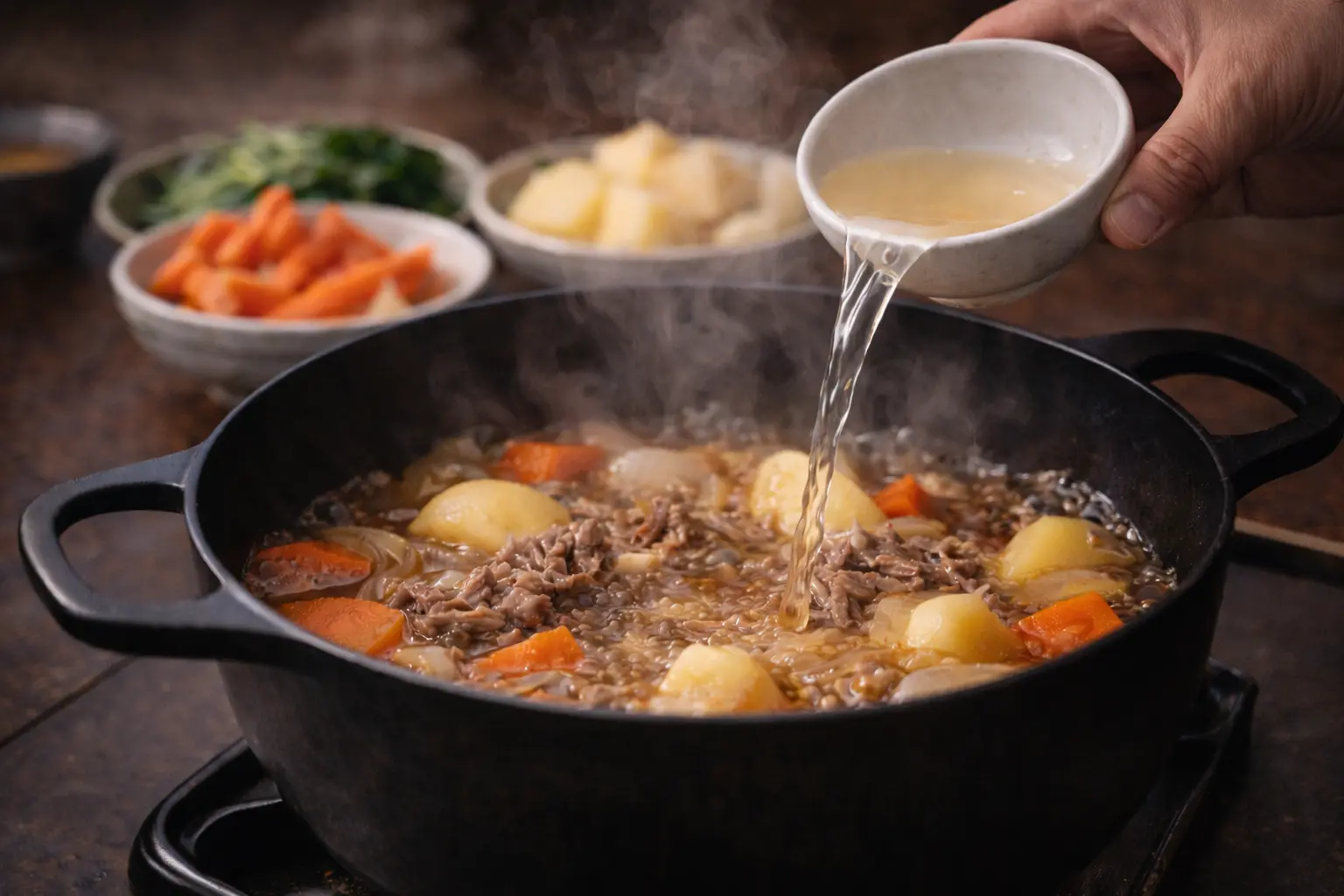
Nikujaga (Meat and Potatoes) Use water and sake 1:1. Potatoes become fluffy.
Chikuzen-ni Steam-braise chicken in sake before adding vegetables.
Buri Daikon (Yellowtail with Daikon) Pre-boil fish in sake. Removes odor for refined taste.
Simmered Kabocha Simmer in sake only instead of water. Deep sweetness emerges.
Hot Pot Dishes
Mizutaki Add 1 cup sake to the broth. Enhances chicken umami.
Shabu-shabu Add sake to kombu broth. Meat becomes even more tender.
Yose-nabe Drizzle sake at the end. Elevates the aroma.
Sakamushi (Sake Steaming) Steam clams or shellfish in sake alone. Exquisite.
Grilled Fish
Preparation Sprinkle sake on fish, wait 5 minutes, then grill.
Effects Removes odor, keeps flesh moist, prevents burning.
Especially Good For Mackerel, sardines, pacific saury—oily fish.
Sashimi
Zuke (Marinated) Marinate sashimi in sake and soy sauce (1:2 ratio).
Shime (Cured) Cure white fish with sake and salt. Kelp-curing style.
Western Cuisine Applications
Meat Dishes
Steak After cooking, add sake to deglaze the pan. Use as sauce base.
Roast Chicken Add sake to the marinade. Meat becomes tender and juicy.
Hamburger Mix 1 tablespoon sake into the patty mixture. Creates fluffy texture.
Braised Pork Belly Braise in sake instead of cola or tea for refined flavor.
Pasta
Vongole Use sake instead of white wine. Creates Japanese-style twist.
Japanese-Style Pasta Add sake to soy sauce-based pasta for deeper flavor.
Cream Sauce Flambé with sake before adding cream.
Risotto
Basic Application Use sake instead of white wine. Let rice absorb sake before adding broth.
Recommended Combinations
- Mushroom risotto + sake
- Seafood risotto + sake
- Cheese risotto + sake
Dessert Applications
Japanese Sweets
Dorayaki Batter Add 1 tablespoon sake. Creates moist, fluffy texture.
Oshiruko (Sweet Red Bean Soup) Add a small amount at the end. Enhances bean flavor.
Daifuku Add a little sake when pounding mochi. Softness lasts longer.
Western Sweets
Fruit Compote Add sake to the syrup. Creates adult flavor.
Pound Cake Use sake instead of rum. Japanese-style pound cake.
Ice Cream Pour sake over vanilla ice cream. Easy affogato-style dessert.
Chocolate Truffles Add a little sake to ganache. Adds depth.
Sake Jelly
Ingredients (serves 4)
- Sake: 200ml
- Water: 100ml
- Sugar: 3 tablespoons
- Gelatin: 5g
Method
- Bloom gelatin in water
- Heat water and sugar until dissolved
- Remove from heat, add gelatin
- Add sake (don’t boil)
- Pour into molds and chill until set
Alcohol remains, so adults only.
Making Sake-Based Seasonings
Nikiri (Cooked-Off Sake)
Method Heat sake in a pan until boiling to evaporate alcohol. (Or flambé)
Uses
- Hidden flavor in clear soup
- Seasoning for vinegared dishes
- Base for marinating sauce
For those avoiding alcohol or cooking for children.
Shio-koji + Sake
Method Mix a little sake into store-bought shio-koji.
Uses Marinating meat or fish. Boosts umami and tenderness.
Mirin-Style Seasoning
Method Dissolve 2 tablespoons sugar in 100ml sake.
Uses As mirin substitute. For simmered dishes and teriyaki.
Important Considerations
Cooking Off Alcohol
When Necessary
- Cooking for children
- For those avoiding alcohol
- When diners will drive
Methods
- Heat thoroughly (above 90°C for several minutes)
- Flambé
- Use nikiri
Don’t Overdo It
Guidelines
- Simmered dishes: 1/4 to 1/3 of the liquid
- Pre-seasoning: 1 tablespoon per 100g
- Finishing: 1-2 tablespoons
Too much leaves alcohol smell or unbalances flavor.
Timing Matters
Add at Beginning For removing odors, tenderizing meat.
Add During Cooking For adding umami, creating glaze.
Add at End For preserving aroma. Keep cooking time short.
Storage
After Opening Refrigerate. Use within 1 month.
Signs of Degradation Sour smell, color change. Don’t use for cooking.
Summary
Real sake is the superior choice for cooking.
Basic Uses
- Remove odors
- Tenderize meat
- Add umami
- Create glaze
Recommended Sake Junmai or honjozo. $10-15 is enough.
Start With Replace water with sake in simmered dishes.
Taste the difference between cooking sake and real sake for yourself.
Not just for drinking—use it in cooking too.
Discover a new side of sake.
Interested in new sake trends? Check out What is Craft Sake?