If You Don't Like Sake: Easier Styles and Better Ways to Drink It
Most people who dislike sake didn't stumble over sake itself—they stumbled over the first glass they were handed. Alcoholic strength, an off-putting smell, the wrong temperature: here is each cause taken apart, along with how to choose the glass worth trying next.
If You Don’t Like Sake
“Sake is the one thing I can’t do.”
Made to down cheap sake at a party, then paying for it badly the next day. Ever since, even the smell is too much—people who tell that story are not hard to find.
And yet the other scene happens just as often: one of those same people tries a sparkling sake and asks, “This is sake?”
Most people who dislike sake don’t dislike the drink. Far more often, the first glass they met, and the way they drank it, were simply bad.
It’s worth taking that aversion apart, cause by cause.
”The alcohol is too strong”
This impression is grounded in fact.
Sake is generally 15–16% alcohol. That’s three times beer’s roughly 5%, and higher than wine’s roughly 12%. On top of that, it usually isn’t sipped slowly from a large glass the way wine is—it’s poured into a small cup and refilled again and again. Of course it feels strong.
But this is also, in part, simply not knowing the alternatives.
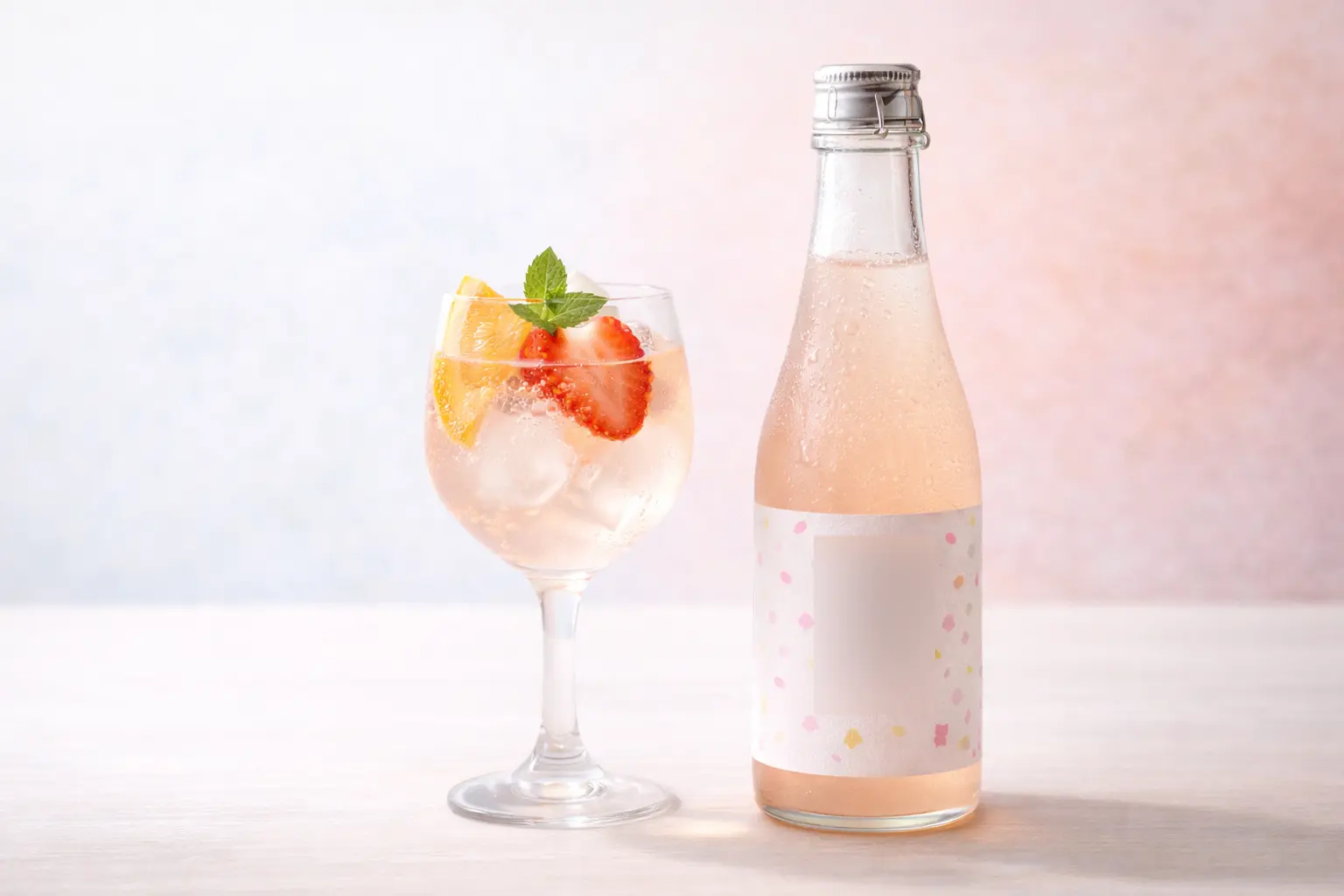
Sparkling sake is often around 8% alcohol. With carbonation and some sweetness, it comes across closer to cider or sparkling wine than to anything you’d expect.
Low-alcohol sake is increasingly common, with breweries releasing bottles held to around 10–12%. These are designed for easy drinking, so the flavor itself is built to be gentle.
Dilution is another option. Some people balk at cutting sake with water or soda water, but if lowering the strength makes it drinkable, that is a perfectly correct way to drink it.
”That distinctive smell puts me off”
The so-called “sake smell.” It has clear causes.
The smell of deteriorated sake. Sake is vulnerable to light and heat. A bottle left on a shelf in direct sunlight, or kept at room temperature for a long time, develops the off-aroma known as hineka—a stale, aged-off smell, heavy and hard to place, somewhere between caramel and old rice.
Sake left open too long. Sake poured from a 1.8-liter bottle that has sat open for days at a restaurant has oxidized. That’s another major source of the “sake smell” people remember.
Cheap sake with a lot of added distilled alcohol. Here the sharp alcoholic edge tends to come forward. The sake laid on in quantity at large drinking parties usually sits in this price range.
In other words, the “smell of sake” most people carry in their memory is usually not sake’s own aroma but a sign of deterioration or low quality.
Open a properly refrigerated ginjo—a sake brewed from highly polished rice for a delicate, aromatic style—and it smells of apple, pear, and melon. Hard to believe it’s the same drink.
”The temperature was wrong”
Plenty of people had their bad experience with hot sake.
Heating sake pushes forward the alcoholic bite along with acidity and bitterness. Heat a sake that wasn’t good to begin with and every flaw steps into the foreground.
Chilling, by contrast, softens the edge. An aromatic sake served at around 10°C makes an entirely different impression.
While the aversion is still fresh, you can forget warm sake altogether. Starting over with chilled sake has a far better success rate. Temperature is covered in detail in Sake Serving Temperatures.
The way it was drunk
Before flavor even enters the picture, the drinking itself is often the culprit.
Drinking on an empty stomach. Put strong sake into an empty stomach and the effect arrives all at once. The memory of getting badly drunk was built by something other than the taste.
Not drinking water. Simply drinking water alongside sake—yawaragi-mizu, the water taken between sips—makes a completely different next morning.
Drinking it in one go. Throw it back with no time to taste it and all that registers is the alcohol.
Using too large a cup. Poured into a tumbler, your sense of quantity goes out the window. Small cups, small sips: much easier to keep a pace.
None of this has anything to do with the quality of the sake; it’s a matter of how and where it was drunk. Which also means these are the easiest factors to fix.
Choosing the next glass to try
Rebuilding from an aversion works best in order. Rather than taking on a serious junmai straight away, go step by step.
Step one: sparkling sake
Carbonated, lower in alcohol, a little sweet. Its greatest advantage is that you can drink it without any preconception about sake at all, so the stronger your resistance, the better a place this is to start.
It works as an aperitif or as the first drink of the evening. Serve it chilled, in a wine glass or a champagne flute.
Step two: aromatic ginjo styles
What the four flavor types call kunshu, the fragrant type. Junmai ginjo and daiginjo—sake made from highly polished rice—with aromas suggesting apple and pear.
Chill to around 10°C and drink from a glass with an open bowl. If you can experience here that sake can smell of fruit, the picture of sake in your memory gets rewritten.
Step three: nigorizake and low-alcohol sake
Nigorizake, the cloudy style with unfiltered rice sediment left in, has the sweetness and body of rice, and some come across close to yogurt or amazake. Many are also lower in alcohol.
If you like sweet drinks, this family tends to suit you.
Step four: with food
Once you’ve come this far, try sake with a meal. Sake shows what it can do alongside food far more than it does on its own.
Sashimi, grilled fish, simmered dishes built on dashi. Paired with Japanese cooking, sake reveals a role you’d never notice drinking it by itself.
How not to go wrong when buying
Choose from the refrigerated case. Sake that’s been kept cold carries a low risk of deterioration. Avoid bottles that have sat a long time on a room-temperature shelf.
Check the production date. Choose something recent. Freshness matters especially for unpasteurized and sparkling sake.
Buy the 720ml bottle. A 1.8-liter bottle is hard to finish, and leaving it open is exactly what causes deterioration. Until you’re used to it, go small.
Ask at a specialist shop. The fastest route is to say it plainly: “I don’t really get on with sake, but I’m looking for something I can drink.” Sake shop staff field this question all the time.
What to say when you order
When the menu at an izakaya tells you nothing, try this.
“I’m not really a sake drinker—could I have something light and fruity, chilled, just a small pour?”
That lands far better than asking for “sweet” or “dry.” On quantity, it helps to add “just a small one” or “by the glass.” Being served more than you can finish reinforces the aversion all by itself.
If there’s a tasting flight, that works too. The pours are small, so if one doesn’t suit you, you can leave it.
And if it still isn’t for you
Having said all of the above: if you try everything and it still doesn’t suit you, that’s fine.
Taste varies from person to person, and some people’s constitution simply doesn’t take alcohol. If you get a flushed face or a racing heart, there is no reason at all to push through. Not being able to drink is a matter of constitution, not something that changes once you get used to it.
Sake is a pleasure, not a merit badge. Being able to drink it doesn’t make anyone admirable, and not being able to doesn’t make anyone lesser. There will be occasions where it’s awkward to refuse a drink someone is pressing on you, but “it doesn’t agree with me” is reason enough.
Listen closely to people who say they don’t like sake and most of the stories converge on the same thing: cheap sake, in poor condition, drunk the wrong way.
As introductions to sake go, that’s a fairly unlucky one.
It’s worth changing the conditions and trying just once more. One chilled glass, a small one, with water alongside, over a meal. If that doesn’t work either, you can say “not for me” with your head held high.
The characteristics of each style are explained in The Types of Sake Flavor.
For how temperature changes the taste, see Sake Serving Temperatures.
For picking a bottle as a beginner, Your First Bottle is also worth a look.