Your First Sake: How to Choose Your First Bottle
A guide for first-time sake drinkers. How to choose your first bottle, easy-drinking brands, and the basics you actually need. Support for your first step into the world of sake.
Your First Sake: How to Choose Your First Bottle
“I want to try sake, but I have no idea what to choose.” If that’s you, the first thing I want to say is this: the encounter with your first bottle can stay with you for a lifetime.
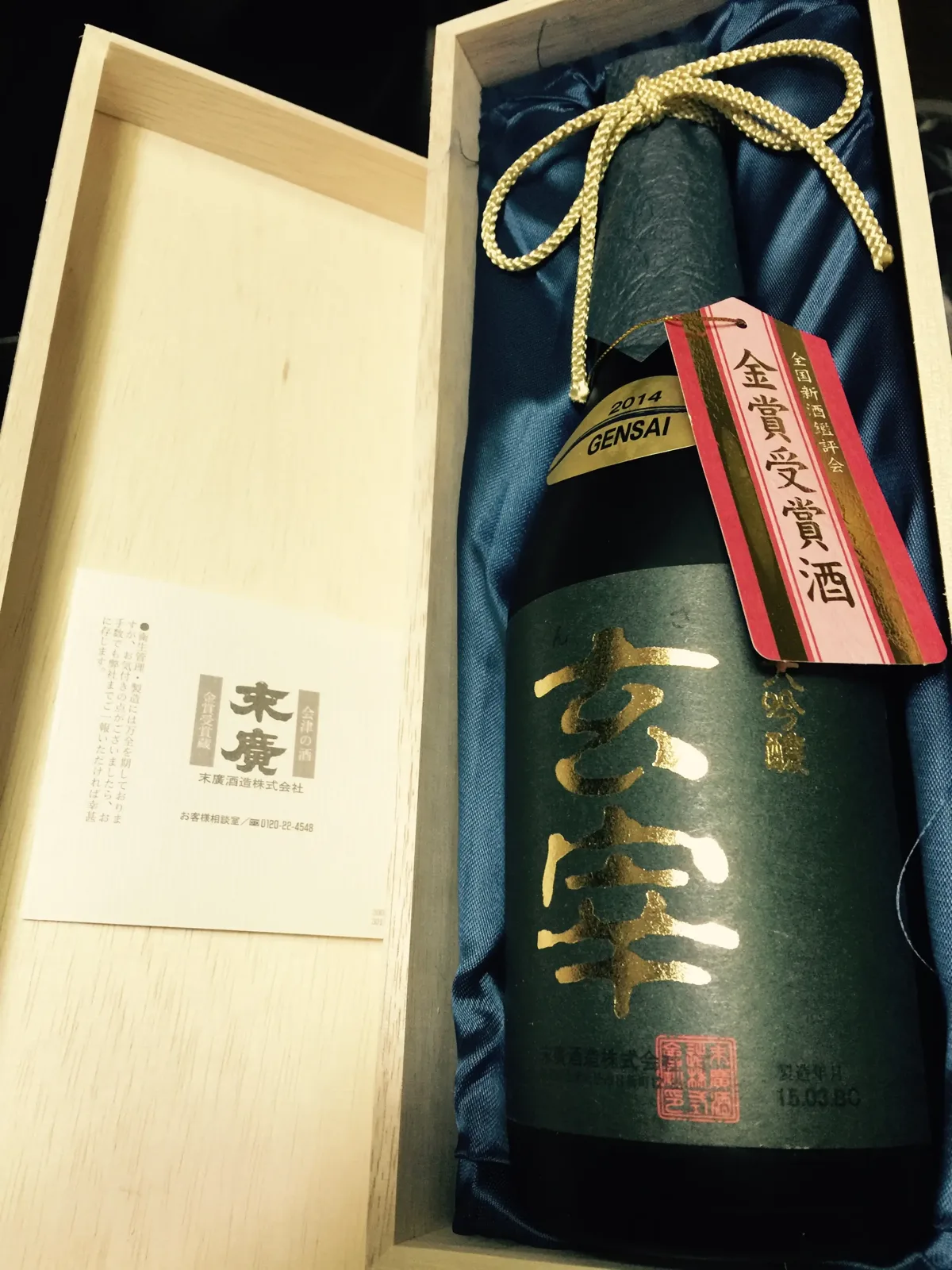
For me, that moment came during my university years. At the cram school where I worked part-time, there was an eccentric senior colleague who, despite still being a student, had bought his own apartment. He often took me out drinking. One day he invited me over to that apartment, and saying “I’ve got some good sake,” he poured me a daiginjo called Gensai, brewed by Suehiro Shuzo in Aizuwakamatsu, Fukushima.
It was ice cold, yet the moment it hit the glass a gorgeous aroma rose up, and when I took a sip a deep, full flavor spread through my mouth. My whole image of sake was rewritten in a single evening. I still can’t forget that feeling. Ever since, I’ve bought Gensai for every celebration, and at my own wedding I chose it as one of the sakes to serve my guests.
I hope you meet a bottle like that too. So in this article, I’ll lay out how to choose your first bottle as concretely as I can. By the time you finish reading, you should be able to reach for a bottle of sake with confidence.
The Bottom Line First
Buy a Junmai Ginjo, chill it in the fridge, and drink it from a wine glass or an ordinary glass.
That’s it. When in doubt, you can’t go wrong with this.
Why Junmai Ginjo? Because it’s balanced. It has solid umami from the rice while also carrying a fruity aroma. It has few quirks, and even a first-timer tends to find it “delicious.”
The reason to chill it is that the aroma becomes gentler and easier to drink. Warmed sake (kanzake) is wonderful, but it’s a high bar to start with. Begin with something cold.
So What Exactly Should I Buy?
Some people hesitate to name specific brands, but I’ll name them. The thing beginners struggle with most is knowing exactly what to buy.
Entry Brands Under ¥1,500
Jozen Mizu no Gotoshi (上善如水) From Shirataki Shuzo in Niigata. Just as the name suggests (“as good as water”), it goes down smoothly like water, with almost none of that heavy sake character. I’ve seen people who “don’t like sake” change their minds over this bottle again and again. Around ¥1,200 for 720ml.
Kubota Senju (久保田 千寿) From Asahi Shuzo in Niigata. A crisp, dry style that never gets in the way of your food. It pairs superbly with Japanese cuisine in particular: sashimi, grilled fish, tempura, you name it. Around ¥1,400 for 720ml.
Hakkaisan Tokubetsu Honjozo (八海山 特別本醸造) From Hakkai Jozo in Niigata. A sharp, clean taste with a crisp finish. A textbook example of a sake you never tire of. Around ¥1,300 for 720ml.
If You Can Stretch a Little Further
Dassai 45 Junmai Daiginjo (獺祭 純米大吟醸 45) From Asahi Shuzo in Yamaguchi. Fruity and gorgeous, with an aroma reminiscent of white peach or melon. Many people are surprised: “So this is what sake can taste like?” Around ¥2,000 for 720ml.
Sharaku Junmai Ginjo (写楽 純米吟醸) From Miyaizumi Meijo in Fukushima. An exquisite balance of juicy sweetness and clean sharpness. One sip and people keep turning into fans. Around ¥1,800 for 720ml.
A Bottle to Open on a Special Day
Gensai Daiginjo (玄宰 大吟醸) The bottle from the opening of this article, my own starting point. Brewed by Suehiro Shuzo in Aizuwakamatsu, Fukushima (founded in 1850), it polishes Yamada Nishiki rice down to 35% to create a daiginjo that carries both a gorgeous aroma and a rich, substantial flavor. The name comes from Tanaka Gensai (1748-1808), the Aizu domain chief retainer who nurtured the region’s sake industry in the Edo period. A regular gold-medal winner at the Japan Sake Awards, it never disappoints as a gift or at a celebration. Rather than an entry bottle, it’s the one to teach you “so sake can go this far.” Do try it on a special day, if your budget allows.
Bottles to Avoid as Your First
Let me also be honest about what I would not recommend for a first bottle.
- Koshu / aged sake — Distinctive flavors that people either love or hate
- Nigori (cloudy) sake — Rich and strongly characterful; start with something clear
- Nama genshu (undiluted unpasteurized) — High in alcohol (18-19%) and packs a punch
- Yamahai / kimoto styles — Strong umami with quirks; better once you’re used to sake
These are all delicious, but they aren’t for beginners. Take them on once you know your own taste.
Where Do I Buy It?
Japanese Grocery Stores and Asian Markets
If you’re outside Japan, a well-stocked Japanese grocery store or Asian market is often the easiest starting point. Brands like Dassai, Kubota, and Hakkaisan are increasingly stocked in the refrigerated section. The convenience is the appeal, though the selection is limited and you usually can’t ask for advice.
Specialty Sake and Liquor Shops
Honestly, this is what I recommend most.
You may feel the door is a little intimidating, but take the plunge and step inside. Say “I’m completely new to this” and you’ll be treated kindly almost 100% of the time. That’s because most people working in a sake shop do it out of love for sake. No one is unhappy about the chance to make a new fan.
Tell them “I’d like something sweeter,” “something crisp,” or “my budget is around this much,” and they’ll almost certainly pick a bottle that suits you.
Online
The advantage is being able to choose slowly from home, with reviews to guide you. Shipping often applies, so buying several at once tends to be the better deal. Specialist online retailers ship internationally, and many offer beginner tasting sets that let you sample several styles, which is perfect for finding your own taste.
The Basics of Drinking
Temperature
Start chilled.
Two or three hours in the fridge is enough. Chill it too hard and the aroma closes up, so the best move is to take it out and let it sit for about five minutes before drinking.
Once you’re used to it, try room temperature or warmed too. The same sake takes on a completely different taste with temperature. That’s the fun of sake.
Glassware
A regular glass is fine at first.
If you have a wine glass, drinking from it brings out the aroma nicely. Sake-specific ochoko or guinomi cups can wait until you know your preferences. There’s no need to start from the equipment.
Amount
Start small.
Sake is 15-16% alcohol. That’s three times beer (around 5%) and a touch higher than wine. It creeps up on you more than you’d expect.
Start with about 90ml (half a go). Getting carried away because it tastes good will leave you regretting it the next morning. That’s advice from experience.
Yawaragi-mizu (Chaser Water)
Drink as much water as sake.
“Yawaragi-mizu” is water you sip between servings of sake. It helps prevent a bad hangover. The reason water is always offered on a brewery tour is old, hard-won wisdom.
Common Mistakes and How to Avoid Them
”Sake gave me a terrible hangover”
There are usually three causes.
- Drinking too much — Forgetting how strong it is and drinking it like beer
- Drinking on an empty stomach — With nothing in your stomach, alcohol is absorbed faster
- Drinking poor-quality sake — The “sake” at cheap bars is, frankly, wildly inconsistent in quality
The fix is simple. Drink slowly. Eat while you drink. Choose a proper brand. Don’t forget your yawaragi-mizu. That alone prevents most bad hangovers.
”I just didn’t find it good”
It may simply be that this particular brand didn’t suit you.
Sake tastes wildly different from brand to brand. To use a wine analogy, the gap is as wide as between a full-bodied red and a sweet sparkling. It would be a shame to write off all sake after one bottle.
Try a different brand. If that still doesn’t work, sake may not agree with your constitution, and there’s no need to force it.
”I couldn’t decide, so I ended up not buying anything”
I get it. I was the same at first.
The solution is “don’t overthink it.” Just grab one of the brands in this article without agonizing over it. Even if it misses, you’re out about ¥1,500. Think of it as tuition.
Rather than hunting for the perfect bottle, actually drinking one bottle matters more.
Storing an Opened Bottle
Refrigerate, Standing Upright
Once opened, sake goes in the fridge. Laid on its side, more surface area meets the air and it degrades faster, so store it standing upright.
Finish Within One or Two Weeks
Opened sake gradually changes in flavor. Finishing it within one to two weeks is ideal. But there’s no need to be too anxious. Even if the taste shifts a little, you can use it as cooking sake with no problem.
Watch Out for Nama-zake
Anything labeled “nama-zake” or “nama chozo-shu” degrades especially fast. Get it into the fridge right after buying and ideally finish it within a week.
Tips for Finding Your Taste
Keep Notes
Jot the brands you drink and your impressions into your phone. “Sweet,” “crisp,” “strong aroma” is enough. After about ten bottles, your preferences start to come into view.
Make Use of Tasting Flights
An izakaya “tasting set” is perfect for finding your taste. You can try three to five sakes in small pours. “I like this, that one’s not for me” all becomes clear at once.
Be Aware of the Seasons
In summer, chilled and crisp; in winter, warmed and rich. Choosing to match the season naturally broadens your range.
Finally
Sake isn’t difficult.
It only looks hard because there’s so much jargon. In the end, it comes down to “do I like it or not.”
Just buy one bottle and drink it. If it’s good, that’s a hit; if it’s so-so, on to the next. Repeat that, and you’re sure to find a favorite.
Welcome to the world of sake. May you have a wonderful encounter.
If you’d like to start with the basics, see What Is Sake?.
To learn more about how temperature changes the flavor, visit Sake Serving Temperatures.
For how to order at an izakaya, How to Order Sake at an Izakaya has the details.