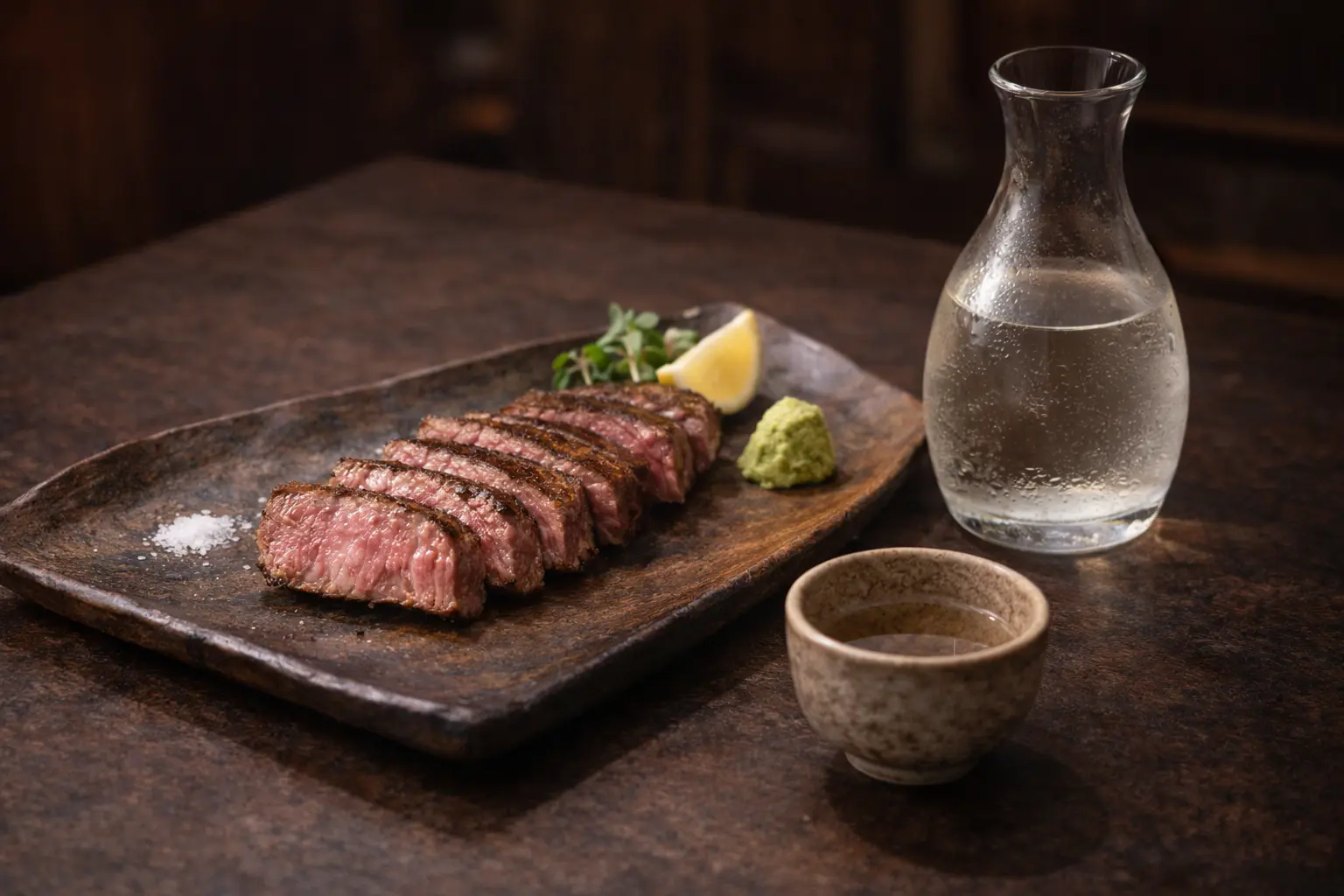
Sake and Meat: Pairing with Yakiniku, Steak, and More
Sake pairs excellently with meat dishes. Learn how to match sake with yakiniku, steak, shabu-shabu, and yakitori based on meat type and cooking method.
Sake with Meat: A Choice Worth Making
Beer with yakiniku, red wine with steak—classic pairings.
But sake works too. Actually, it works wonderfully. It enhances meat’s umami, cleanses the palate of fat, makes the next bite delicious. Sake and meat—worth trying.
Why Sake Works with Meat
Umami Synergy
Meat contains abundant inosinic acid. Sake has plenty of glutamic acid.
When these two umami compounds combine, synergy multiplies the flavor depth. Eat meat, drink sake—umami explodes in your mouth.
Cutting Through Fat
Sake has moderate acidity.
This acidity cleanses meat’s fattiness. Even after rich dishes, sake resets your palate. That’s why the next bite tastes fresh.
Neutralizing Gaminess
Sake’s alcohol and organic acids neutralize meat odors.
Especially good with lamb and game meats. Gaminess fades, letting true meat flavor shine.
Pairings by Meat Type
Beef
Yakiniku × Junmai
For fatty cuts like kalbi or harami, try robust junmai.
Junmai’s body matches meat’s richness. Acidity refreshes the palate—you keep eating.
Steak × Yamahai/Kimoto
For sirloin or ribeye, try powerful yamahai or kimoto junmai.
Bold enough to match meat’s volume. A worthy wine substitute. Aged meat with aged sake is interesting too.
Sukiyaki × Honjozo
For meat in sweet-savory broth, try crisp honjozo.
The sauce’s sweetness and honjozo’s finish pair well. Warmed sake satisfies even more.
Pork
Pork Shabu-shabu × Ginjo
For light shabu-shabu, try aromatic ginjo.
Pork’s sweetness and ginjo aromatics match elegantly. With ponzu sauce, serve sake chilled.
Braised Pork Belly × Junmai
For rich braised pork, try full-bodied junmai.
Junmai embraces melting fatty sweetness. Room temperature or slightly warm.
Tonkatsu × Honjozo
For crispy tonkatsu, try sharp honjozo.
Cuts through fried oil cleanly. Beer’s good, but try sake too.
Chicken
Yakitori (Salt) × Ginjo
For simple salt-grilled skewers, try delicate ginjo.
Chicken umami and ginjo aromatics harmonize. Especially good with breast meat.
Yakitori (Sauce) × Junmai
For sweet-savory sauce, try umami-rich junmai.
Sauce sweetness and junmai richness resonate. Great with thigh and skin.
Karaage × Honjozo
For juicy fried chicken, try crisp honjozo.
Cleanses oil—you can eat endlessly. With lemon, serve sake chilled.
Lamb and Game
Lamb × Yamahai Junmai
For gamey lamb, try equally distinctive yamahai junmai.
Both personalities meet, creating unique harmony. Gaminess becomes less noticeable.
Venison/Boar × Aged Sake
For wild game, try aged koshu.
Complex flavors resonate together. Ask for sake at restaurants serving game.
Choosing by Cooking Method
Grilled
For charred meat, try aromatic sake.
Maillard reaction aromas match sake’s fragrance. Ginjo or solid junmai.
Braised
For slow-cooked dishes, try full-bodied sake.
Deep braised flavors need junmai’s umami. Room temperature or warm.
Fried
For deep-fried dishes, try crisp sake.
Honjozo or dry junmai cleanses oil effectively. Serve chilled.
Raw/Rare
For rare preparations, try delicate sake.
Beef tataki or raw liver with chilled ginjo. Doesn’t overwhelm delicate meat flavors.
Temperature Selection
Chilled
For fatty meats, fried foods. Cold sake refreshes.
Room Temperature
For savoring meat umami fully. Both meat and sake taste best here.
Warm
For winter hot pots, braised dishes. Warms the body, aids digestion.
Sake at Meat Restaurants
Yakiniku Restaurants
More yakiniku spots now stock sake.
Owners recognize fat-sake compatibility. If it’s on the menu, try it.
Steakhouses
Some list sake alongside wines.
Ask sommeliers for sake that pairs with beef.
Yakitori Shops
Yakitori and sake are already classic.
Changing sake between salt and sauce—that’s connoisseur style.
Summary
Meat and sake—better than expected.
Umami synergy, fat-cutting acidity, gaminess neutralization. Theory supports sake-meat pairing.
Next yakiniku or steak night, try sake instead of beer or wine. Discoveries await.
Learn more about sake pairing in Sake and Western Cuisine.