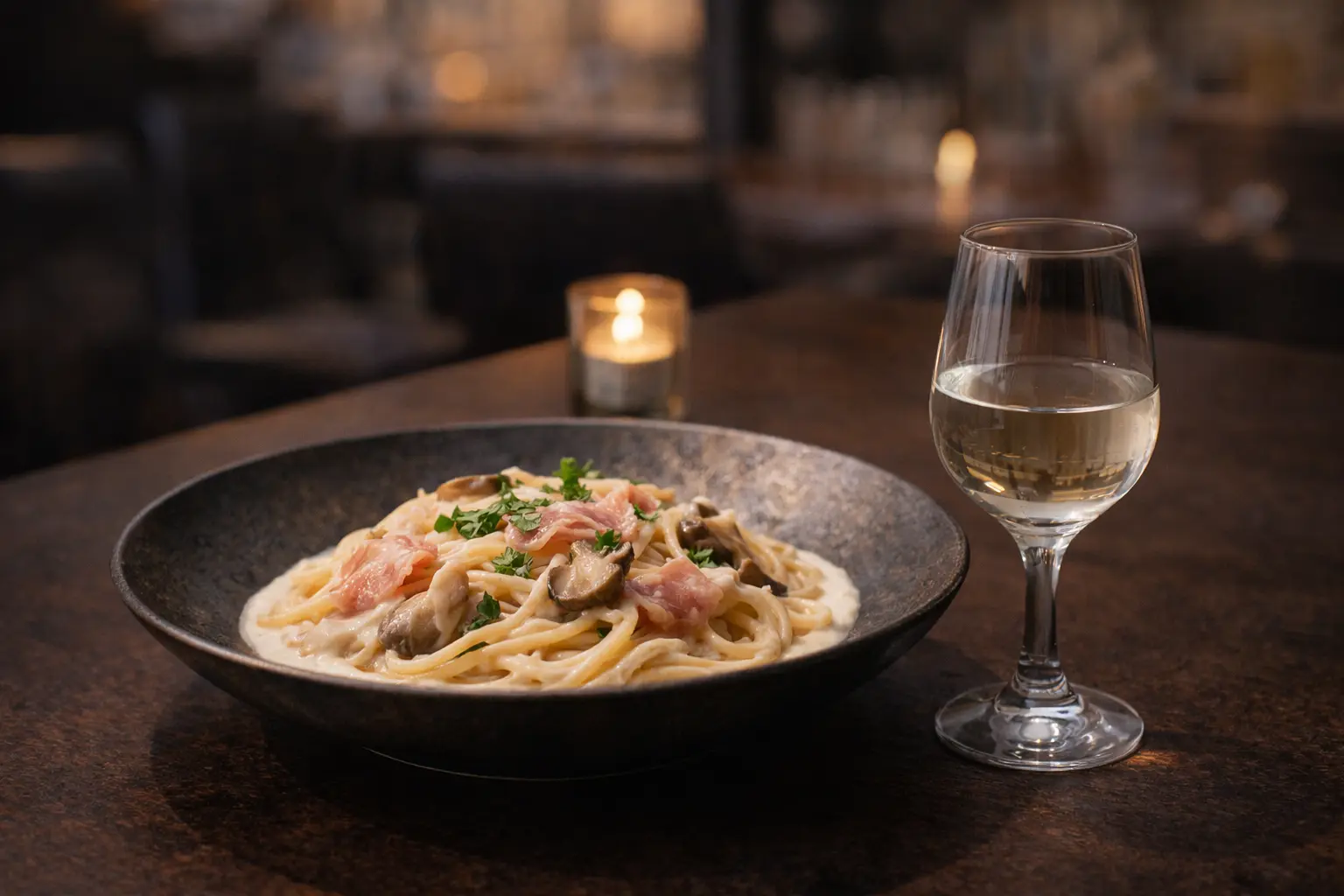
Sake and Western Cuisine: Beyond Japanese Food
Sake isn't just for Japanese food. Discover surprisingly great pairings with pasta, French cuisine, Italian dishes, and more. Enter a new world of sake pairing.
Sake Isn’t Just for Japanese Food
“Sake goes with Japanese food”—but that’s only part of the story.
Sure, sake pairs beautifully with Japanese cuisine. But its possibilities extend much further. Try it with Western food, and surprises await. Sake instead of wine? Worth exploring.
“Sake with gratin?” Skepticism is understandable. Here I want to lay out both the reasoning and the practical ways to make it work.
Why It Works with Western Food
Umami as Common Language
Sake contains abundant umami compounds.
Western cuisine, especially French and Italian, also emphasizes umami. Sauces, stocks, tomatoes, cheese—all umami-rich. Shared language enables conversation.
Sake’s umami comes mainly from amino acids. Rice protein is broken down by koji enzymes, releasing umami compounds like glutamic acid. The same umami you find in tomatoes, cheese, and aged meat shares that root. So “umami × umami” creates a multiplying effect.
Cutting Through Fat
Sake has moderate acidity.
This acidity cleanses the palate after rich, fatty dishes. Drink sake after buttery or creamy foods, and your mouth resets.
Gentle, Not Aggressive
Many wines have strong personalities. Tannins and acidity can clash with food.
Sake is generally mellow. It accompanies rather than competes with dishes.
Wine vs. Sake: Understanding Their Different Roles
Western food means wine. If you’re going to challenge that convention with sake, it helps to understand how the two differ—that gives you a framework for choosing.
The Quality of Acidity Differs
Wine’s acidity centers on malic and tartaric acids—sharp and well-defined. It tightens a dish and sometimes creates contrast.
Sake’s acidity centers on lactic and succinic acids. It’s rounder, and integrated with umami. Rather than “cutting” a dish, it “wraps around” it. Where wine confronts with acidity, sake harmonizes by drawing close. That difference shapes the entire approach to pairing.
No Tannins
Red wine has astringency—tannins. They bind with the fat and protein of meat, creating a distinctive, pleasant grip. But for delicate seafood or dairy, they can be too much.
Sake has almost no tannins. So it won’t clash with cream sauces, white fish, or raw vegetables—things red wine can struggle with. “No astringency” isn’t a weakness; it’s a wider range.
Umami on a Different Scale
Sake contains several times more amino acids than wine, by some measures. This abundant umami is its greatest weapon for joining hands with the umami in Western food. If wine draws close through “aroma and acidity,” sake draws close through “umami and round acidity.” Same table, entirely different approach.
To put it simply:
- Wine = tightens and contrasts a dish with acidity and tannins
- Sake = melts into and harmonizes with a dish through umami and round acidity
Western Genres at a Glance: Pairing Chart
Let’s start with the big picture. Here’s a chart of major Western genres and representative dishes, matched to sake types and serving temperatures. When in doubt, use it as your starting point.
| Genre | Representative Dishes | Sake Type | Recommended Temp |
|---|---|---|---|
| Italian (tomato) | Arrabiata, Margherita | Ginjo, fruity junmai ginjo | Chilled (10–13°C) |
| Italian (rice/cheese) | Risotto, Caprese | Junmai, nama sake | Chilled to room temp |
| French (butter) | Meunière, sautés | Ginjo | Chilled |
| French (cream) | Fricassee, gratin | Junmai | Room temp to warm |
| French (rich) | Foie gras, pâté | Sweet junmai, kijoshu | Chilled |
| Spanish | Ajillo, paella | Honjozo, junmai | Chilled to room temp |
| Meat (grilled/roasted) | Roast beef, steak | Yamahai, kimoto junmai | Room temp to warm |
| Dessert | Tiramisu, cheesecake | Aged koshu, kijoshu | Chilled |
The chart is only a guide. Once you internalize the logic—“ginjo’s fruitiness for tomato acidity,” “junmai’s umami for creamy richness,” “yamahai’s acidity for the power of meat”—you can improvise even with a dish you’ve never paired before.
Pairings by Dish
Pasta and Sake
Cream Pasta × Junmai
For carbonara or cream sauces, try rice-forward junmai.
Cream richness harmonizes with junmai’s full body. Slightly warmed works even better.
Tomato Pasta × Ginjo
For arrabiata or pomodoro, try fruity ginjo.
Tomato acidity and ginjo aromatics create refreshing harmony. Serve chilled.
Oil-Based Pasta × Honjozo
For peperoncino or aglio e olio, try crisp honjozo.
Doesn’t interfere with garlic and olive oil, just cleanly cuts through.
French Cuisine and Sake
Fish Meunière × Ginjo
Butter-cooked fish meets aromatic ginjo perfectly.
Butter richness and ginjo fragrance intertwine beautifully. Choose ginjo like you’d choose white wine.
Chicken in Cream Sauce × Junmai
Chicken fricassee pairs with full-bodied junmai.
Junmai’s umami embraces cream sauce richness. Room temperature recommended.
Foie Gras × Sweet Junmai
Rich foie gras with slightly sweet junmai.
Like Sauternes with foie gras—sweetness balances fat’s weight. Try kijoshu too.
Italian Food and Sake
Caprese × Nama Sake
Simple tomato and mozzarella with fresh nama sake.
A celebration of freshness. Olive oil also pairs well with nama.
Risotto × Junmai
Rice dish meets rice drink.
Mushroom risotto, seafood risotto—junmai works with both. Rice with rice, naturally.
Tiramisu × Aged Sake
Surprising perhaps, but coffee-flavored tiramisu with aged koshu works.
Both have complex flavors. An adult dessert pairing.
Other Western Dishes
Gratin × Junmai
Cheese and béchamel gratin with full-bodied junmai.
Melted cheese umami resonates with junmai umami.
Roast Beef × Yamahai Junmai
Powerful yamahai junmai stands up to meat’s richness.
Instead of red wine. Yamahai acidity highlights meat juiciness.
Grilled Seafood × Ginjo
Shrimp and scallop grills with elegant ginjo.
Where you’d choose white wine, try ginjo instead.
Start at Home with These Dishes
You don’t need a restaurant to begin. Western pairing is easy to start in your own kitchen. Here are some recommended “first steps.”
Pizza × Junmai
Delivery or a supermarket frozen pizza is fine. The salt and umami of the cheese sit perfectly against junmai’s full body. For Margherita, a lightly chilled junmai ginjo; for salami or bacon, room-temperature junmai. More relaxed than wine, and hard to get wrong.
Carpaccio × Ginjo
White fish or salmon carpaccio, with olive oil and lemon. Add chilled ginjo, and the same logic that makes sake work with sashimi comes alive. The fish’s fat, the lemon’s acidity, and ginjo’s fruity aroma become a trinity.
Store-Bought Gratin × Warm Sake
Heat up a frozen or chilled gratin, and warm junmai to body temperature. Just matching the temperatures makes the richness of cream and cheese jump out. A combination worth making a cold-night regular.
Potato Salad / Fries × Honjozo
An unexpected star performer: potato dishes. Crisp honjozo resets the oil from mayonnaise or salt. As a drinking snack, few pairings are this easy and this reliable.
The key is not to start with something difficult. The Western food you have on hand, plus the sake in your fridge. Begin from that combination and it’s more than enough.
Pairing Tips
Match Temperatures
Cold dishes with chilled sake, warm dishes with room temperature or warm sake.
Temperature matching alone improves pairing success.
Focus on Sauces
Sauces define Western dishes.
Cream sauces with junmai, tomato sauces with ginjo, oil-based with honjozo—matching sauce characteristics reduces mistakes.
Regional Pairing
Italian wine with Italian food makes sense.
Similarly, try matching specific regional cuisines with sake from that region. Local ingredients with local sake.
Drop Preconceptions
“Sake with Japanese food only” limits possibilities.
Just try it. Combinations you expect won’t work sometimes surprise you.
At Restaurants
Western Restaurants with Sake
More restaurants now offer sake alongside wine.
Ask sommeliers—they may suggest sake pairings. Don’t be shy.
BYO Restaurants
At restaurants allowing bottles, bring sake to pair with Western food.
Corkage fees apply, but you can experiment with pairings.
Frequently Asked Questions
Does sake go with tomato dishes?
Yes. Tomatoes are a treasure trove of umami (glutamic acid), which pairs well with sake’s own umami. The thing to watch is the tomato’s acidity. Here, meet it with a fruity, light ginjo or junmai ginjo, well chilled. Rather than answering acidity with acidity, catch it with aroma and roundness. Try it with a chilled tomato pasta or a simple Margherita.
What should I choose for heavy butter or cream sauces?
Full-bodied junmai is the recommendation. Against the richness of butter and cream, a junmai with solid umami stands up head-on. Room temperature to gently warmed works well; warming a little aligns it with the dish’s temperature and boosts its fat-cutting effect. Gratin, fricassee, and cream pasta all taste a notch better with this pairing.
What pairs with sweet desserts?
Try aged koshu or kijoshu. Long-aged koshu carries a complex sweetness and aroma reminiscent of caramel and dried fruit, resonating with tiramisu, cheesecake, and chocolate desserts. Kijoshu—brewed using sake in place of water for a rich, sweet result—is exactly the “after-dinner glass.” The trick is to serve it chilled and savor a small amount slowly.
Summary
Sake and Western food—of course they work.
Shared umami, fat-cutting acidity, gentle character. Valid reasons support sake with Western cuisine. And precisely because sake differs from wine in the quality of its acidity and the absence of tannins, there are pairings only sake can pull off.
Next time you eat Western food, try sake instead of wine. Start with the pizza or gratin at home. New culinary pleasures surely await.
Learn more about sake pairing in Sake and Cheese Pairing.