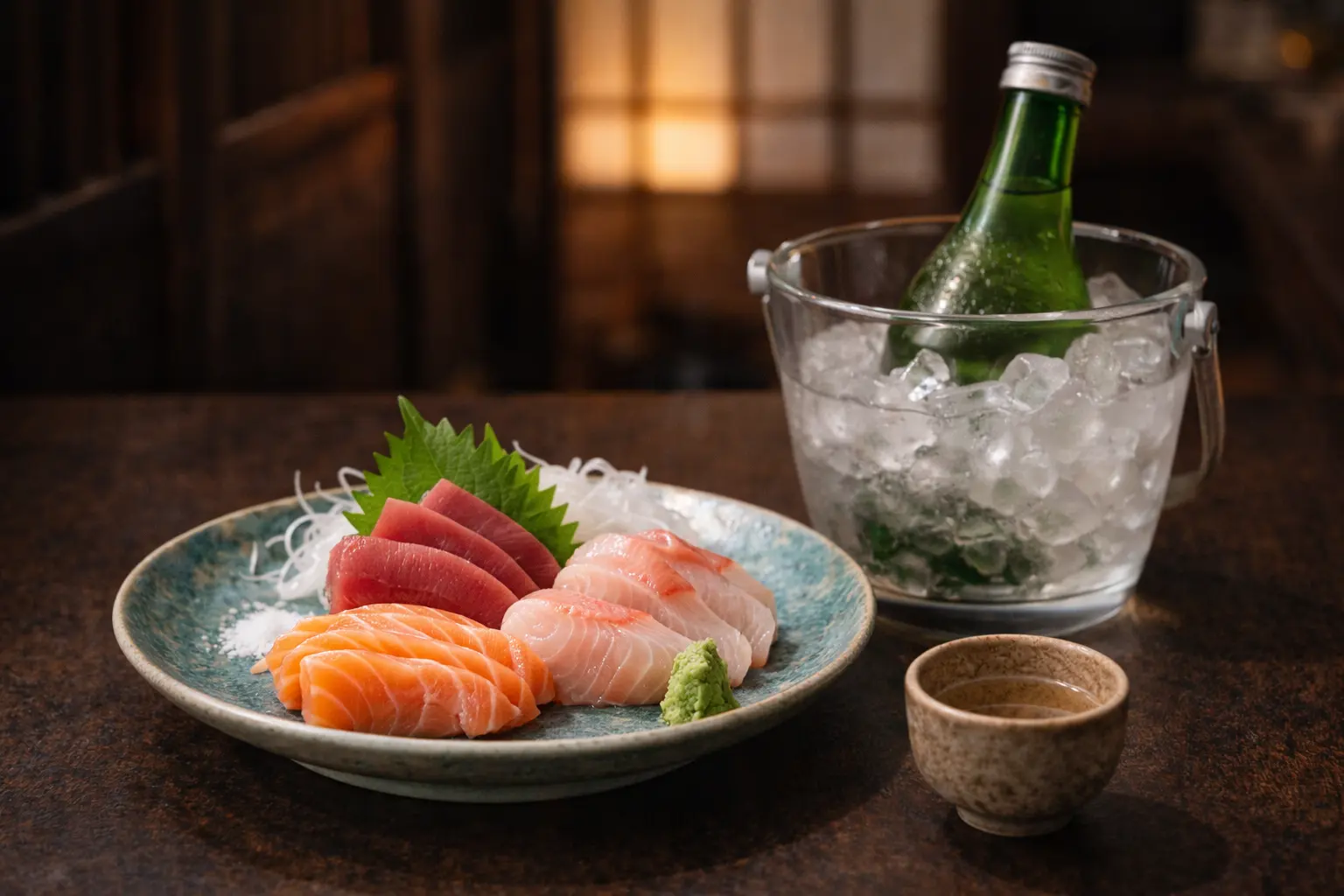
Sake and Seafood Pairing: Enhancing Ocean's Bounty
A comprehensive guide to pairing sake with seafood. From sashimi to grilled fish, shellfish to simmered dishes, discover how to enhance your seafood experience with the perfect sake.
Sake and Seafood: A Natural Partnership
Sake and seafood. There’s no more natural pairing.
Japan is an island nation surrounded by sea. For centuries, the Japanese have eaten fish and brewed sake. It’s only natural that they go together perfectly. Sake is the ultimate partner for bringing out the best in seafood.
Why They Work Together
Neutralizing Fishy Odors
Sake has the ability to suppress fishy odors.
The alcohol and amino acids in sake envelop the compounds that cause fishy smells. That’s why sashimi and sake are such a perfect match. While wine can sometimes emphasize fishy odors, sake rarely does.
Umami Synergy
Seafood contains inosinic acid. Sake contains glutamic acid.
When these two combine, umami is amplified many times over. This is called “umami synergy”—a scientifically proven principle of taste.
The Refreshing Cut
When you eat fatty fish, your mouth feels coated.
The moderate acidity and effervescence of sake wash away that richness. This makes your next bite taste even better. This is what’s called “kire” or “cut.”
Pairing with Sashimi
White Fish × Light and Dry
Sea bream, flounder, sole—pair light white fish with light, dry sake.
White fish has a delicate flavor. A sake with too much presence will overpower the fish. A clean honjozo or a subtle junmai works best.
Serve the sake chilled for an extra refreshing effect.
Red Fish × Junmai
Tuna, bonito—pair rich red fish with full-bodied junmai sake.
Red fish has intense flavor and iron content. The robust umami of junmai sake harmonizes with the strength of red fish. Room temperature or slightly warmed is recommended.
Blue Fish × Honjozo
Mackerel, horse mackerel, sardines—pair oily blue fish with crisp honjozo.
Blue fish is fatty with distinctive flavors. The clean taste of honjozo cuts through the fat and suppresses any fishiness.
Add lemon and shiso leaves to enhance the pairing further.
Shellfish × Ginjo
Scallops, ark shell, whelk—pair shellfish with aromatic ginjo sake.
The sweetness of shellfish and the ocean’s aroma. Ginjo’s fruity notes enhance these qualities. Chilled sake is the classic choice.
Oysters also pair well with dry junmai. The creaminess of the oyster and the crispness of the sake make a perfect match.
Squid and Octopus × Nama-sake
Pair squid and octopus with fresh nama-sake.
The chewy texture and mild flavor pair wonderfully with the freshness of unpasteurized sake. Keep it simple with salt and sudachi citrus.
Pairing with Grilled Fish
Salt-Grilled × Junmai
Simple salt-grilled fish pairs best with junmai sake.
Salt-grilling concentrates the fish’s umami. Junmai’s rice umami creates harmony. For salt-grilled pacific saury, slightly warmed junmai is the ultimate match.
Saikyo-Yaki × Junmai Ginjo
Miso-marinated Saikyo-yaki pairs well with junmai ginjo.
The sweetness and richness of the miso marinade. Junmai ginjo’s elegance enhances it. Miso-glazed black cod with junmai ginjo is a golden combination.
Dried Fish × Warmed Sake
Dried fish calls for warmed sake.
Dried fish is salty with concentrated umami. Warmed junmai gently envelops the saltiness. Dried horse mackerel with kanzake—this is the essence of drinking at home.
Pairing with Simmered Fish
Simmered in Soy Sauce × Junmai (Warmed)
Sweet-savory simmered fish pairs with warmed junmai sake.
The sweetness of the simmered fish and the soy sauce flavor. The warmth and umami of kanzake meld together. Simmered flounder with hot sake—a winter classic.
Fish Head Stew × Yamahai/Kimoto
Rich fish head stew calls for yamahai or kimoto sake.
Fish head stew has an intense flavor. The complex taste and acidity of yamahai/kimoto can stand up to it. Especially recommended with yellowtail head stew.
Pairing with Fried Seafood
Tempura × Dry Junmai
Seafood tempura pairs with dry junmai sake.
Crispy batter and seafood umami. Junmai’s crispness cuts through the oil. Shrimp tempura, whiting tempura, squid tempura—all go perfectly with sake.
For tempura with salt, go for light and clean. With tentsuyu dipping sauce, choose a richer style.
Fried Fish × Honjozo
Fried horse mackerel, fried shrimp pair with clean honjozo.
The oil of fried food and the crispy coating. Honjozo’s sharp finish is the best match. Whether with tartar sauce or tonkatsu sauce.
Pairing with Hot Pot
Seafood Nabe × Junmai (Warmed)
Seafood hot pot or shabu-shabu pairs with warmed junmai.
The broth infused with seafood essence. The match with warm junmai is outstanding. It warms both body and soul.
Crab Hot Pot × Ginjo
Crab hot pot pairs with aromatic ginjo sake.
The sweetness and delicacy of crab. Ginjo’s elegant fragrance enhances the crab. Delicious whether chilled or warmed.
Fugu Hot Pot × Light and Dry
Fugu (pufferfish) hot pot pairs with light, dry sake.
Fugu has a subtle, refined taste. An unassuming sake works best. Fugu hirezake (fin sake) is also a luxurious way to enjoy it.
Regional Pairings
Hokkaido
- Uni & Ikura × Hokkaido’s light, dry sake
- Salmon Chanchan-yaki × Asahikawa junmai
Tohoku
- Hoya (sea squirt) × Miyagi honjozo
- Kesennuma shark fin × Nanbu Bijin
Hokuriku
- Winter yellowtail × Ishikawa yamahai junmai
- Sweet shrimp × Toyama ginjo
Kansai
- Akashi sea bream × Nada dry sake
- Hamo (pike conger) × Fushimi junmai
Kyushu
- Seki mackerel & Seki horse mackerel × Oita honjozo
- Yobuko squid × Saga junmai ginjo
Local fish with local sake. This is the golden rule.
Tips for Enjoyment
Consider Temperature
- Sashimi & raw items → Chilled to room temperature
- Grilled & simmered → Room temperature to warmed
- Fried → Chilled to room temperature
Matching the temperature of your food and sake creates harmony.
Use Condiments
Wasabi, ginger, shiso, green onion, sudachi.
Condiments suppress fishy odors and bridge the gap between seafood and sake. Use them generously.
Try Salt
Instead of soy sauce, try eating sashimi with salt.
The natural sweetness of the fish stands out, and you can taste the sake more directly. Try different salts like seaweed salt or pink salt.
Consider Order
Progress from mild to rich fish.
From white to red fish, raw to cooked, cold to warm. Change your sake from light to full-bodied. This way you won’t get bored.
Conclusion
Sake and seafood—this is the crystallization of Japanese food culture.
A pairing refined over centuries in this island nation surrounded by seas. There’s a deliciousness that transcends mere explanation.
If you have fish on tonight’s table, please try adding sake. You’ll rediscover a pleasure that seems obvious yet feels completely new.
For more sake pairing ideas, see Sake and Cheese Pairing.