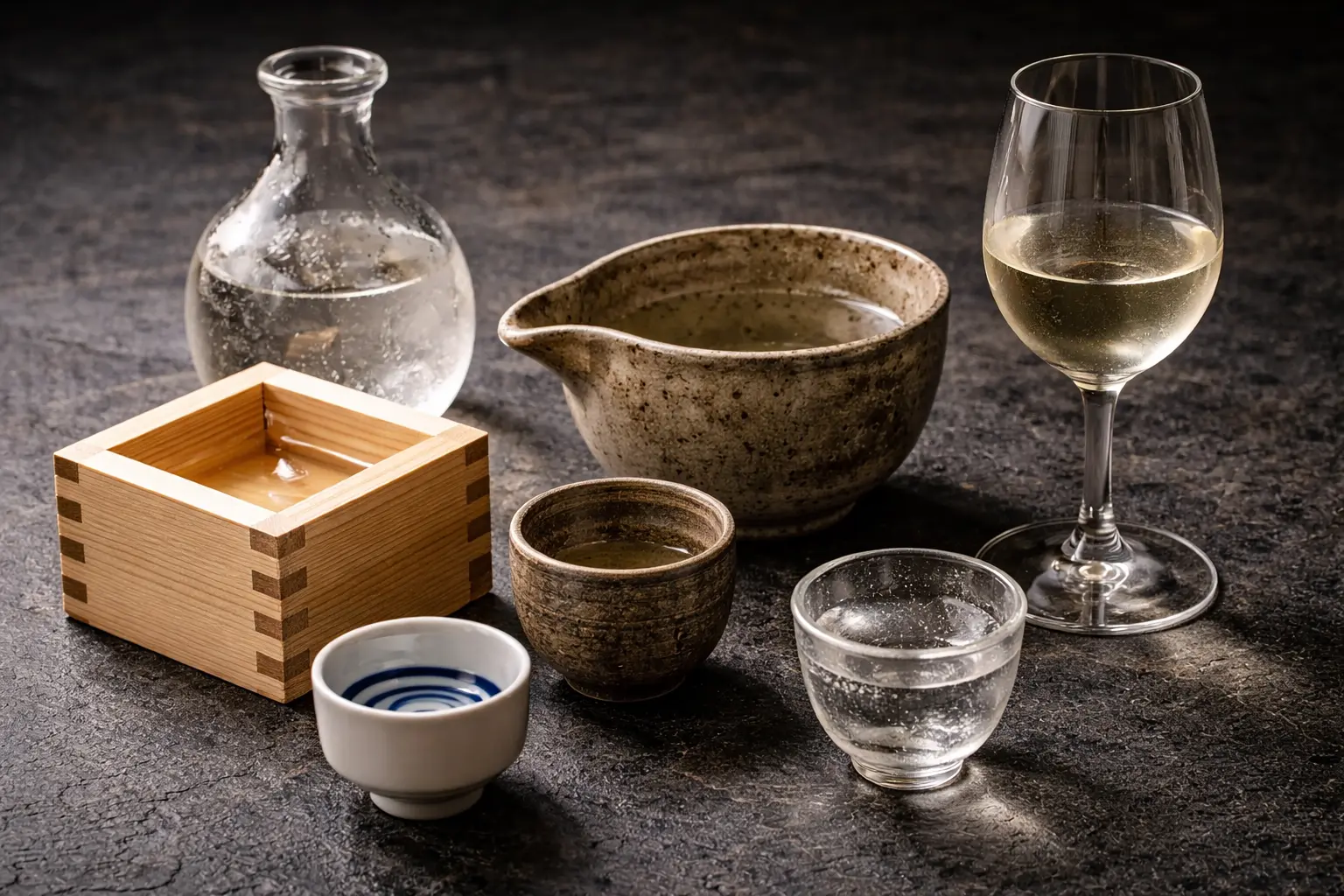
Choosing Sake Vessels: Ochoko, Guinomi, Wine Glasses
How to choose the right vessel for better sake enjoyment. From ochoko and guinomi to wine glasses, learn how materials and shapes affect flavor.
How Vessels Change Sake’s Taste
Same sake, different cup—different taste.
Sounds unlikely? It’s true. How aromas rise, how sake feels on the palate, how temperature changes—vessels genuinely affect the drinking experience.
Types of Sake Vessels
Ochoko
The most common sake cup. Small, meant to be finished in one or two sips.
The beauty of ochoko is enjoying small amounts at a time. Warm sake doesn’t cool before you drink it. Cold sake doesn’t warm up. Every pour tastes fresh.
That’s why ochoko appear so often at izakaya and banquets—the size makes sense.
Guinomi
Slightly larger than ochoko. Palm-sized, meant for savoring sake slowly.
The name suggests gulping (“gui” means to gulp), but these cups are really for taking your time. Materials vary—ceramic, porcelain, glass—and finding your favorite is part of the fun.
Many collectors seek out artist-made guinomi. The cup itself becomes art.
Katakuchi
A pouring vessel with a spout. Meant for serving, though some drink directly from it.
Pour chilled sake into a katakuchi, keep it on the table, serve into smaller cups. This ritual becomes part of enjoying sake. It creates time to appreciate what you’re drinking.
Tokkuri
The classic warmed sake vessel. Narrow neck, bulging body—that distinctive shape.
Warming sake in hot water, pouring from tokkuri into ochoko—this flow defines the kanzake experience. The shape helps sake heat evenly and stay warm longer.
Wine Glasses
Surprising perhaps, but wine glasses suit sake well.
Especially aromatic ginjo and daiginjo. The bowl gathers and lifts aromas. Tilting the glass brings scents to your nose easily.
Dedicated sake wine glasses now exist for this purpose.
Material Differences
Ceramic (Earthenware)
Earthy warmth. Poor heat conductivity makes it good for warm sake.
Rough-textured surfaces make sake taste softer. The earthen feel creates a relaxed mood.
Different kilns—Bizen, Shigaraki, Hagi—each have distinct characteristics.
Porcelain
Smooth and thin. Best for chilled sake.
Sharp mouthfeel delivers sake’s taste directly. Delicate painted designs from Arita or Kutani please the eye too.
Glass
Transparency is the appeal. You can see chilled sake’s clarity.
Thin glass creates delicate mouthfeel. Perfect for sake over ice. Glass vessels suit summer sake perfectly.
Pewter (Tin)
Excellent heat conduction—warm sake heats quickly. Pre-chilled, it keeps cold sake cold.
Some say tin mellows sake’s taste. The distinctive luster adds elegance.
Wood
Sake from cypress or cedar masu cups absorbs wood aroma.
Opinions vary on this, but masu often appear at celebrations. The character for masu (“升”) sounds like “increase” (“益す”)—auspicious wordplay.
Shape and Flavor
Rim Width
Wide-rimmed cups let aromas spread. Good for aromatic ginjo.
Narrow rims concentrate aromas. Each sip delivers focused scent.
Depth
Shallow cups show sake’s color clearly. Choose shallow to appreciate subtle hues.
Deep cups trap aromas. Better for slowly savoring scents.
Thickness
Thin cups create delicate mouthfeel. Sake flows in smoothly.
Thick cups feel substantial. Good for sipping warm sake slowly.
Temperature and Vessel Pairings
For Chilled Sake
- Thin glass
- Porcelain ochoko
- Wine glasses
Chilled sake is about delicate flavors. Light-feeling vessels match best.
For Room Temperature
- Ceramic guinomi
- Porcelain sakazuki
- Pewter cups
Room temperature sake has gentle flavors. Substantial vessels, slow sipping.
For Warm Sake
- Thick ceramic
- Tokkuri and ochoko sets
- Pewter guinomi
Warm sake needs heat retention. Choose vessels that don’t release warmth quickly.
Choosing Your Own Vessels
Start with One
No need to collect everything at once.
Start with one cup you like. Try your favorite sake in it. Does it feel right? That tells you what to look for next.
Match Your Sake
If you know what you drink, choose accordingly.
Love ginjo? Try wine glasses. Prefer warm sake? Get a tokkuri set. For everyday drinking, a practical guinomi works.
Discover While Traveling
Visit pottery regions and find local ceramics.
Drinking sake from that trip in a cup from that same trip—there’s a pleasure in that connection.
Growing Your Vessels
Some ceramics develop character with use.
They absorb sake, colors shift, textures change. This “growing” process is unique to ceramics.
Long-used vessels hold memories too.
Summary
There’s no correct answer in choosing sake vessels.
Expensive doesn’t mean better. Traditional doesn’t mean right. What matters is whether you enjoy drinking from it.
Try different vessels. Notice what cups you’re served at izakaya. Your preferences will emerge.
Sake vessels are tools for enjoyment—and companions along the way.
Learn more about enjoying sake in Sake Serving Temperatures.