Sake and Western Cuisine: Beyond Japanese Food
Sake isn't just for Japanese food. Discover surprisingly great pairings with pasta, French cuisine, Italian dishes, and more. Enter a new world of sake pairing.
Sake Isn’t Just for Japanese Food
“Sake goes with Japanese food”—but that’s only part of the story.
Sure, sake pairs beautifully with Japanese cuisine. But its possibilities extend much further. Try it with Western food, and surprises await. Sake instead of wine? Worth exploring.
Why It Works with Western Food
Umami as Common Language
Sake contains abundant umami compounds.
Western cuisine, especially French and Italian, also emphasizes umami. Sauces, stocks, tomatoes, cheese—all umami-rich. Shared language enables conversation.
Cutting Through Fat
Sake has moderate acidity.
This acidity cleanses the palate after rich, fatty dishes. Drink sake after buttery or creamy foods, and your mouth resets.
Gentle, Not Aggressive
Many wines have strong personalities. Tannins and acidity can clash with food.
Sake is generally mellow. It accompanies rather than competes with dishes.
Pairings by Dish
Pasta and Sake
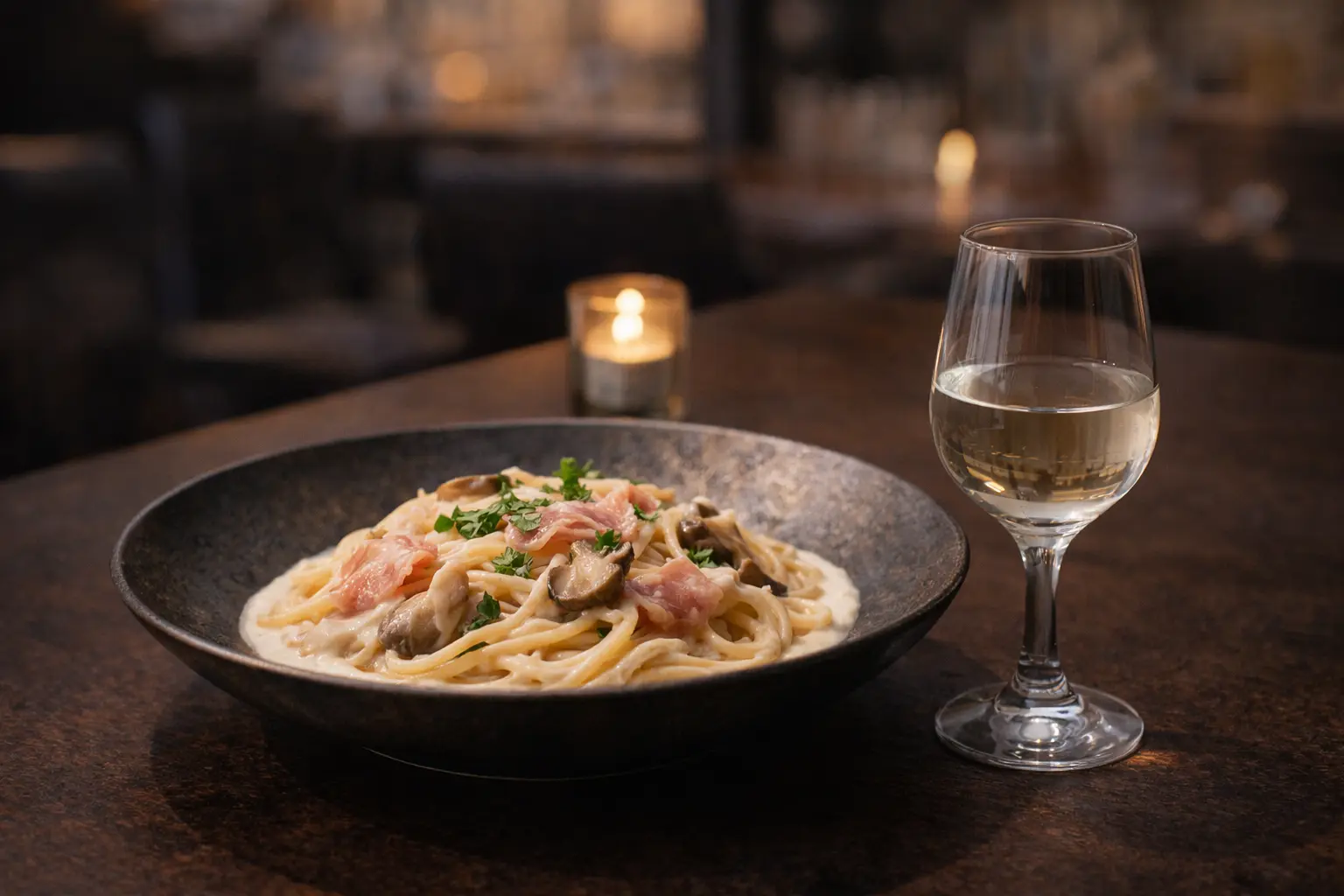
Cream Pasta × Junmai
For carbonara or cream sauces, try rice-forward junmai.
Cream richness harmonizes with junmai’s full body. Slightly warmed works even better.
Tomato Pasta × Ginjo
For arrabiata or pomodoro, try fruity ginjo.
Tomato acidity and ginjo aromatics create refreshing harmony. Serve chilled.
Oil-Based Pasta × Honjozo
For peperoncino or aglio e olio, try crisp honjozo.
Doesn’t interfere with garlic and olive oil, just cleanly cuts through.
French Cuisine and Sake
Fish Meunière × Ginjo
Butter-cooked fish meets aromatic ginjo perfectly.
Butter richness and ginjo fragrance intertwine beautifully. Choose ginjo like you’d choose white wine.
Chicken in Cream Sauce × Junmai
Chicken fricassee pairs with full-bodied junmai.
Junmai’s umami embraces cream sauce richness. Room temperature recommended.
Foie Gras × Sweet Junmai
Rich foie gras with slightly sweet junmai.
Like Sauternes with foie gras—sweetness balances fat’s weight. Try kijoshu too.
Italian Food and Sake
Caprese × Nama Sake
Simple tomato and mozzarella with fresh nama sake.
A celebration of freshness. Olive oil also pairs well with nama.
Risotto × Junmai
Rice dish meets rice drink.
Mushroom risotto, seafood risotto—junmai works with both. Rice with rice, naturally.
Tiramisu × Aged Sake
Surprising perhaps, but coffee-flavored tiramisu with aged koshu works.
Both have complex flavors. An adult dessert pairing.
Other Western Dishes
Gratin × Junmai
Cheese and béchamel gratin with full-bodied junmai.
Melted cheese umami resonates with junmai umami.
Roast Beef × Yamahai Junmai
Powerful yamahai junmai stands up to meat’s richness.
Instead of red wine. Yamahai acidity highlights meat juiciness.
Grilled Seafood × Ginjo
Shrimp and scallop grills with elegant ginjo.
Where you’d choose white wine, try ginjo instead.
Pairing Tips
Match Temperatures
Cold dishes with chilled sake, warm dishes with room temperature or warm sake.
Temperature matching alone improves pairing success.
Focus on Sauces
Sauces define Western dishes.
Cream sauces with junmai, tomato sauces with ginjo, oil-based with honjozo—matching sauce characteristics reduces mistakes.
Regional Pairing
Italian wine with Italian food makes sense.
Similarly, try matching specific regional cuisines with sake from that region. Local ingredients with local sake.
Drop Preconceptions
“Sake with Japanese food only” limits possibilities.
Just try it. Combinations you expect won’t work sometimes surprise you.
At Restaurants
Western Restaurants with Sake
More restaurants now offer sake alongside wine.
Ask sommeliers—they may suggest sake pairings. Don’t be shy.
BYO Restaurants
At restaurants allowing bottles, bring sake to pair with Western food.
Corkage fees apply, but you can experiment with pairings.
Summary
Sake and Western food—of course they work.
Shared umami, fat-cutting acidity, gentle character. Valid reasons support sake with Western cuisine.
Next time you eat Western food, try sake instead of wine. New culinary pleasures await.
Learn more about sake pairing in Sake and Cheese Pairing.