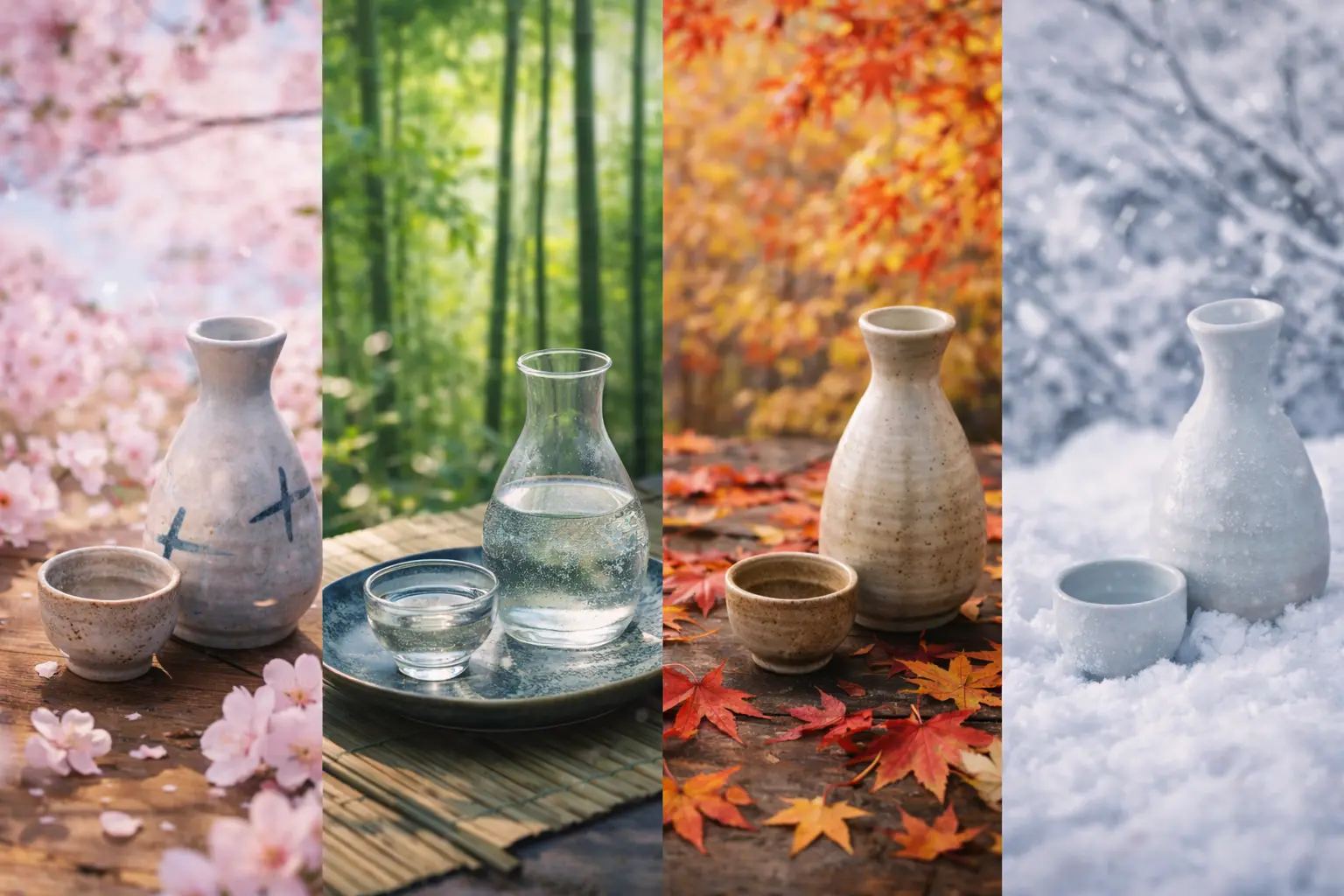
Enjoying Sake Through the Seasons
Discover how to select and enjoy sake for each season. Learn about seasonal releases and perfect food pairings throughout the year.
How Sake Changes with the Seasons
Sake is a curious drink—the same bottle can feel completely different depending on the season. A glass in spring and a glass on a winter night can seem like entirely separate beverages.
This isn’t just about temperature and humidity. Each season brings limited releases, pairs with different seasonal ingredients, and invites its own way of drinking. Experiencing the changing seasons through sake—that’s what this guide explores.
Spring | Opening New Sake Under Cherry Blossoms
Spring marks when new sake, brewed through winter, reaches the market.
“Shiboritate” sake from this season tastes fresh and youthful. There’s a certain rough edge that hasn’t smoothed out yet, but that energy feels distinctly spring-like.
Drinking sake during hanami (cherry blossom viewing) is special. Taking a sip of chilled new sake while petals drift through the air—you physically feel the shift from winter to spring.
“Usunigori” works beautifully this time of year too. The faintly cloudy appearance evokes cherry blossom pink, and its smooth texture matches spring’s gentle atmosphere.
At the Spring Table
Mountain vegetables appear in markets now. Simmered bamboo shoots or tempura-fried fuki-no-to pair wonderfully with slightly sweet Junmai. The sake’s sweetness embraces the vegetables’ subtle bitterness.
For katsuo tataki (seared bonito), reach for dry Honjozo. It handles the bold garlic and ponzu flavors while providing a clean finish.
Sakura-dai (sea bream in season) sashimi calls for Junmai Ginjo. The elegant ginjo aromatics complement the delicate white fish perfectly.
Summer | A Glass That Makes You Forget the Heat
Drinking ice-cold Nama-zake in sweltering heat—feeling the sweat on your forehead begin to dry—that’s a distinctly summer happiness.
Nama-zake skips pasteurization, preserving a fresh, lively character. Some continue fermenting slightly in the bottle, revealing a gentle effervescence on the palate.
Recently, “Natsu-zake” (summer sake) has emerged—lighter styles with lower alcohol around 13%. They go down almost too easily, like beer with dangerous consequences.
On a hot evening, sitting on the veranda with sake on the rocks—ice cubes floating—delivers a different kind of coolness than air conditioning. Something that seeps into you slowly.
At the Summer Table
Cold tofu with dry Junmai makes a simple but perfect match. The tofu’s subtle sweetness and the sake’s crispness enhance each other. Pile on the green onions and grated ginger.
Chilled soba or somen noodles pair beautifully with refreshing Honjozo. The salty dipping sauce and sake’s umami interweave as you slurp away.
Festival-grilled corn with earthy Junmai creates pure nostalgia. The charred soy sauce and rice umami resonate together in ways hard to describe.
Autumn | When Maturation Blossoms
Autumn might be sake’s finest season.
Have you heard of “Hiyaoroshi”? Sake pressed in spring, rested through summer, released in fall—those months of maturation bring settled depth.
What tasted rough and young as new sake has now softened and rounded. Yet it hasn’t lost all freshness. That balance between youth and maturity defines autumn Hiyaoroshi.
In the cooling evening breeze, savoring Hiyaoroshi at room temperature or barely warmed—this isn’t sake to rush. It’s sake to sit with.
At the Autumn Table
Salt-grilled sanma (Pacific saury) with dry Honjozo is a classic combination. The sake’s crispness cuts through the rich, fatty fish. Add grated daikon and a squeeze of sudachi, then chase with sake—does it get better than this?
Matsutake dobinmushi (pine mushroom in broth) wants rich Junmai. The earthy mushroom aroma and rice umami harmonize beautifully.
Kuri gohan (chestnut rice) or persimmon shira-ae (tofu salad) with naturally sweet notes call for slightly sweet Junmai.
Moon-viewing night, enjoying sake with dango—slowly sipping while gazing at the moon—represents luxury at its purest.
Winter | Warm Sake Season Arrives
When cold weather sets in, warm sake calls.
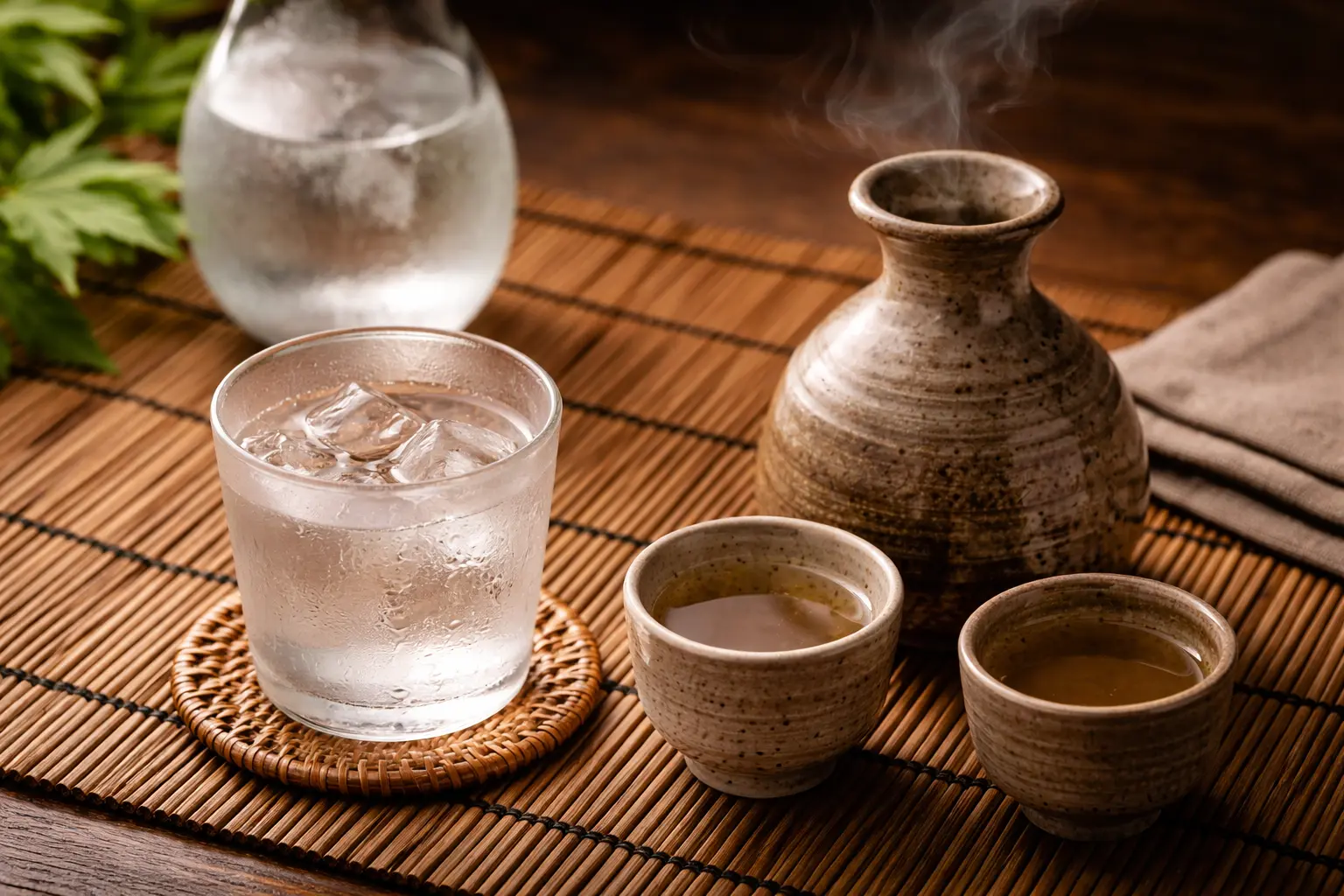
Kanzake (heated sake) holds a special place among sake experiences. The same bottle transforms completely when warmed versus chilled. Different temperatures release different aromatics and alter how umami registers.
Rich Junmai, Yamahai, and Kimoto styles excel warm. Kimoto especially—heating pushes the rice umami forward, creating warming power that reaches your core.
Nurukan (around 40°C) lets umami spread gently. Atsukan (50°C+) sharpens into something more assertive. Try the same bottle at different temperatures—you’ll discover something new.
New Year brings “Hatsu-shibori”—the year’s first pressing. As a celebration of the new year, it carries special significance.
At the Winter Table
Oden with warm sake defines winter. The umami from simmered fishcakes and daikon melds with warm sake in your mouth.
Sukiyaki wants sweet Junmai. The sweet-salty cooking sauce and sake’s sweetness find harmony. Dip the meat in raw egg, bring it to your lips, chase with sake—pure bliss.
Hot pot dishes of any kind pair brilliantly with sake. Warming yourself with rich Junmai while gathered around the pot—no better way to spend a winter night.
Chasing Seasonal Releases
Among sake enthusiasts, hunting seasonal releases becomes part of the enjoyment.
February’s Risshun (first day of spring) brings “Risshun Asashibori”—sake pressed that very morning, arriving at shops the same day. Many reserve theirs annually.
Spring means cherry blossom-labeled limited editions. Summer brings refreshingly designed Natsu-zake. Autumn delivers various Hiyaoroshi. Winter offers new-rice sake and Hatsu-shibori.
Throughout the year, sake exists that can only be found in that season. Even familiar breweries show different faces at different times. Once you start noticing sake’s relationship with seasons, the year’s cycle feels richer.
Choosing seasonal sake as gifts? See Sake for Gifts and Celebrations.